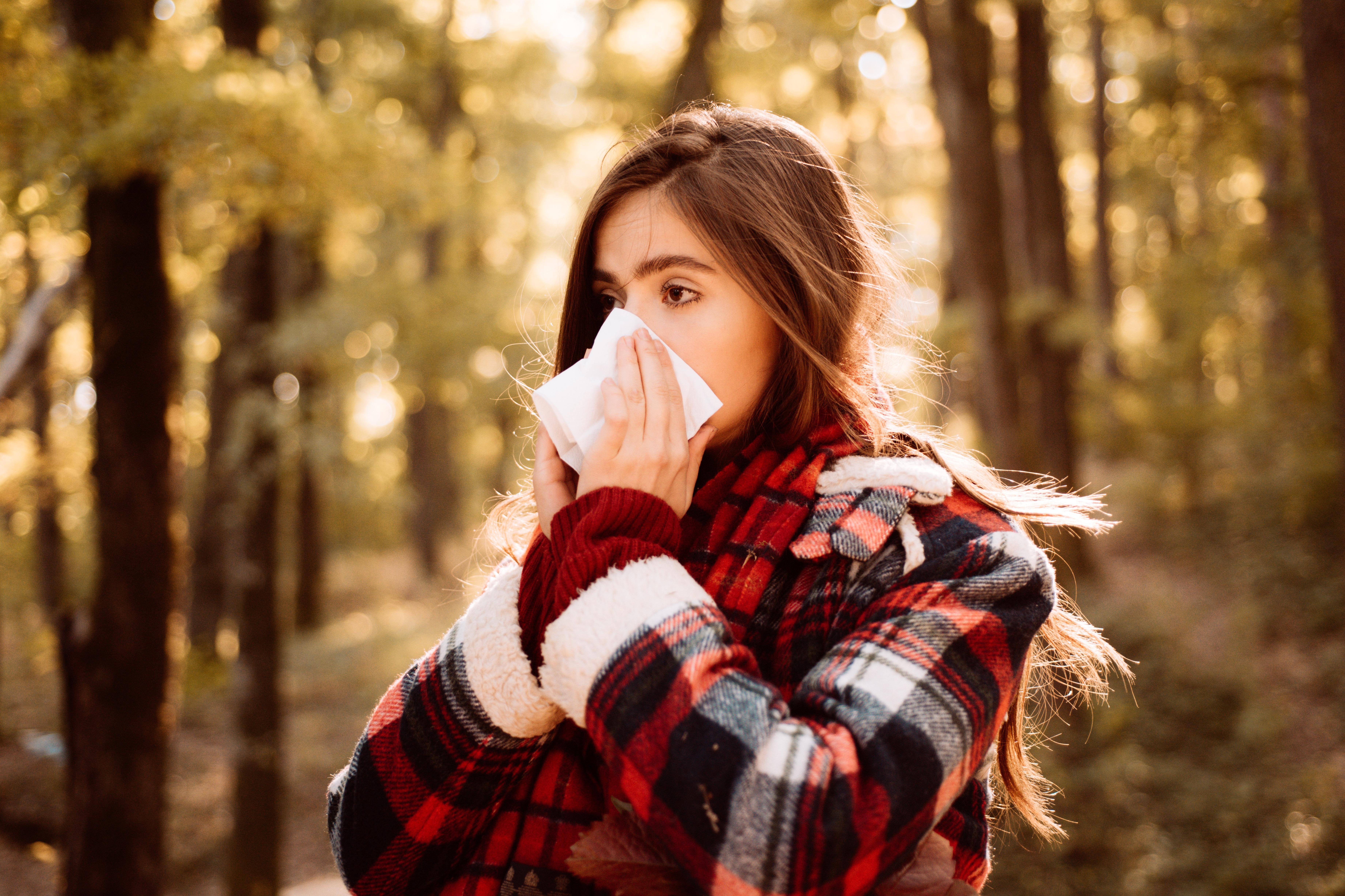
It’s the season for pumpkins, changing leaves, hot drinks — and fall allergies.
As fall brings dropping temperatures and falling leaves, millions are reaching for extra tissues — but not because of a common cold.
Rather, seasonal allergies, or hay fever, are kicking in, bringing watery eyes, runny noses and other symptoms that resemble the flu.
Instead of pollen from blooming flowers and trees that marks the onset of spring, fall allergies — also called allergic rhinitis — are most often caused by ragweed pollen, a fern-like plant that’s especially prevalent on the East Coast.
And if temperatures are warmer than normal, you could be dealing with both ragweed pollen and grass pollen, which can make allergies worse, according to the Cleveland Clinic.
Mold spores from decaying wet leaves are another common fall allergen, getting into the air when they’re stepped on and traveling into airways.
Many of the major symptoms of fall allergies are the same as those in springtime, including nasal congestion, runny nose, itchy eyes, scratchy throat, a cough and postnasal drainage.
While these are similar to the signs of a cold, a respiratory infection from a cold or the flu can also make it hard to breathe and cause fatigue, mild body aches, nausea, vomiting, fever or chills.
Despite the number of leaves falling from the trees or ragweed floating through the air, there are ways to prevent and manage fall allergies, many of which are also similar to warmer seasonal allergens.
Getting tested for allergies can help identify what specifically triggers symptoms, whether pollen, dust, mold or something else.
From there, you can reduce irritants by removing wet leaves from the yard, minimizing dust and pet hair by vacuuming and using an air purifier.
It’s also recommended to change your clothes and take a shower when you get home to remove pollen.
Rather than waiting until you’re already suffering from allergy symptoms, start any treatment regimens before the season and continue using a few weeks after.
This usually means taking over-the-counter allergy medicine or nasal sprays a month before in August, and continuing to use them through November.
While it’s tempting to get outside while the weather is still nice enough, checking daily pollen counts and staying indoors on high-count days can help reduce symptoms.
The National Allergy Bureau has an online tracker, and wear an N95 mask if going outside is unavoidable.
The first recommendation for allergies? Nasal sprays, particularly a combination of a nasal steroid spray, such as fluticasone, and a nasal antihistamine spray, such as azelastine.
Nasal sprays can reduce inflammation and the amount of mucus that drains into the back of the throat.
Oral antihistamines like Zyrtec, Allegra and Claritin are common allergy medications that reduce or stop the effects of a chemical produced by the body during an allergic reaction.
But experts say you don’t need to switch treatments to get the best results.
“It’s more important that you’re consistent with the antihistamine that you do choose,” Dr. David A. Gudis, chief of the Division of Rhinology and Anterior Skull Base Surgery at New York‑Presbyterian, told Health Matters.