Make New York Post a Preferred Source The Chinese Communist Party has worked systematically to crush, suppress and co-opt all religious groups in China under its 2018 “Sinicization” campaign. Now it’s coming for Protestant Christians, China’s largest religious minority.
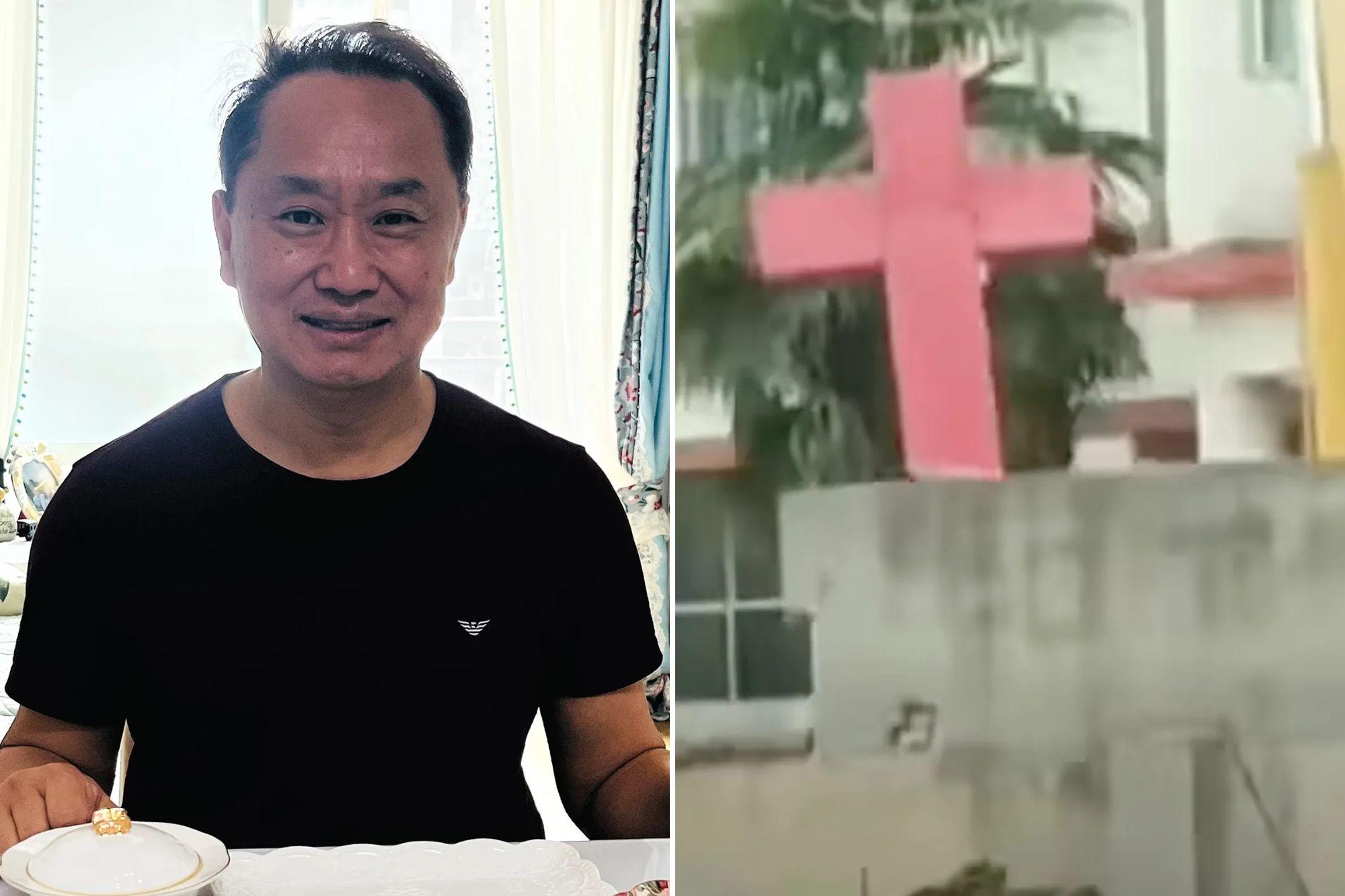
Reports surfaced this week that Pastor Xianfeng Edward Cui, the founding leader of Beijing Jiaquan Church since 2006, was charged with fraud on Oct. 23. The charge, which typically carries a prison sentence, was based on his passing around the collection plate.
The 57-year-old house church leader was detained on Sept. 4 when some 100 police officers raided the house church, his wife Jin Young Gu, who lives outside China, told the Associated Press. She said the operation was related to “church members’ offerings.”
The real reason for Cui’s arrest is that he has resisted registering his church with the Three Self Patriotic Movement, which is directly under the CCP’s United Front Work Department. Established under Mao Zedong, the movement is now the CCP’s main instrument for ensuring the Sinicization of Protestant Christianity in China.
President Xi Jinping euphemistically defines Sinicization as “adapting religion to socialism with Chinese characteristics.” In practice it means pastors must ban all minors under 18 years old from church, center sermons on Xi Jinping’s Thought, and spy on their congregations, among many other demands and restrictions.
The cases of Chinese Pastor Ezra Jin and eight of his fellow Zion megachurch pastors and leaders are part of this pattern. They were arrested a year ago, after refusing the installation of government surveillance cameras in their churches and then for preaching online. Jin was rescued by President Donald Trump last July but the other eight Zion leaders remain imprisoned in China on fraud charges, like Cui.
Pastor Cui’s church is popular. In 2019, the congregation in Beijing was barred from its worship space because authorities thought it was too large. Cui then began meeting in smaller groups at various sites but authorities told him in 2023 that he could lead “only one church with fewer than 100 people,” his wife reported. These suppression tactics apparently weren’t enough for the CCP. It decided to shut down the church completely, silence its pastor and taint his reputation by invoking a crime of moral turpitude.
I asked Pastor Jin’s daughter, Grace, her thoughts on Cui’s arrest. She commented in an email that “Beijing continues to persecute Christians and choke off religious freedom, now dressing that persecution in the language of criminal law.”
She observes that the charge, itself, is a form of criminalizing Christian practice. She wrote: “Charging a pastor with fraud over his congregation’s offerings criminalizes tithing, a practice as old as the church itself. When law is used this way, it stops being law and becomes a weapon.”
Grace Jin also sees a contradiction in these cases, which she calls a bitter irony:
“For more than a century, Chinese Christians have worked to build churches that support themselves, free from reliance on foreign missions. Congregations like Pastor Cui’s, sustained by the gifts of ordinary Chinese believers, are the fruit of that effort. If any church in China is truly ‘sinicized,’ it is the house church. Crushing these congregations in the name of sinicization shows the campaign for what it is: not about making faith Chinese, but about making it obedient.”
Sinicization impacts all religions in China. Protestant Christianity will be its biggest challenge since it counts 100 million or more among its members, most of whom worship with unregistered house churches, like Cui’s. Renowned Purdue University sociologist Fenggang Yang wrote in an Oct. 8 email that he accepts that number based on his calculations using a “strict measure of self-identification that excludes those who believe without belonging or practice without believing or belonging.”
There could be more Protestants in China than members of the CCP, which is reported to also number 100 million.
Another consideration for the CCP is Christian influence within America, whose markets, investments and trade China depends on. While it works to suppress the Chinese house churches, the CCP faces a delicate balance of placating both its own booming Christian population and the American public.
It is using lawfare in kangaroo courts against the Christians, not the brutal tactics that it applies to crush the Tibetan Buddhists, Uyghur Muslims, or Falun Gong practitioners. It is persecution nonetheless.
President Trump should speak up for Pastor Cui and the others persecuted in China when he meets with Xi later this month.