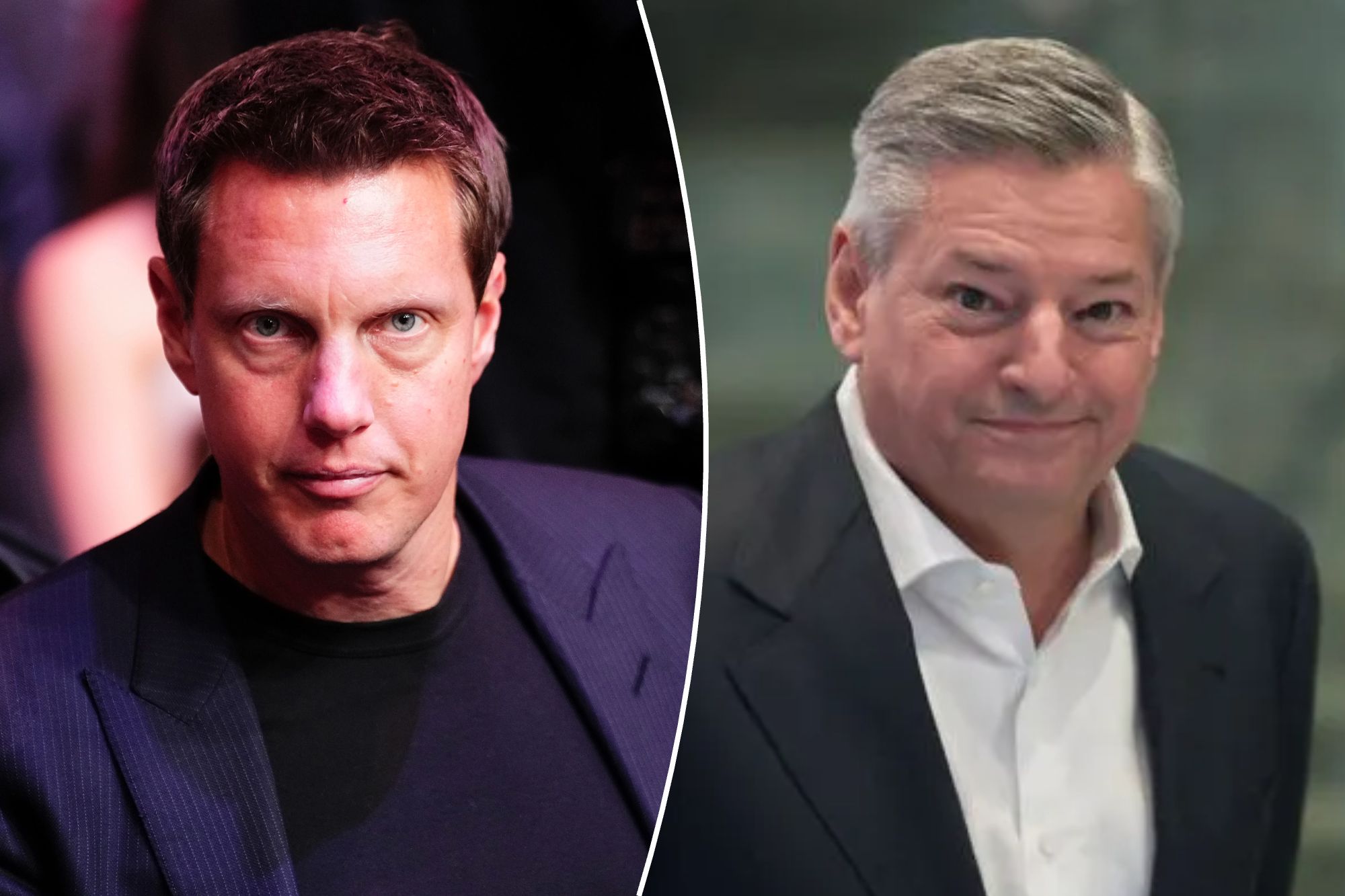
Paramount CEO David Ellison attends the UFC 324 event at T-Mobile Arena on January 24, 2026 in Las Vegas, Nevada. Zuffa LLC The last time Paramount tried to acquire Warner Bros., Hollywood was admittedly a much more colorful place. The year was 1929, talkies had just been introduced, the industry was facing calls for censorship from religious groups, and was dealing with the aftermath of the scandal surrounding comedian Fatty Arbuckle.
Back then, the man pushing the merger was Paramount co-founder Adolph Zukor who spent years trying to convince Harry Warner that a merger between the two fledgling studios was in both their interests. The deal was ultimately thwarted by the arrival of the Great Depression and a dispute over how to divvy up the stock of the proposed new company. It all ended in acrimony as Paramount and Warner Bros. refused to do business together until a truce was reached several years later.
It’s hard to see any parallels between Zukor — a Hungarian immigrant and self made mogul who helped build Paramount from scratch — and David Ellison, whose claim to fame is being the son of the second richest man in the world. But there is a connective tissue between Zukor’s ill-fated attempt to merge with Warner Bros., the modern-day battle between Paramount and Netflix and, for that matter, almost every major merger or acquisition in Hollywood history: the role that ego plays in all of it.
Take Disney’s acquisition of Fox in 2019. Bob Iger bested Brian Roberts in that deal, and he was driven reportedly in part by the lingering resentment of Roberts’ attempt at a hostile takeover of Disney in 2004, when Iger was president.
Or take the ill-fated AOL-Time Warner merger in 2000, considered the Mt. Rushmore of bad media deals, which started to fall apart due to the deteriorating relationship between Gerry Levin and Stephen Case. Even AT&T’s own disastrous run after buying Time Warner was doomed the second John Stankey, then WarnerMedia CEO, told HBO’s Richard Plepler how to do his job.
To be sure, there’s no shortage of ego driving the current fight for Warner Bros. Start with Larry Ellison, the billionaire founder of Oracle whose extravagant lifestyle includes owning islands, racing yachts and flying jets. (Have you heard the old Silicon Valley joke about the difference between God and Larry Ellison? God Doesn’t think he’s Larry Ellison. Ha!)
On the other side of the transaction is Ted Sarandos, arguably Hollywood’s most famous interloper who was once dismissed as the “video rental guy,” but ended up eating everyone’s lunch. And in the middle, there’s David Zaslav, a self-described cable guy whose first move after acquiring Warner Bros. was to buy Woodland, Robert Evans’ iconic Beverly Hills estate, and pull Jack Warner’s old desk out of storage so he could use it in his new office. Subtle.
Anyone who has paid close attention to the deal knows that bad blood between titans is playing a major part. After Zaslav spurned Paramount’s advances last year, the younger Ellison has acted like a jilted lover, making multiple hostile takeover attempts, threatening to oust board members and even pulling the “do you know who my dad is?” card. Meanwhile, Sarandos has gone on every podcast and TV network willing to give him airtime to bash Paramount for lying about their offer and misleading Warner Bros. investors, who will vote on the deal next month.
Hollywood loves drama, but this current battle feels different because the stakes are nothing short of the future of Hollywood. If Netflix wins, the fear is they would drive the final stake through the heart of the theatrical experience. If Paramount is victorious, it would result in two of Hollywood’s biggest legacy studios being put under the control of one family that’s made no secret of their political allegiances.
“David Ellison wants Paramount and Warners because he wants to be a big media company,” Naveen Sarma, managing director of S&P Global Ratings (and a veteran media deal watcher), tells Page Six Hollywood. “Adding in Warner’s absolutely does that. And so his rationale for going after this asset is much more transparent. He just wants to be a player.”
And Netflix? “My gut is that it has to do with HBO,” says Alan Wolk, co-founder of TV[R]EV, a research and consulting firm that helps TV networks navigate the streaming world. “I think that at some level, Netflix is thinking, you know, we need shows like [HBO has]. We can’t just be a source of disposable crap.” (The irony is not lost here, given that Netflix famously outbid HBO for “House of Cards,” the show that would supercharge the streamer’s Hollywood ambitions.)
On Wednesday, almost a dozen Republican state attorneys general signed a letter insisting that the federal government scrutinize Netflix‘s bid for the iconic studio. It was the latest sign that events might be tipping back in favor of Paramount, because Ellison’s ace-in-the-hole in all of this is the man sitting in the oval office who knows a thing or two about ego.