Make New York Post a Preferred Source The late Howard Rubenstein was the best public relations executive I have ever known. His foundational advice to his corporate and political clients facing a crisis was captured on a small plaque in his office.
It read: “If you always tell the truth, you don’t have to remember what you said.”
The first time I saw it, I laughed out loud and, with a smile, he nodded and said, yes, that’s what I’ve learned and what I believe.
Howard and his wisdom came to mind in recent days as I watched federal officials try to reassure the nation after the grounding of aircraft stranded tens of thousands of Americans at airports and disrupted the travel plans of millions.
The problem for officials, especially on Friday when late afternoon delays started without warning and quickly cascaded, was that they didn’t know what was happening and why.
Still, they had to appear in public to at least try to calm the contagious outrage and anxiety. The only good news is that they didn’t hit the panic button and try to convey a sense of certainty they didn’t have.
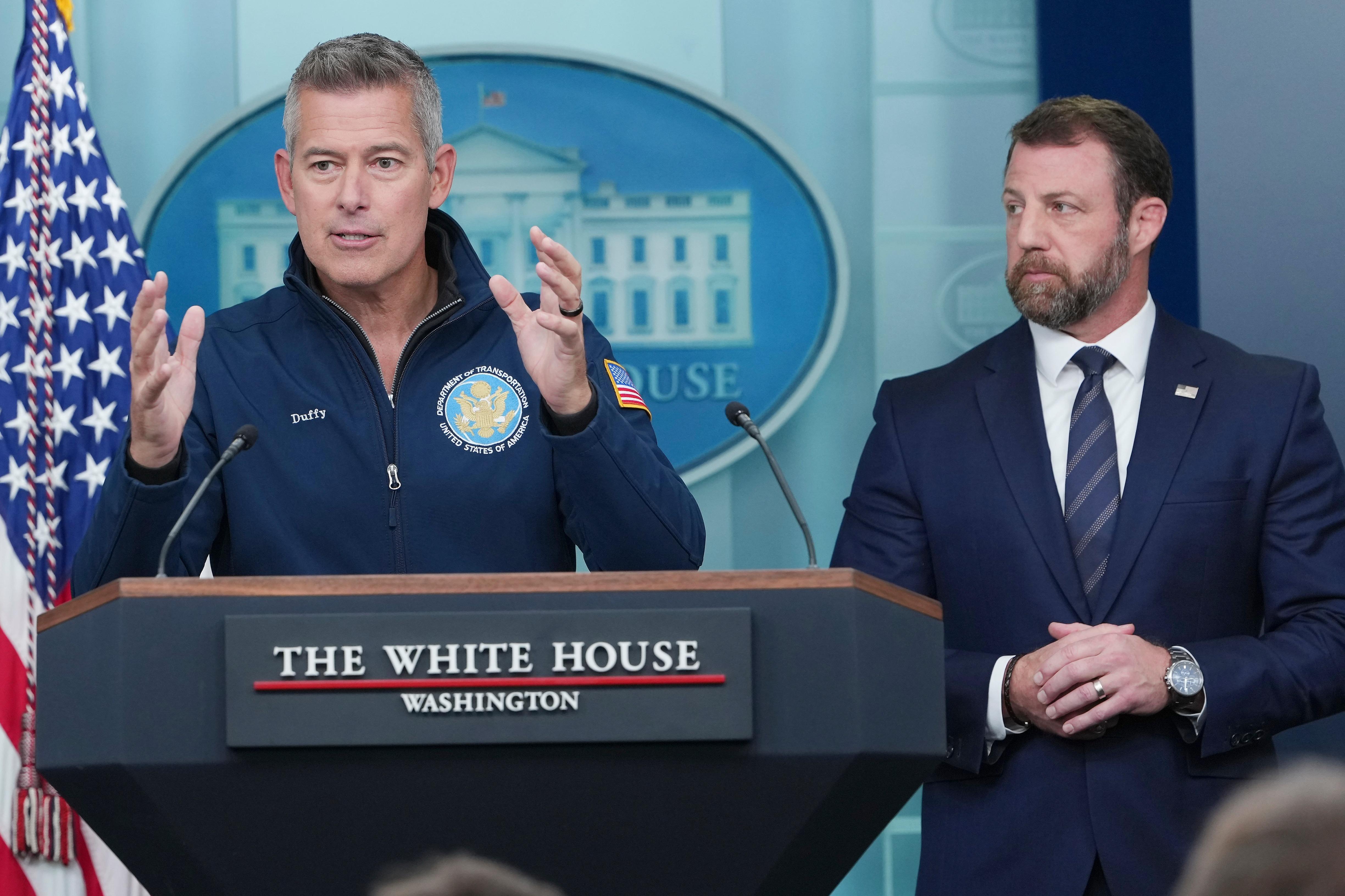
Instead, Transportation Secretary Sean Duffy and Homeland Security director Markwayne Mullin confessed they couldn’t say with full confidence what was happening nor could they predict when the crisis would end.
The truth was far from comforting, but they nonetheless did the right thing by admitting the limits of what they knew. Had they exaggerated their knowledge to project a certainty they didn’t have, they would have made a bad situation worse and jeopardized their jobs and reputations.
Duffy, who appeared a bit rattled Friday night, said the disaster likely was caused by the failure of “old hardware that went down” and affected air traffic controllers at regional hubs across the country.
Mullin appeared calmer, but he also was restrained, especially in response to a media question about whether there had been a cyber attack.
If he could have flatly denied it, he surely would have. Instead, Mullin chose his words carefully by saying only that there was “zero evidence” of such an attack.
Although their answers were frustrating given the scope of the problem, both men chose the right course by refusing to project false confidence. In fact, their uncertainty demonstrated why the lure of pretending to have complete conviction in a crisis often proves irresistible to public officials.
Especially for the millions of Americans trapped in airport hell without explanations or promises about when they could get to their destinations, the truth could not have been very comforting.
Ditto for the millions of others who had travel plans for the rest of the weekend and were left unsure about what to do next.
But the truth was important because the government did not know what had happened to the computerized network and officials were wise to say so.
The situation remained dicey Saturday, with as many as 4,000 more flights delayed or canceled. In some cases, the aircraft were not in the right locations or flight crews had “timed out” during the delays.
The best news federal officials had on the second day was that they hoped that normal operations would be in place later Sunday.
This time, Duffy appeared more calm and confident as he advanced possible causes, saying investigators were looking into whether a contractor’s error or faulty equipment had set off the cascade of disaster.
“What we’re working to determine was whether we had incompetence — meaning, was it user error or installation error,” he said. Duffy added that the work of switching from old copper wires to fiber optic cable had caused a router to overload the system.
He confessed it remained unknown if the flaw was with the equipment itself or with a contractor doing the work, L3Harris.
Again, that wasn’t the most hopeful statement, but he still was being extra careful not to go beyond what he could say with full confidence.
FAA Administrator Bryan Bedford also stuck to a narrow script by echoing Mullin’s Friday cautionary statement about a cyber attack.
Bedford said investigators still “don’t believe” any attack or foreign interference caused the incident.
And he said there was “zero evidence” that anything AI-related caused the meltdown, although he didn’t completely rule out the possibility.
The most troubling consistency of both the press conferences on Friday and Saturday was the officials’ eagerness to blame Congress for not budgeting enough money to speed the modernization of the FAA’s communication network.
Duffy said the work should have been done years earlier, and renewed his appeal for Congress to appropriate a staggering $50 billion in new funding for emergency overhauls.
Coming in the midst of the mysterious shutdown, the not-enough-money argument struck me as being predictable and off key. Washington is now $40 trillion in debt, or about $121,000 for each US resident. How much is enough?
Especially when it comes from Duffy, the demand for another mountain of money is disappointing.
He was elected to Congress in the 2010 Tea Party anti-tax wave, and was a reliable fiscal hawk until he resigned in 2019.
Moreover, if you were stuck at an airport or were unsure about planning to fly in coming days and weeks, watching the person in charge demanding billions more of taxpayer dollars was hardly comforting or convincing.
Even if Congress wrote the check tomorrow, the work would take years. So the cavalry is not coming soon.
Such pleas always sound like everything would be fine if only America spent more.
But FAA funding has not been a front and center issue in Congress or the media.
We just had a hard-fought national election that saw Democrats seize control of both the House and Senate, and I don’t recall a single accusation by a challenger that incumbents had not spent nearly enough money to upgrade airports or that Duffy was unfit.
Still, the facts didn’t stop Gov. Hochul from weighing in from the peanut gallery with her two cents.
In a statement released by her office mid-morning Saturday, she accused Duffy of not paying attention to his job and said “serious lapses in our aviation system have become a pattern on Sean Duffy’s watch.”
Without citing a previous example of such a “pattern,” she called on him to resign or for President Trump to fire him.
It was not until six hours later that she said in a separate statement that Port Authority workers were handing out blankets, pillows, cots and baby formula in three airports — JFK, LaGuardia and Stewart, in Orange County.
Par for her course, it was blame-game politics first and practical help a distant second.