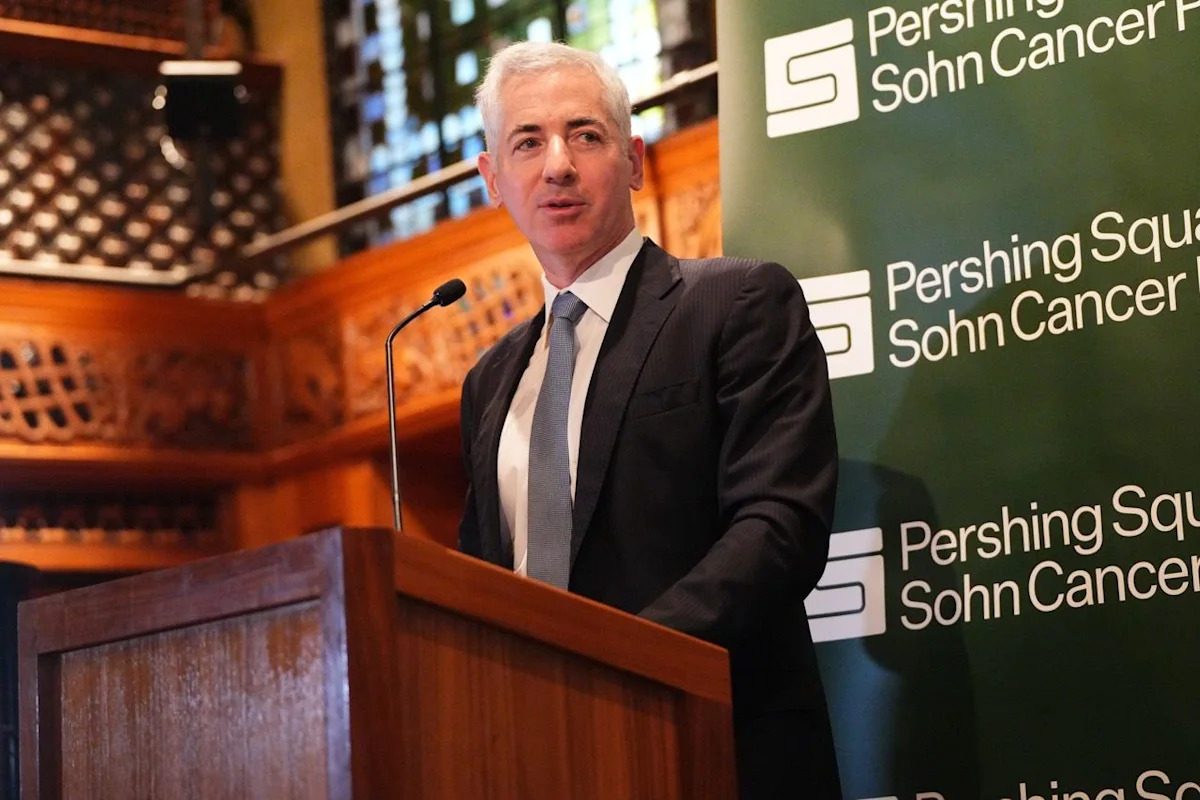
Billionaire investor Bill Ackman and the various funds he manages have been betting on Fannie Mae (OTC:FNMA) and Freddie Mac for over a decade, yet their commitment hasn't wavered.
Fannie and Freddie are two high-risk, high-reward stocks. The two giants play a big role in the mortgage market, buying mortgages from banks and other lenders, packaging them into mortgage-backed securities (MBS), and selling them to investors. This enables banks and other lenders to get mortgages off their balance sheets, so they can continue to meet demand.
Missed Nvidia in 2009? This Rare Signal Is Flashing Again. In 2009, a "Double Down" signal flashed for a little-known chipmaker called Nvidia. For the first time in years, that same "Total Conviction" signal is flashing for a company 1/100th the size of Nvidia. Continue »
Both Fannie and Freddie were placed in conservatorship by the U.S. Treasury Department following the Great Recession because they had excessive exposure to subprime mortgages.
Since Trump's first administration, momentum has been building for a release from government control, which Ackman recently said could unlock $500 billion in value.
With each stock having jumped at least 23% over the past month, is now the time to bet on this payoff?
Fannie and Freddie weren't supposed to be in conservatorship this long, but once they were, it became difficult to get out for a few reasons.
After entering conservatorship, Fannie and Freddie would ultimately receive a total injection worth over $191 billion from the Treasury Department in exchange for senior preferred stock and warrants that represented nearly 80% of the common stock. The preferred stock initially paid a 10% annual dividend.
However, when the agreement was first made, Fannie and Freddie couldn't make enough money to pay the dividend, so in 2012, the Treasury and Federal Housing Finance Agency (FHFA), Fannie and Freddie's regulator, amended the agreement so both companies would essentially pass nearly all of their profits to the Treasury each year.
But that agreement lasted longer than shareholders may have anticipated, and Fannie and Freddie ended up paying the Treasury close to $280 billion in profits. In 2019, during Trump's first administration, the Treasury and FHFA amended the agreement again, this time ending the net sweep agreement. Fannie and Freddie were allowed to retain profits and start building capital to potentially exit conservatorship one day.
Since that time, Fannie and Freddie, which completely dominate the secondary mortgage market and are very profitable, have built over $200 billion in combined equity, and Ackman and his team estimate combined capital will top $375 billion over the next five years.
It's unclear exactly where Ackman got the $500 billion figure he mentioned in a recent investor Q&A. Still, The Wall Street Journal reported in 2025 that both companies could be worth a combined $500 billion if released from conservatorship, citing anonymous Trump officials.
An initial public offering could expedite the capital-building process and get Fannie and Freddie to the FHFA's desired regulatory capital ratios. But several aspects of the transition would be difficult, namely that the Treasury Department's senior preferred stock and warrants would result in significant dilution.
Ackman has argued that the Treasury Department should consider the senior preferred stock repaid under the prior net sweep agreement and exercise the warrants before relisting both stocks, so that investors understand the ownership structure. The Treasury would still reap significant proceeds from IPOs that could be put toward achieving more affordable housing goals.
Another issue, however, is what would happen to MBS yields if Fannie and Freddie are no longer backed by the government. The MBS could be considered riskier, thereby increasing yields, which would, in turn, increase mortgage rates for the average homebuyer.
Investing in Fannie and Freddie is risky, but the bulls, like Ackman, will have no better chance than they did during Trump's last two years in office. While there's still no clarity on how the Treasury will proceed with its senior preferred stock and warrants, Treasury Secretary Scott Bessent is supportive of releasing Fannie and Freddie from conservatorship.
Obviously, if the release led to higher mortgage rates, that would be a nonstarter, given that many Americans can't afford homes, so there will have to be some kind of guarantee, formalized or not.
As with the country's largest banks, which are considered too big to fail, whether Fannie or Freddie is in conservatorship or not, it is extraordinarily unlikely they would be allowed to fail, given their importance in providing liquidity to the mortgage market.
Ultimately, I still don't think investors should acquire too large a position. Ackman believes Trump can release Fannie and Freddie from conservatorship and do a relisting all through executive orders. But it's hard to believe the now Democratic-controlled Congress couldn't at least challenge these moves and potentially slow them down.
I still think both Fannie and Freddie will one day be released from conservatorship, but whether it happens in the next two years or the next 20 years, I have no idea. I currently own a very small position in the Freddie Mac common shares.
The common shares have the most upside if Fannie and Freddie are released, and Ackman has assigned 10-fold upside from current levels. But investors can also purchase the junior preferred shares, which hold higher priority in the capital stack and face less dilution risk. However, these currently trade at about 30% of par, so there is also much less upside than the common shares.
Before you buy stock in Federal National Mortgage Association, consider this:
The Motley Fool Stock Advisor analyst team just identified what they believe are the 10 best stocks for investors to buy now… and Federal National Mortgage Association wasn't one of them. The 10 stocks that made the cut could produce monster returns in the coming years.
Consider when Netflix made this list on December 17, 2004... if you invested $1,000 at the time of our recommendation, you'd have $335,171!* Or when Nvidia made this list on April 15, 2005... if you invested $1,000 at the time of our recommendation, you'd have $1,000,640!*
Now, it's worth noting Stock Advisor's total average return is 823% — a market-crushing outperformance compared to 208% for the S&P 500. Don't miss the latest top 10 list, available with Stock Advisor, and join an investing community built by individual investors for individual investors.
*Stock Advisor returns as of November 14, 2026.
Bram Berkowitz has positions in Federal Home Loan Mortgage. The Motley Fool has no position in any of the stocks mentioned. The Motley Fool has a disclosure policy.
Bill Ackman Says Freeing Fannie Mae and Freddie Mac From Government Control Could Unlock $500 Billion in Value, Just as Both Stocks Have Jumped Over 23% in the Past Month. Is Now the Time to Bet on That Payoff? was originally published by The Motley Fool