Soros’ Fund Made Intel Its Biggest Stock Bet Right Before It Halved Omor Ibne Ehsan Sat, November 14, 2026 at 12:34 PM EST 5 min read INTC -4.17% NVDA -3.12% XLE +0.96% XOP +0.92% Explore stocks on Coinbase Trading disclosure Trading disclosure The above button links to Coinbase. Yahoo Finance is not a broker-dealer or investment adviser and does not offer securities or cryptocurrencies for sale or facilitate trading. Coinbase pays us for certain activity generated through this link. Prices displayed are informational.
Soros Fund Management bought Intel (INTC) up 28-fold to $340 million, its largest stock holding, before the shares dropped 50% from September 30.
Only put options on XLE and XOP outranked Intel in the fund's portfolio, while it cut NVIDIA (NVDA) shares 19%.
Weak fourth-quarter guidance and no expected free cash flow triggered Intel's 29% October 30 plunge, its worst day in over 50 years.
Building a portfolio and living off one are two completely different skills, and almost nobody teaches the second. This problem is what The Definitive Guide to Retirement Income helps, and it is free today. Read more here. (Sponsor)
Soros Fund Management filed its third-quarter 13F at 4:05 p.m. ET on Friday, November 13, 2026. The filing names Intel (NASDAQ:INTC) as the fund's largest common-stock holding on September 30. A 13F is the quarterly list of U.S. stock holdings that large managers must file.
The fund owned 2,830,000 Intel shares, up from 100,000 at June 30, which made the stake roughly 28 times larger. It reported the position at $340,250,900, or 4.0% of a $8.51 billion portfolio spread across 263 positions.
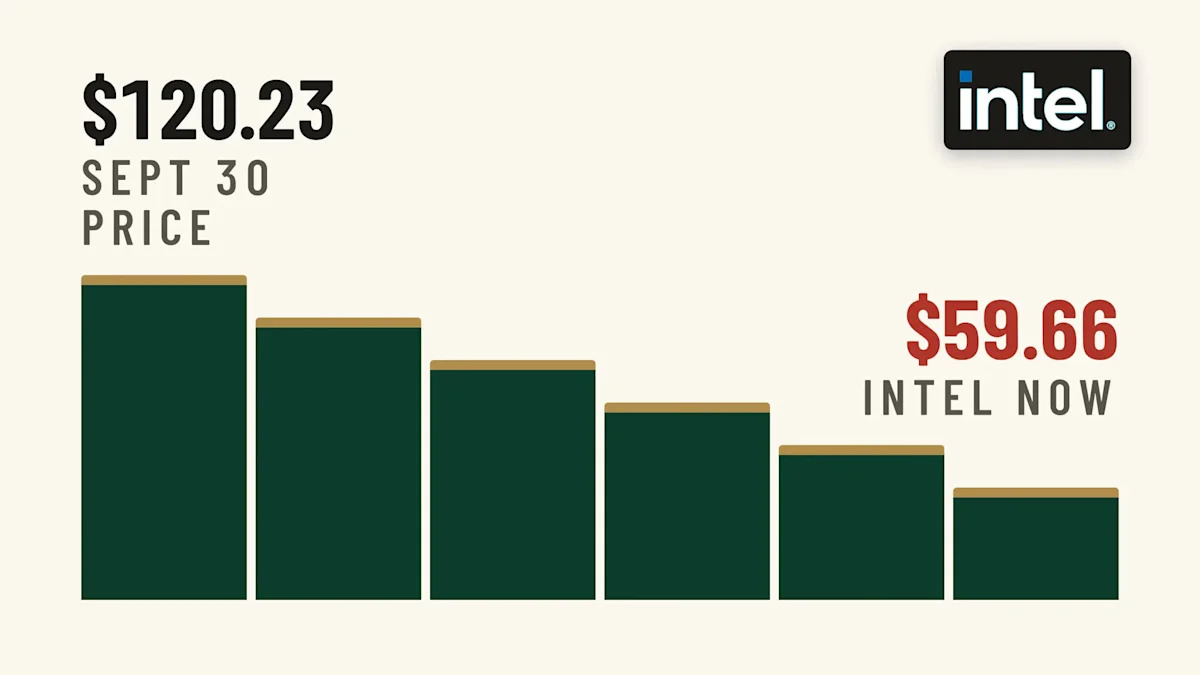
Intel then fell by half. It closed at $59.66 on November 13, down 2.52% on the day and 50.4% below its September 30 close of $120.23. NVIDIA (NASDAQ:NVDA), which the fund cut, fell 2.01% in the same session.
The fund is run by CEO and chief investment officer Dawn Fitzpatrick. Its Intel value matches the September 30 closing price, so it shows the stake at quarter-end prices, which can differ from what the fund paid.
Only two lines were larger, and both were put options, which are contracts that gain value when prices fall. One was $670.2 million of puts on the Energy Select Sector SPDR ETF (NYSEARCA:XLE), and the other was $327.5 million of puts on the SPDR S&P Oil & Gas Exploration & Production ETF (NYSEARCA:XOP).
Many successful investors eventually reach the same moment. The saving is done, the portfolio is built, and the question quietly changes from how much can I grow this to how much can I take out? Get that second question wrong and decades of good investing can come apart in a handful of years.
That is exactly what The Definitive Guide to Retirement Income helps answer. It covers what your retirement could actually cost, which income sources are worth using, and the withdrawal math that decides whether the money lasts. It is free today from Fisher Investments. Read More Here ›
The fund also cut its NVIDIA stake by 19% to 858,822 shares, worth $196.1 million. It also held puts covering 350,000 NVIDIA shares, a figure that counts shares the contracts control rather than cash the fund put in. The filing does not show when the Intel shares were bought, what the fund paid, or whether it still holds them.
If the fund still holds every share, the stake is worth about $168.8 million, down about $171 million. That loss hurts the fund, but it is small next to Intel's $317.09 billion market value.
Other large holders were also in the stock at these prices. Primecap Management reported 77,261,208 Intel shares worth $9.29 billion as its largest holding.
NVIDIA's main link to the story is its $5.0 billion equity stake in Intel. That stake is small for a company worth $3.932 trillion.
The fund was most likely buying into AI-driven server demand and hopes for Intel's foundry business. The third quarter delivered on that idea: revenue rose 21% to $16.5 billion, and adjusted EPS of $0.52 beat estimates.
The guidance caused the selloff. Intel forecast fourth-quarter revenue of $15 billion to $16 billion, while analysts had expected about $17.07 billion. Its adjusted EPS forecast of $0.25 missed the $0.43 analysts expected.
The CFO also said Intel probably will not produce positive free cash flow next year, because it is paying for three manufacturing processes at once. On October 30, the stock fell 28.6% to $65.76, its worst day in more than 50 years.
Every Intel close in the third quarter fell between $81.88 and $127.39, and the stock now trades below that range.
Server demand is real, but Intel faces a year of heavy spending with no free cash flow. Management also expects PC units to fall roughly 10% in 2027, and the foundry lost $1.9 billion last quarter.
Intel's chief executive bought shares after the record drop, which is a real show of confidence. Copying a 13F is risky, though, because you only learn about September positions in November.
NVIDIA sits on stronger financial footing. It trades at about 33 times trailing earnings with a 55.60% net margin, so it already makes the cash Intel is still hoping to generate.
NVIDIA is scheduled to report on Tuesday, November 17, and an Intel close back above $65.76 would suggest the selloff went too far.
(Sponsor) Most people spend their entire working lives focusing on one thing: growing a pile of money. Then they retire and discover the skill they actually need is close to the opposite. Turning that pile into steady income, year after year, through good markets and bad, without ever running out.
It may be the least discussed and most consequential transition in personal finance, and plenty of otherwise careful investors walk into it with no real plan. That is exactly what The Definitive Guide to Retirement Income helps answer. It is a free guide from Fisher Investments covering what your retirement will really cost, where the cash flow should come from, and how much you can safely withdraw each year. Learn more here. Learn More Here ›
Contact editorial@247wallst.com for any questions or corrections.