Nvidia lost $1.6 trillion after Jensen Huang's exit, but Apple's and Uber's CEO transitions offer a blueprint Sam Bourgi Sat, November 14, 2026 at 10:45 AM EST 5 min read NVDA -3.12% AAPL +0.14% UBER +0.10% Explore stocks on Coinbase Trading disclosure Trading disclosure The above button links to Coinbase. Yahoo Finance is not a broker-dealer or investment adviser and does not offer securities or cryptocurrencies for sale or facilitate trading. Coinbase pays us for certain activity generated through this link. Prices displayed are informational.
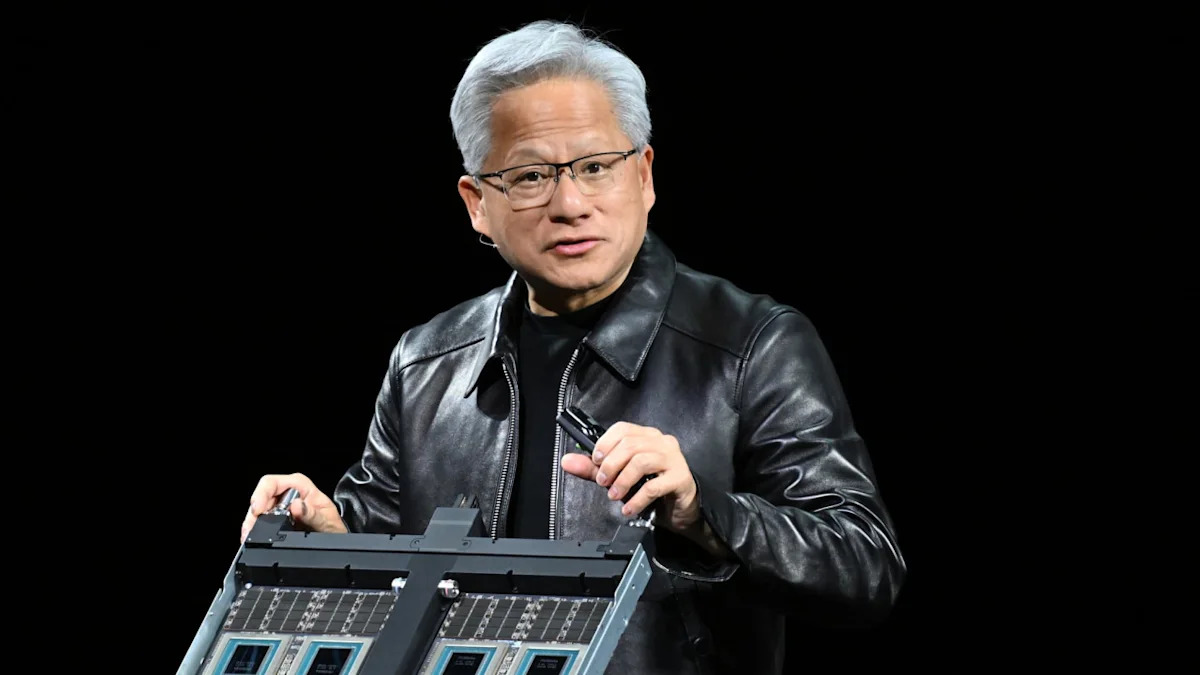
Jensen Huang's abrupt departure from Nvidia (NASDAQ: NVDA) after 33 years at the helm has sent the chipmaker's shares tumbling. But the bigger question for investors is whether Nvidia can maintain its dominance in artificial intelligence without the man who helped build it.
Huang resigned on Nov. 12 amid an investigation into his relationship with Alice Huang, a businesswoman who U.S. intelligence agencies suspect of passing information to China. Nvidia has said it has no reason to believe company secrets or national security were compromised, although its investigation remains ongoing.
Jeff Bezos backs a platform that lets anyone invest in rental homes for as little as $100 — 5 ways to build wealth like a landlord without actually being one
Dave Ramsey warns nearly 50% of Americans are making 1 big Social Security mistake. Here's what it is and 3 simple steps to fix it ASAP
A single line on your car insurance policy could be inflating your premium by up to 30% — here's what to change
Nvidia shares have lost more than 30% from their October peak, wiping out roughly $1.6 trillion in market value.
Investors have faced this question before. In 2011, Steve Jobs stepped down as Apple (NASDAQ: AAPL) CEO, leaving Tim Cook to lead a company synonymous with its founder. Six years later, Uber (NYSE: UBER) investors forced out Travis Kalanick, paving the way for Dara Khosrowshahi to take over.
Both companies became considerably more valuable under their successors, but they took very different paths to get there.
Steve Jobs resigned as Apple CEO in August 2011, shortly after the company briefly overtook Exxon Mobil as the world's most valuable publicly traded company.
His departure raised questions about whether Apple could continue producing hit consumer products without the executive most closely associated with its success. As the Wharton School noted at the time, Cook faced the difficult task of succeeding a leader so closely identified with Apple.
He needed to "find a leadership style that fits him while keeping Apple's business strategy on a steady path," Wharton said.
Even JPMorgan analysts were uncertain, assigning the stock a "hold" rating amid concerns about the leadership transition.
But Cook thrived as CEO. He oversaw the introduction of Apple Watch and AirPods, even as the company continued to depend heavily on the iPhone. When he took over in 2011, Apple's market capitalization was roughly $350 billion. By 2026, it had surpassed $5 trillion. Apple's annual revenue increased from $108 billion in fiscal 2011 to $479 billion in fiscal 2026.
Cook also expanded Apple's manufacturing footprint beyond China, including increased iPhone production in India. Meanwhile, Apple's services business, which includes iCloud, Apple Music and the App Store, generated a record $123.3 billion in revenue in fiscal 2026.
Read More: Vanguard reveals what's coming for U.S. stocks — and it could be bad news for this group of investors
Uber faced its own leadership crisis in 2017, when co-founder Travis Kalanick was forced out following a series of workplace scandals and regulatory controversies.
Kalanick had helped turn Uber into one of the world's most valuable startups, capitalizing on the rapid growth of the so-called "gig economy" in the 2010s. Although Uber wasn't publicly traded, private investors valued the company at roughly $70 billion.
As The Atlantic noted at the time, Uber faced a difficult challenge: reforming its corporate culture without losing the aggressive approach that had helped it grow so quickly.
Dara Khosrowshahi, who had spent 12 years as CEO of Expedia, took over Uber in 2017. He inherited a company facing lawsuits and mounting reputational damage, while also trying to maintain growth ahead of its planned IPO.
On Khosrowshahi's watch, Uber went public in 2019 and grew its annual revenue from $7.9 billion in 2017 to $52 billion in 2025. The company also reported $5.6 billion in operating profit in 2025, following years of losses under both Kalanick and Khosrowshahi. Today, the company has a market capitalization of $142 billion.
Nvidia's interim CEO, Colette Kress, has big shoes to fill. But she's no stranger to the company, having served as its chief financial officer since 2013.
Kress also brings nearly 25 years of previous finance experience at technology companies, including Microsoft and Cisco. Still, her expertise is in corporate finance, while Huang spent three decades overseeing Nvidia's technology development and building relationships with its biggest customers.
Not everyone is convinced Nvidia made the right decision. The Kobeissi Letter, a financial publication run by Adam Kobeissi with 2.7 million followers on X, said Nvidia and Huang "made a massive mistake" with his resignation. It argued that the "board should have taken the time to conduct a thorough investigation, consult with shareholders and carefully evaluate the long-term implications of this decision."
But Nvidia isn't starting from scratch. It remains the dominant supplier of chips used to train and run AI models, with an estimated 80% to 90% share of the AI accelerator market.
Apple and Uber both prospered after losing the executives who helped build them. Nvidia could follow the same path, although replacing Huang's technical expertise and industry relationships may prove harder than replacing his title.
Millionaires under 45 keep two-thirds of their wealth out of stocks. Here's where their money is actually going
The tax breaks in Trump's 'big beautiful bill' expire after 2028. Here are 4 moves to make before the window closes
Here are the 7 top habits of 'quietly wealthy' Americans. How many do you follow?
Your cash is rotting in a regular savings account. Here are 4 simple ways to grow your money (and no, you don't have to touch the stock market)
Join 250,000+ readers and get Moneywise's best stories and exclusive interviews first — clear insights curated and delivered weekly. Subscribe now.
This article originally appeared on Moneywise.com under the title: Nvidia lost $1.6 trillion after Jensen Huang's exit, but Apple's and Uber's CEO transitions offer a blueprint
This article provides information only and should not be construed as advice. It is provided without warranty of any kind.