Why the biggest risk for investors in 2027 isn't Nvidia — it's inflation Brian Sozzi · Executive Editor Sat, November 14, 2026 at 11:02 AM EST Nvidia (NVDA) not being led by its leather-jacket-wearing founder Jensen Huang isn't going to plunge the US economy into turmoil in 2027. While Huang has been an important force in America's AI boom, the company he built will continue to lead the AI infrastructure build-out.
If you are looking for an economic shock factor next year, it's inflation that won't die and a Federal Reserve subsequently forced to pull out a series of interest rate hikes.
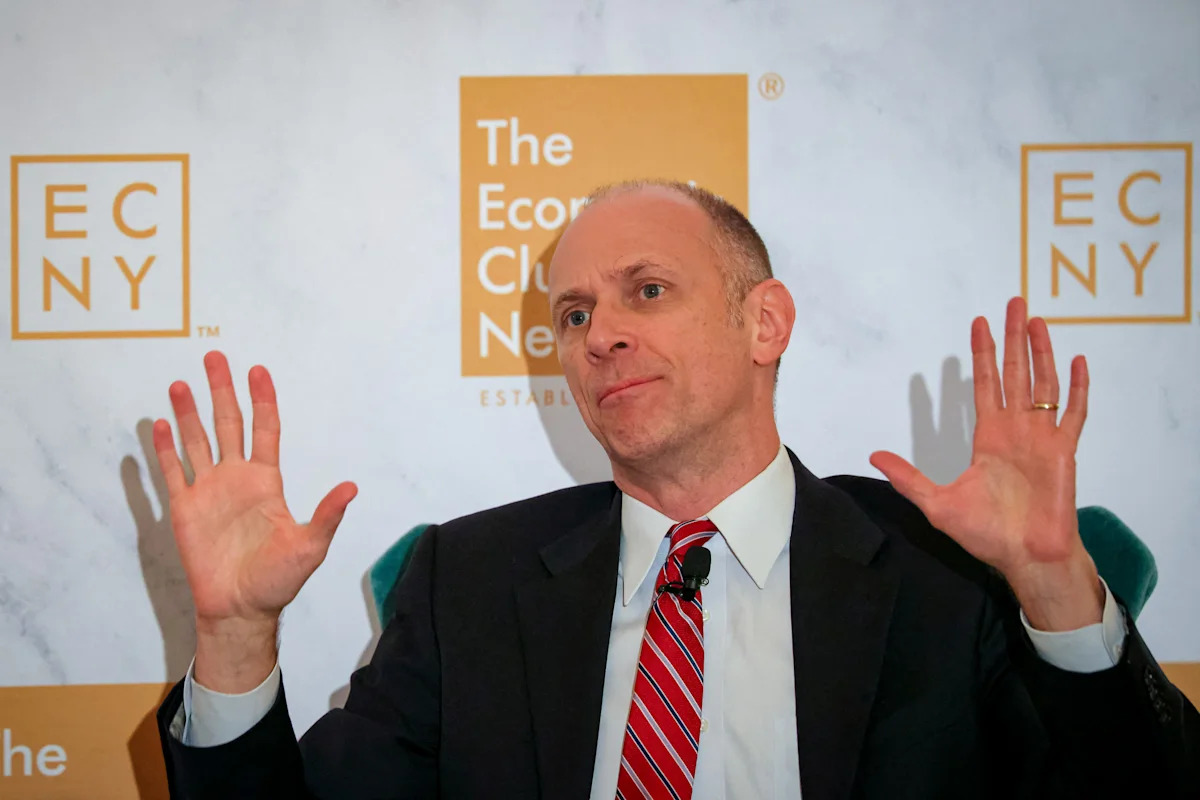
"If you break out the categories of where the inflation is, it's kind of in the wrong, more disturbingly persistent categories like services, healthcare, a series of things that really can't be coming from tariffs or oil prices," Chicago Federal Reserve president Austan Goolsbee said at Invest this week. "I think it's worth being sober-minded at a moment like this that we're inching our way into a territory that's historically a tough spot for any central bank to try to get rid of that inflation. We'd do well to try to prevent it from getting worse."
Read more: What is inflation, and how does it affect you?
Goolsbee stopped short of saying the US economy is nearing a wage-price spiral, which is usually caused by consumers expecting ever-higher inflation.
But it's hard to argue the Fed is dealing with an inflation problem after several Fed members came out this week floating a 50 basis point rate hike at the December meeting.
The inflation picture has deteriorated in recent months, with the latest October Consumer Price Index (CPI) showing prices rising 0.4% month over month, following a 0.6% increase in September. Core CPI, which excludes food and energy, rose another 0.3%, marking the third consecutive month of that pace and suggesting underlying price pressures remain stubborn.
The Federal Reserve's preferred measure of inflation, the Personal Consumption Expenditures (PCE) price index, was up 3.6% year over year in September. The core PCE clocked in at 3.1% — both well above the Fed's 2% target.
Inflation doesn't appear to be cooling fast enough, raising the possibility that interest rates may need to stay higher for longer or even move higher again.
The Federal Reserve's decision to lift interest rates in September came after sticky inflation readings, in part fueled by the AI boom and rising energy costs, forced central bankers back into tightening mode. The rate hike marked the central bank's first increase since July 2023.
At its late-October meeting, the Fed held steady, which may be a mistake in hindsight.
"We continue to expect a second 25bp rate hike in December and are adding a third 25bp hike to our forecast in March 2027. A third hike could come earlier in January, but we think March is a bit more likely because we expect the November and December inflation reports to be softer but then expect larger start-of-the-year price increases amidst ongoing cost pressures to boost inflation in January," Goldman Sachs economist David Mericle said this week.
He expects rate cuts to begin one quarter later, in December 2027, versus September 2027 previously.
Goolsbee said, "We're failing on the inflation side of the dual mandate. We're not failing on the employment side. We're not facing a trade-off of a stagflationary nature. We are failing on the inflation side. And we've got to get inflation back down to 2%."
Follow Brian Sozzi on X @BrianSozzi, Instagram, and LinkedIn. Tips on stories? Email him at brian.sozzi@yahoofinance.com.