America ‘will have a heart attack’: Ray Dalio issues fresh warning on US economy — with savers at highest risk Jing Pan Sat, November 14, 2026 at 8:30 AM EST 10 min read GC=F Money Rehab/ YouTube Moneywise and Yahoo Finance LLC may earn commission or revenue through links in the content below.
Ray Dalio sounded like a doctor delivering bad news. The damage had been building for years, and by the time he described what could happen next, he was using two words nobody wants to hear.
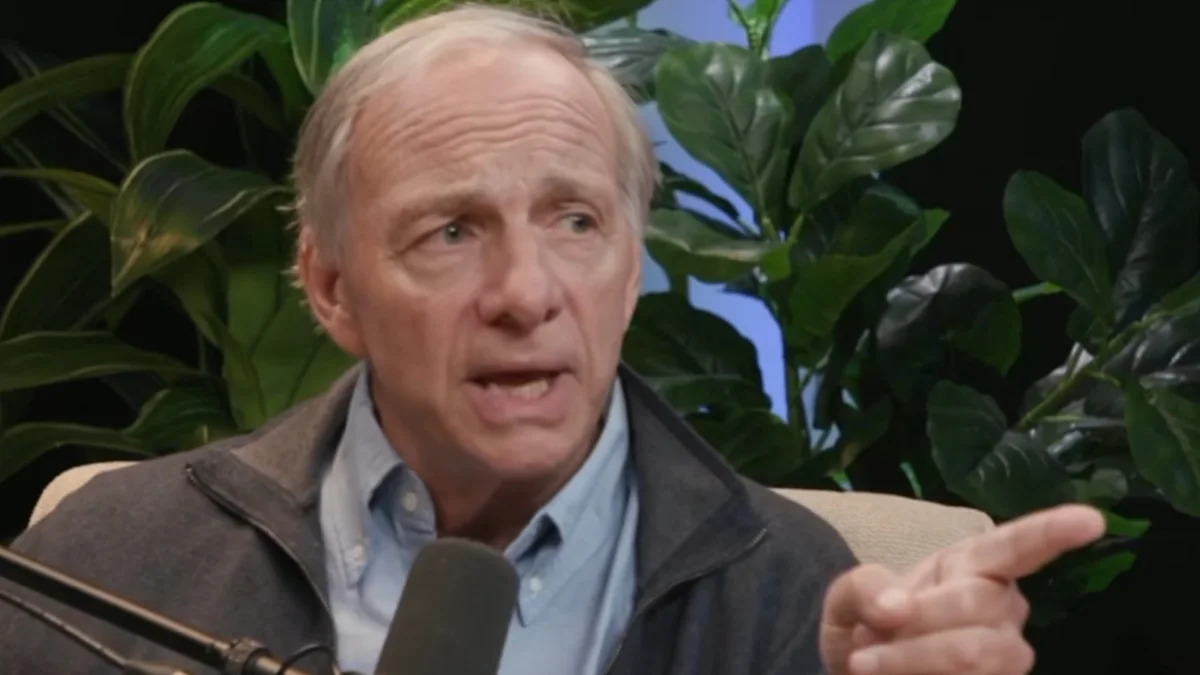
"We are very exposed to a heart attack," he said (1) in a recent interview with "Money Rehab."
Jeff Bezos backs a platform that lets anyone invest in rental homes for as little as $100 — 5 ways to build wealth like a landlord without actually being one
A single line on your car insurance policy could be inflating your premium by up to 30% — here's what to change
Gold has overtaken U.S. Treasuries as central banks' top reserve asset. Get Goldco's 2026 Precious Metals IRA Playbook for free
But the patient he had in mind wasn't just one person. It was the entirety of America.
The billionaire founder of Bridgewater Associates compared the financial system to the body's circulatory system. And he had a grim way of describing what happens when you let the debt pile up.
"It's like plaque," he said. Over time, the payments squeeze out money that could have gone toward everything else.
"I would say you've accumulated a lot of plaque and you are at risk," Dalio said.
Then he put a number on what it would take to avert a crisis.
"If we don't cut the budget deficit down to 3% of GDP — it's now probably going to be about six and a half percent of GDP — if we don't cut it there, we will have a heart attack," he said.
The government is running a shortfall more than twice Dalio's target. The federal deficit hit $2 trillion in the fiscal year that ended Sept. 30, up $217 billion from the year before. That was 6.2% of GDP, according to the Congressional Budget Office (2). By the end of that fiscal year, the total federal debt had reached $40.2 trillion. By Nov. 13, it had crept up to $40.5 trillion (3).
As Dalio pointed out, Washington is already spending more on interest than the Pentagon spends on its military activities. The CBO put net interest on the public debt at $1.14 trillion for the year, compared with $917 billion in military spending by the Department of Defense.
Those may sound like numbers for Washington to worry about. But Dalio warns that how the government deals with its debt could determine how much your savings can buy.
"Either interest rates have to go up and constrict the demand … or the Federal Reserve has to come in and print money and buy all this debt, which is inflationary. In either case, it has the effect of reducing buying power," he said.
Americans are already feeling the squeeze at the checkout and at home. The food index in the U.S. consumer price index has risen 35% (4) since the start of 2020, while the shelter index has climbed 34% (5).
Dalio warned that if Washington mishandles the debt, Americans could face another spike in inflation — worse than the last one.
"The inflationary problem that we experienced before was because of all of the debt and money that was handed out," he said. "And so you can see a big version of that, something that could be worse than that if this isn't handled well."
"You don't increase wealth by printing money. You just lessen the value of money."
That's how a crisis in Washington could eat into years of savings. The dollars you've put away could buy less right when you need them most.
The damage inflation does to your savings can be startling when you zoom out. According to the Federal Reserve Bank of Minneapolis (6), $100 in 2026 has the same purchasing power as just $11.65 did in 1970.
Dalio has pointed to one time-tested asset in particular — gold.
"When there's too much debt, and there are big problems, gold is an effective diversifier," he said, adding, "gold should be part of a portfolio as a diversifier."
Gold has long been considered a go-to safe haven. It can't be printed out of thin air like fiat money, and because it's not tied to any single currency or economy, investors often flock to it during periods of economic turmoil or geopolitical uncertainty, driving up its value.
Over the past five years, as inflation continued to chip away at the purchasing power of the dollar, gold has climbed 108%.
Dalio even put a number on how much room he'd make for it: "If you have a traditional portfolio and you have about 10 or 15% in gold and that kind of bad time happens, you'll be well diversified."
Other prominent voices see further upside in the precious metal. JPMorgan CEO Jamie Dimon has said that in this environment, gold can "easily" rise to $10,000 an ounce.
One way to invest in gold that also provides significant tax advantages is to open a gold IRA with the help of American Hartford Gold.
Gold IRAs allow investors to hold physical gold or gold-related assets within a retirement account — combining the tax advantages of an IRA with the protective benefits of investing in gold, making it an option for those looking to potentially hedge their retirement funds against economic uncertainties.
Even better, you can often roll over existing 401(k) or IRA accounts into a gold IRA without tax-related penalties. American Hartford Gold also helps keep startup costs down with free account setup, free insured shipping and up to five years of free storage. To learn more, get your free information guide on investing in precious metals.
If you change your mind, you can cancel within seven days for a full refund on eligible assets. With their price protection guarantee, if prices drop within seven days of your purchase, your order is repriced to reflect the lower price. Qualifying purchases can also receive up to $25,000 in free silver.
Skip the 60-minute Nvidia call: Get our expert analysis emailed to you, free
Gold isn't the only asset investors turn to during inflationary times. Real estate has also proven to be a powerful hedge.
When inflation rises, property values often increase as well, reflecting the higher costs of materials, labor and land. At the same time, rental income tends to go up, providing landlords with a revenue stream that adjusts for inflation.
Over the past ten years, the S&P Cotality Case-Shiller U.S. National Home Price NSA Index (7) has jumped by 84%, reflecting strong demand and limited housing supply.
Of course, high home prices can make buying a home more challenging, especially with mortgage rates still elevated. And being a landlord isn't exactly hands-off work — managing tenants, maintenance and repairs can quickly eat into your time (and returns).
The good news? You don't need to buy a property outright — or deal with leaky faucets — to invest in real estate today. Crowdfunding platforms like mogul offer an easier way to get exposure to this income-generating asset class.
As a real estate investment platform offering fractional ownership in blue-chip rental properties, mogul gives investors monthly rental income, real-time appreciation and tax benefits — without the need for a hefty down payment or 3 a.m. tenant calls.
Founded by former Goldman Sachs real estate investors, the team hand-picks the top 1% of single-family rental homes nationwide for you. In other words, you gain access to institutional-quality offerings for a fraction of the usual cost.
Each property undergoes a rigorous vetting process, requiring a minimum 12% return even in downside scenarios. Across the board, the platform features an average annual IRR of 18.8%. Offerings often sell out in under three hours, with investments typically ranging between $15,000 and $40,000 per property.
Investing legend Warren Buffett also knows a thing or two about navigating inflation, having managed Berkshire Hathaway's stock portfolio through the double-digit inflation of the 1970s and developed plenty of insight into the types of businesses that can hold up when consumer prices surge.
In his 1981 letter to shareholders (8), Buffett pointed to two characteristics that can make a business especially resilient in an inflationary environment: The ability to increase prices easily and the ability to handle more business without requiring large amounts of new capital.
In other words, companies with strong pricing power and relatively modest capital needs can be better positioned to protect their profitability as costs rise.
That helps explain why the right stocks can serve as a long-term hedge against inflation. But Buffett has also made clear that you don't need to be an expert stock picker to participate in the market's growth.
"In my view, for most people, the best thing to do is own the S&P 500 index fund," Buffett has famously stated (9). This approach gives investors exposure to 500 of America's largest companies across a wide range of industries, providing instant diversification without the need for constant monitoring or active trading.
If you prefer that kind of hands-off approach to building wealth, Vanguard's Digital Advisor puts the investing expertise of one of the world's largest asset managers right at your fingertips.
It takes the guesswork out of investing by building a personalized portfolio for you using Vanguard's well-known low-cost ETFs and mutual funds — then keeps things running smoothly with automatic rebalancing.
The platform also offers guidance on saving for retirement and lets you set additional goals as your life evolves.
It can even help you think through debt repayment strategies, potentially freeing up more cash to invest toward your long-term plans.
With a minimum investment of just $100, it's an easy way to get started with professionally guided investing.
For every $10,000 in an all-index portfolio, you'll pay approximately $15 to $16 per year.*
You can even test-drive the Vanguard experience with no advisory fees for the first 90 days.
*All investing is subject to risk, including the possible loss of the money you invest.
The tax breaks in Trump's 'big beautiful bill' expire after 2028. Here are 4 moves to make before the window closes
Vanguard reveals what's coming for U.S. stocks — and it could be bad news for this group of investors
Robert Kiyosaki issued grim warning for baby boomers. Many could be 'wiped out' and homeless 'all over' the country. How to protect yourself now
Dave Ramsey says this 1 indulgent purchase stops Americans from becoming wealthy. Here's what he recommends instead
We rely only on vetted sources and credible third-party reporting. For details, see our ethics and guidelines.
Money Rehab/ YouTube (1); Congressional Budget Office (2); U.S. Department of the Treasury (3); Federal Reserve Bank of St. Louis (4), (5); Federal Reserve Bank of Minneapolis (6); S&P Global (7); Berkshire Hathaway (8); CNBC (9)
This article provides information only and should not be construed as advice. It is provided without warranty of any kind.