Make New York Post a Preferred Source A New York think tank just came out with its own proprietary college rankings, and the results probably aren’t what you’d expect: the University of Texas at Austin at number one, Yale all the way down at number ten, and Arizona State ranked higher than Stanford.
The rankings may be surprising, but, according to the Manhattan Institute (MI), they’re meant to subvert academic snobbery and scrutinize the value of an education. In their own words, the rankings “judge schools by present performance, not past prestige.”
“Other prestige-focused rankings offer little insight into the content of the education students will receive, the classroom and campus environment they will inhabit, or the values that will surround them,” the think tank said in a press release.
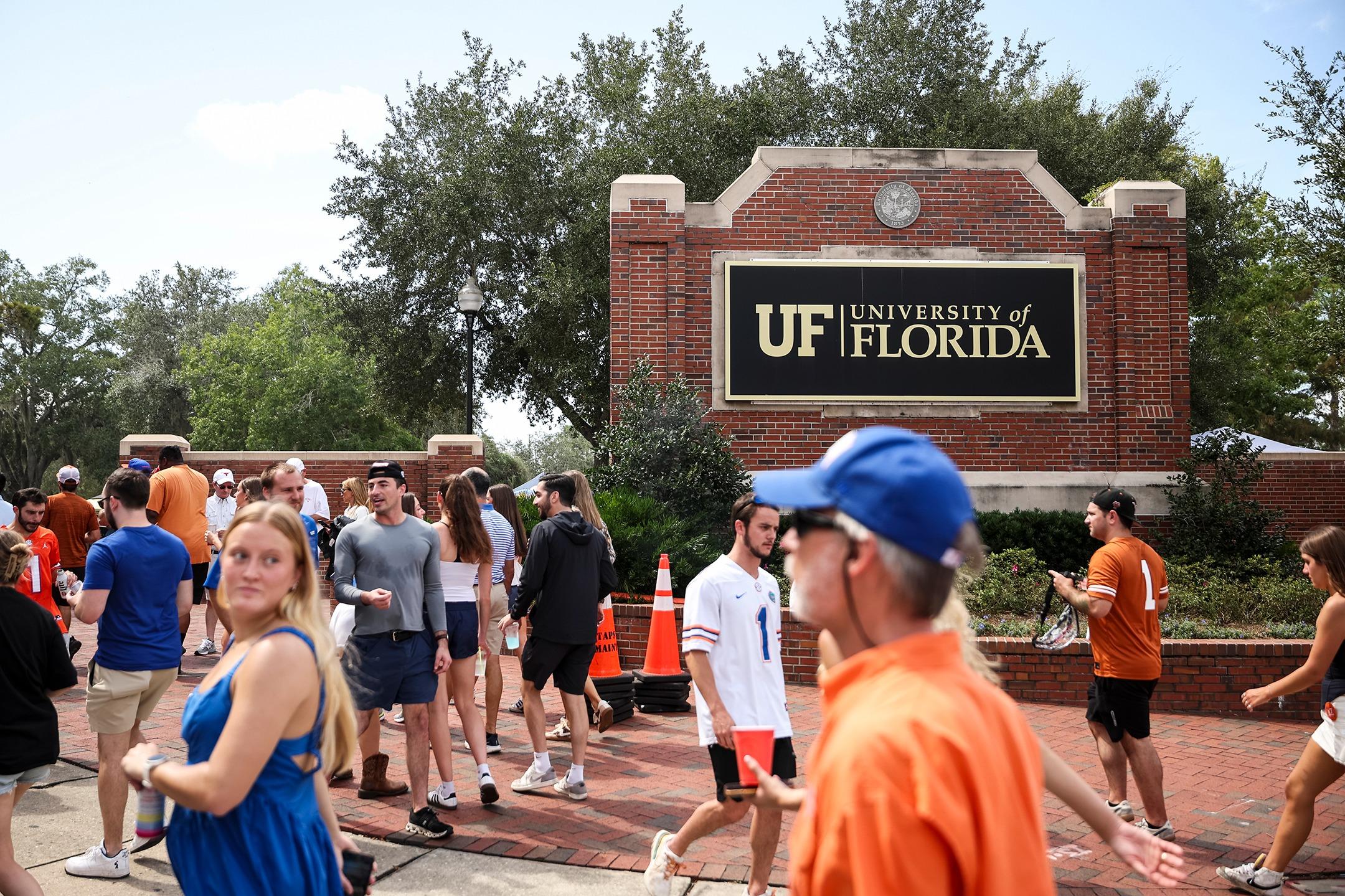
The rankings score 115 schools using 95 variables. The top schools, according to MI’s calculations: University of Texas at Austin, University of Florida, and Notre Dame. And at the very bottom: Smith College and Oberlin College.
“We’re trying to provide a different perspective on these choices,” Kevin Wallsten, a senior fellow at the Manhattan Institute who led the initiative, told The Post. “Better data can help people make better choices, and we’re trying to cover the schools most likely to be on young people’s minds when they’re applying to college.”
The rankings diverge from traditional lists because they take a more holistic approach, looking at return on investment, civics education, and a de-politicized campus. MI has decided to exclude traditional measures of school rank, like their admissions rate, in an attempt to measure students’ actual experiences.
It’s an unorthodox rating system that doesn’t pretend Americans aren’t losing faith in higher education. Today just 31% of Americans say a college education is “very important,” compared with a full 70% back in just 2013.
The rankings laudably center return on investment for students — perhaps the central reason that young people are losing faith in college. A recent analysis found that fully 66% of for-profit colleges don’t provide a return on investment, or take at least 26 years to do so.
MI positions itself as answering a question that “many Americans are already thinking: Is college worth it?”
The rankings prioritize four broad categories: educational experience, student life, student outcome, and governance quality.
“Student outcomes are the primary driver, but there’s a lot more to a college experience than selectivity, test scores and median income earnings ten years after graduation,” Wallsten, who is also a political science professor at California State University, Long Beach, said.
The results differ enormously from the US News and World Report’s annual rankings, which are usually touted as the industry standard.
University of Texas at Austin and University of Florida — MI’s numbers 1 and 2 — are tied for 34th place in the US News report. And MI’s bottom two schools — Smith College and Oberlin — fare far better in the traditional US News college rankings, at 22 and 59 respectively.
Interestingly, state schools tend to do disproportionately well, and small liberal-arts colleges disproportionately poorly in MI’s estimation. Wallsten says that’s in part because small colleges tend to be far more ideologically homogenous.
State schools, on the other hand, have built-in advantages favored by MI’s ranking system: relatively lower tuition, a government-backed commitment to free-speech values, and, in some cases, state-mandated civics-education curriculum.
Perhaps the greatest advantage of all, at least in the MI rankings, is the low cost of tuition for in-state students, which makes a positive return on investment easier for a public school to achieve.
MI’s rankings highly value viewpoint diversity and free speech. The think tank leans conservative, but Wallsten emphasized that schools aren’t celebrated for sharing that same ideology. “We’re not rewarding schools for being conservative. We’re rewarding them for being politically balanced,” he said.
They’re also rolling out some proprietary measures not used by other ranking systems. That includes the balance of student political organizations, political diversity using faculty campaign donations as a proxy, and analyzing presidential statements for commitment to meritocracy, institutional neutrality, viewpoint diversity, and academic rigor.
“We put a lot of effort into tracking down all the op-eds, speeches and interviews that presidents and chancellors have given during their time in office,” Wallsten said. “We’re scoring them on… whether they take the blame for the trust deficit in higher ed.”
This is MI’s second year producing the rankings, and Wallsten is already noticing emerging trends, including the fact that every single Ivy League school except for the University of Pennsylvania went up in the rankings since last year. The Post previously reported that elite colleges have re-centered free expression after the post-October 7th chaos on their campuses drew scrutiny.
“The Ivies have shifted course,” Wallsten said. “They’ve become more serious about meritocracy.” It’s an encouraging sign that their rankings aren’t stubbornly anti-elite, and are responsive in real time to positive change.
Of course, MI’s rankings drew criticism. “This is why people make fun of Republicans,” one X user wrote, attaching a screenshot showing Arizona State University ranked above Princeton and Stanford. “I literally burst out laughing when I opened this list,” another said.
Wallsten admits the list isn’t prescriptive: “A lot of people will object to the rankings and say, ‘Are you really arguing that a kid who gets into the University of Florida should go there instead of Harvard, if they get in?’ And, fair enough — we’re just trying to provide a different perspective on these things.”
But, for the countless thousands of sharp college students who don’t have legacy connections to the Ivies, MI’s rankings could provide a novel measure of school quality.