Inside Jim Cramer’s Charitable Trust: 5 Stocks He Actually Owns Syeda Seirut Javed Fri, November 13, 2026 at 3:33 PM EST 9 min read NVDA -2.88% GOOG -1.61% MU -4.19% AAPL +0.12% GEV -2.52% Explore stocks on Coinbase Trading disclosure Trading disclosure The above button links to Coinbase. Yahoo Finance is not a broker-dealer or investment adviser and does not offer securities or cryptocurrencies for sale or facilitate trading. Coinbase pays us for certain activity generated through this link. Prices displayed are informational.
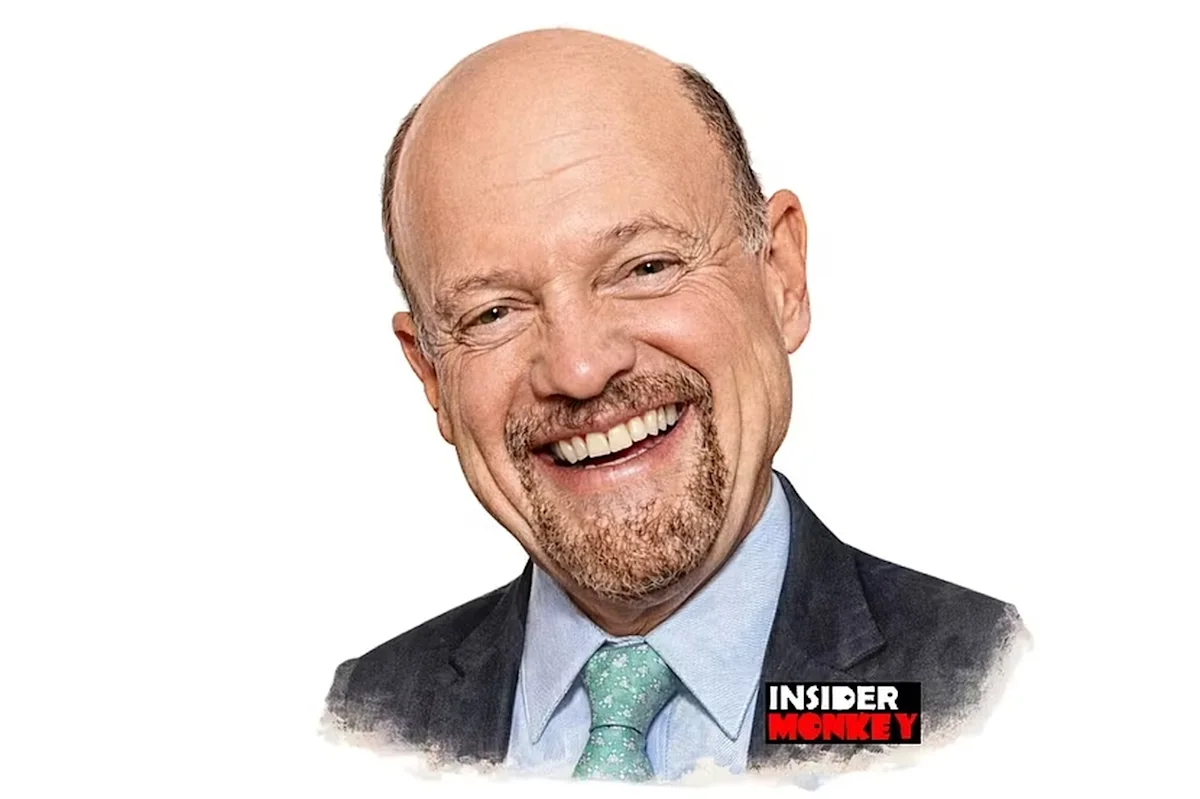
Jim Cramer started his Charitable Trust in 2005 with $3 million of his own money. According to CNBC, Cramer's own investment is at risk, and the trust distributes its investment income and realized capital gains to charity. The CNBC Investing Club gives subscribers a way to follow that portfolio. Members can see how much of it Cramer has committed to each stock, when he adds to a position or sells shares, and how he and his team explain those decisions. For investors who count on dividend checks, it's worth a closer look at which of those companies kept paying shareholders even when business slowed.
Disseminating his investing lessons on Mad Money, Cramer described one way he builds the trust's cash reserves. When a stock rallies, he sometimes sells part of the position. If the shares keep climbing, the trust still owns shares it can sell at a higher price. If the market falls, he has money to buy companies he likes better. He went on to say:
I'm saying I believe it's essential to raise some cash during or after a rally, emphasis on some. Really, that's the goal. I don't care how much you like your stocks. Not selling something to raise cash when the market's making it easy for you is downright reckless. With the Charitable Trust, I've taken my cash position at times up to around 20% when I sense too much euphoria. When the market eventually pulled back, put that… cash back to work in stocks we liked a lot more than the ones we previously sold.
By September 1, the trust held more than 15% in cash, and Cramer was cutting its exposure to data centers. In the same month, he singled out one chip designer he wished the trust had held on to longer, even though it had made a sizable profit on the shares. On November 11, he acknowledged that some of the shares he had sold were already trading higher. He still expected AI spending to grow. What concerned him was how many businesses in the portfolio depended on the same construction boom, from chipmakers to suppliers of networking and cooling equipment. He was willing to miss some of the upside to bring that risk down. So, what are the 5 stocks Jim Cramer's Charitable Trust actually owns? We provided the expanded list of Inside Jim Cramer's Charitable Trust: 10 Stocks He Actually Owns. The top 5 stocks are provided below.
We identified ten companies Jim Cramer has publicly said the Charitable Trust owns. For each, we examined what he told viewers about the investment and the business developments shareholders have had to weigh since.
Why are we interested in the stocks that hedge funds pile into? The reason is simple: our research has shown that we can outperform the market by imitating the top stock picks of the best hedge funds. Insider Monkey's quarterly newsletter strategy selects 14 small-cap and large-cap stocks every quarter and has returned 612% since May 2014, beating its benchmark by 375 percentage points (see more details here).
GE Vernova Inc. (NYSE:GEV) agreed on October 28 to buy Trench Group, one of its suppliers, for the equivalent of $9 billion. Trench makes high-voltage equipment used to move electricity across the grid. Buying it would give GE Vernova more control over the supply of components its electrification business already needs. The company expects to fund the purchase roughly equally with cash and debt, with closing expected in late 2027.
Demand for equipment to generate that electricity is also running years ahead of delivery. GE Vernova ended the third quarter with 122 gigawatts of gas power equipment covered by firm orders or agreements to reserve manufacturing slots. It is significant to consider because a customer can reserve a slot before placing a firm order. Across the business, quarterly revenue rose 27% to $12.6 billion. A drop of nearly 9% after earnings in July hit close to home for Cramer, who told viewers how much GE Vernova mattered to his Charitable Trust, as he said:
I see today's decline, actually, yes, indeed, as a buying opportunity, but Wall Street can't seem to look past the earnings miss. I would say this, though: if GE Vernova keeps getting hammered, you've got my blessing to keep buying it on weakness, and you might find my Charitable Trust buying right alongside you, even as we have a much lower cost basis from long ago.
In October, a caller wanted to know whether problems with the data-center buildout might hurt Vertiv, a supplier of power and cooling systems. Cramer took GE Vernova as his starting point and explained when he would buy Vertiv for exposure to the same boom.
Apple Inc. (NASDAQ:AAPL) entered the holiday quarter with a new way to test how much customers will pay for a hardware upgrade. Its redesigned MacBook Pro began reaching customers on November 6 with a touchscreen OLED display. U.S. prices start at $2,899 for the 14-inch model and $3,399 for the 16-inch model. Sales of those laptops will first show up in the December quarter.
The iPhone had already set a September-quarter sales record, helping lift Apple's fiscal fourth-quarter revenue 12% to $114.5 billion. Services revenue also reached a record. For shareholders, the appeal of a hardware upgrade extends beyond the purchase itself. A customer who sticks with an iPhone can keep paying for storage, apps and subscriptions for years between purchases.
Cramer defended his Charitable Trust's longstanding Apple stake in July, when investors were weighing the company's AI strategy. By September, Apple shares had already rallied after the iPhone launch, but he thought one model could still surprise investors with the demand it could draw.
Micron Technology, Inc.'s (NASDAQ:MU) customers have been making multiyear commitments to secure memory chips. Micron is making commitments of its own further up the supply chain. On October 20, it agreed to fund an expansion of Indium Corporation's refining and manufacturing operations in Rome, New York. The companies also plan a long-term supply agreement that would give Micron access to high-purity materials used in chipmaking. The investment is part of the company''s broader plan to spend up to $3 billion on its U.S. supply chain.
Micron's fiscal fourth-quarter revenue rose to $54.23 billion from $11.32 billion a year earlier. In past memory cycles, a shortage could send profits soaring just before new supply arrived. On its September 30 earnings call, the company estimated that 26 signed customer agreements would account for more than 35% of its revenue through 2030. Cramer had visited Micron in August. By the time he discussed the stock again, one number had changed enough since his visit to make him question whether the old pattern still fit.
During the October 7 episode of Mad Money, a Western Digital shareholder who had bought on the way down asked Cramer whether to wait for a recovery. Cramer had once owned a sizable stake himself, but his advice to the caller turned on how Western Digital compared with Micron.
Alphabet Inc. (NASDAQ:GOOGL) put its balance sheet behind another company's AI expansion on November 4. Data-center developer TeraWulf disclosed that Google had agreed to cover certain obligations under Anthropic's leases at a Kentucky campus. Once the guarantees take effect, a default by Anthropic could leave Google paying overdue rent and taking over the affected lease. Under certain conditions, Google could instead pay a termination fee that would entitle it to acquire a stake in the TeraWulf subsidiary that leases the site.
Google Cloud revenue more than doubled to $30.7 billion in the third quarter. Google Search and other revenue grew 12%, while search queries recorded their fastest year-over-year growth in five years. Query growth answers one question for shareholders about whether people still turn to Google. How much advertising revenue Google earns when AI answers a question directly is harder to judge from those figures.
On September 3, Cramer said Alphabet's 9% gain for the year left the stock looking cheap. He pointed to Google Cloud's rapid growth and YouTube's reach, then explained why he liked the shares at $342 even as investors who bought in the recent stock offering were sitting on losses. His Charitable Trust still owned Alphabet after its October 28 report, though the results left him less comfortable with the outlook for search.
NVIDIA Corporation (NASDAQ:NVDA) is making room for other companies' chips inside data centers built around its technology. On November 9, Korean chip designer Rebellions announced plans to connect its next-generation R200 processors to NVIDIA systems using NVLink Fusion. SK Telecom plans to deploy the systems. That gives NVIDIA a way to sell the technology that connects processors even when a customer chooses another company's chip to run an AI model.
Data centers accounted for $89 billion of NVIDIA's $96.2 billion in fiscal second-quarter revenue. With about 92.5 cents of every sales dollar coming from that business, a project that fails to get built can matter even when customers want the chips. On November 9, Cramer still considered NVIDIA a buy, but he thought local opposition at the ballot box could slow construction of new data centers.
Cramer had discussed owning NVIDIA through his Charitable Trust on July 1. On September 28, NVIDIA added $150 billion to its existing share repurchase authorization. He welcomed the size of it but had a more pointed message for management about when to start buying shares.
While we acknowledge the risk and potential of NVDA as an investment, we believe certain AI stocks offer greater upside potential and carry less downside risk. If you're looking for an extremely undervalued AI stock that also stands to benefit significantly from Trump-era tariffs and the onshoring trend, see our free report on the best short-term AI stock.
Click to continue reading and see the expanded list of Inside Jim Cramer's Charitable Trust: 10 Stocks He Actually Owns.
This article is originally published at Insider Monkey.