Stock market today: Nasdaq leads Dow, S&P 500 lower as chip stock sell-off accelerates Grace O'Donnell and David Hollerith Updated Fri, November 13, 2026 at 2:15 PM EST 1 min read NVDA -2.26% ^IXIC -0.97% ^DJI -0.01% AMD -9.02% ^GSPC -0.54% Explore stocks on Coinbase Trading disclosure Trading disclosure The above button links to Coinbase. Yahoo Finance is not a broker-dealer or investment adviser and does not offer securities or cryptocurrencies for sale or facilitate trading. Coinbase pays us for certain activity generated through this link. Prices displayed are informational.
US stocks fell Friday as a sell-off in chip stocks picked up, Nvidia (NVDA) stock continued to decline, and an annual reading of wholesale inflation came in hot.
The Dow Jones Industrial Average (^DJI) edged below the flat line, while the S&P 500 (^GSPC) declined 0.6%. The tech-heavy Nasdaq Composite (^IXIC) fell 1%.
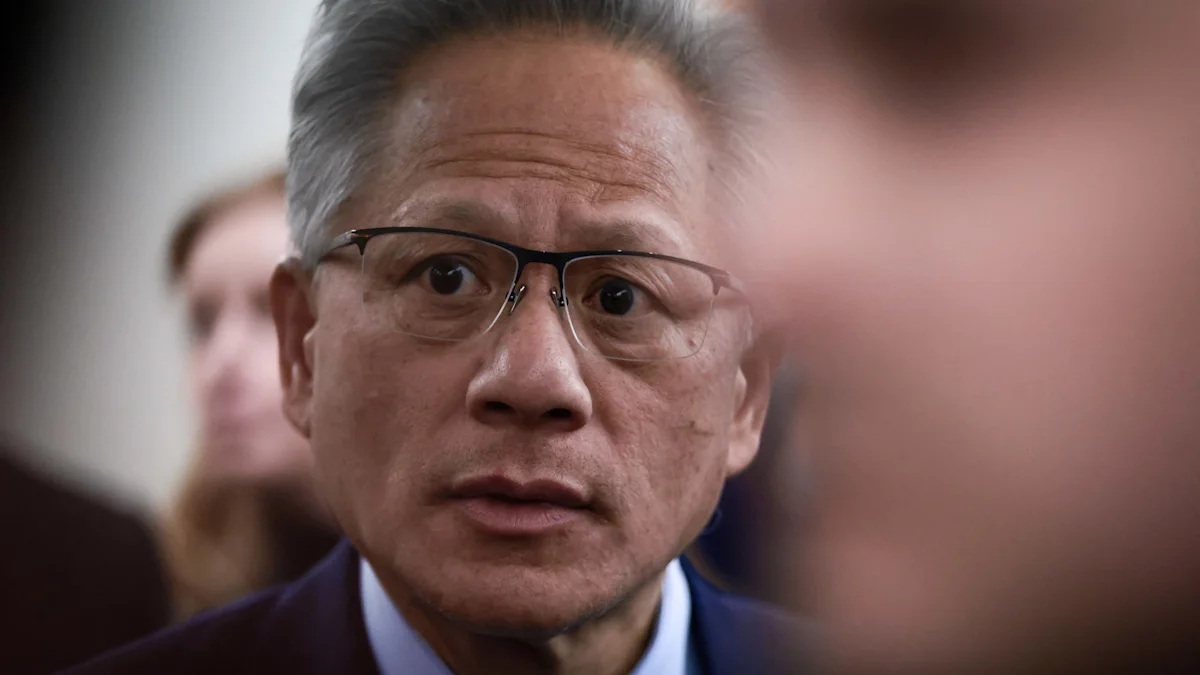
Stocks sank amid a series of tremors, from Nvidia CEO Jensen Huang stepping down to elevated oil prices and a sell-off in government bonds.
Nvidia stock turned lower again as the fallout from Huang's affairs continued to unfold, raising the stakes for the company's third quarter earnings next Tuesday. Investors are debating whether the controversy surrounding the chip giant's former leader implicates the wider artificial intelligence boom that Nvidia has played a central role in building.
Chipmaker sector stocks declined, with AMD (AMD) and Broadcom (AVGO) sinking.
Go deeper with AlphaSpace 52,290.11 -6.98 (-0.01%) As of 2:34:50 PM EST. Market Open. ^DJI ^GSPC ^IXIC Oil prices were little changed, providing some relief after a spike in prices sparked Thursday's sell-off in bonds. As traders braced for an interest rate hike in December, the 10-year Treasury yield (^TNX) reached as high as 5.17% on Friday, its highest level since October.
The setup has pressured bitcoin (BTC), with the world's largest cryptocurrency tumbling below $70,000 Friday for the first time in nearly three months.
In economic news, wholesale inflation rose 0.3% month over month in October, according to the producer price index. The reading was less than the 0.4% economists expected, but the annual rate of 6.5% highlighted persistent inflation pressures, which likely keeps the Federal Reserve on track to hike interest rates next month.
Bitcoin (BTC) prices extended declines on Friday, tanking 3% to hover near $69,00 for the first time in nearly three months as investors priced in a more hawkish Federal Reserve.
The slide in cryptocurrencies followed monthly wholesale prices coming in hotter than expected.
Over the past five sessions, bitcoin has fallen roughly 7%. Year-to-date, the token is down more than 20%.
A future of new scientific discovery where cancer, Alzheimer's, and heart disease are considered relics of the past, and artificial intelligence agents perform a growing number complex tasks for humans safely.
Those were among the ambitions Anthropic CEO Dario Amodei laid out to JPMorgan Chase (JPM) CEO Jamie Dimon Friday as the artificial intelligence startup prepares for one of the largest initial public offerings in history.
"We can have a much more beautiful world… It sounds starry-eyed. It sounds crazy. I really do believe it," Amodei said.
The remarks came during a livestreamed conversation hosted by at JPMorgan's Manhattan headquarters, one of Anthropic's final stops this week in its Wall Street push to drum up investor demand for its IPO next week.
Amodei laid out a sweeping vision for the technology, from accelerating scientific discoveries and transforming medicine to deploying increasingly capable AI agents in fields such as robotics and cybersecurity.
Nvidia (NVDA) shares were downgraded to Hold at HSBC on Friday amid the fallout from Jensen Huang's exit as CEO. The firm also cut its price target to $170 from $365.
Analyst Frank Lee said investor confidence has been "shaken" as the company's "leadership succession plan is unclear." He said the fundamentals remain intact, though long-term uncertainty has increased.
"AI demand remains strong and NVIDIA has procured enough supply to achieve the 70% y-o-y revenue growth it outlined last quarter," Lee wrote.
Still, Lee said the new CEO could face challenges in executing Nvidia's existing roadmap and shaping its evolving product strategy, as well as "maintaining the same pricing power with customers and the same bargaining power with suppliers."
Tightened export restrictions are another potential risk that could ultimately weigh on revenue and earnings.
"While the findings of the independent probe by NVIDIA and Congressional scrutiny remain to be seen, one possible outcome could be enhanced export restrictions," Lee wrote.
Nvidia (NVDA) stock slipped more than 4% on Friday as a sell-off in the semiconductor sector accelerated and investors digested the exit of Jensen Huang as CEO of the AI chip heavyweight, following reports of multiple affairs. The stock is expected to close out the week in the red, slipping below the $4 trillion market cap threshold.
Shares of chipmaker peers AMD (AMD), Broadcom (AVGO) and Intel (INTC) dropped roughly 9%, 6% and 5%, respectively.
Storage maker Sandisk (SNDK) stock extended declines from the prior session, falling 9%. Shares of memory chipmakers Micron Technology (MU) and SK Hynix (SKHY) also tanked 5% and 6%, respectively.
Go deeper with AlphaSpace 162.44 -3.76 (-2.26%) As of 2:34:50 PM EST. Market Open. NVDA AMD AVGO Today at 3:59 PM UTC David Hollerith Wall Street's fear gauge is spiking again Wall Street's fear gauge jumped Friday as investors grew more uncertain about the stock market amid broader inflation worries and the Nvidia (NVDA) tumult.
The Cboe Volatility Index, or VIX (^VIX), climbed above 20 in morning trading, extending a muted rise on Thursday as the tech-heavy Nasdaq Composite and S&P 500 were mixed.
The latest jump marks a sharp reversal from earlier this week, when volatility expectations retreated following last week's post-election market turmoil. The VIX surged nearly 70% on Nov. 5, one of its largest daily increases this year.
The index, which tracks expectations for S&P 500 volatility over the next 30 days, has averaged roughly 18.2 in 2026, according to Yahoo Finance data. Its recent swings underscore how quickly investors' appetite for risk has shifted.
Still, stocks are holding on to gains for the week.
Richemont stock opened more than 4% lower on Friday morning as the Swiss luxury group reported slower growth in its jewelry business.
The owner of Cartier and Van Cleef & Arpels posted first-half net profit of 2.5 billion euros (approximately $2.76 billion), up from 1.8 billion euros ($2 billion) a year earlier and above analyst forecasts of 2.26 billion euros ($2.5 billion).
But eyes were on jewelry, the group's growth engine, where sales rose 14%, short of the 16% analysts had expected, according to an RBC poll.
Many luxury brands have struggled amid foreign conflicts, rising gold prices, and cost-sensitive consumers. The luxury sector has fallen some 30% in 2026, per Barron's.
Wholesale inflation data came in better than expected for the month of October, but the long-term trend painted a worrying picture of rising prices.
The Producer Price Index, a measure of wholesale inflation, rose 0.3% month over month in October, the Bureau of Labor Statistics reported on Friday. Economists had expected PPI to increase 0.4%.
However, over the last 12 months, the index for final demand increased 6.5% in October, the largest annual increase since November 2022.
That keeps the pressure on the Fed to raise interest rates next month.
Fed governor Michelle Bowman said Tuesday that rate hikes may be needed to slow the pace of price increases, Yahoo Finance's Jennifer Schonberger reported.
"Inflation pressures have persisted for longer than I had hoped and have shown recent signs of broadening," Bowman said in a speech in Washington.
US stocks opened higher on Friday as investors looked to close out a volatile week marked by rising Treasury yields, renewed pressure from oil prices and turmoil at Nvidia.
The Dow Jones Industrial Average (^DJI) rose 0.4%, while the S&P 500 (^GSPC) gained 0.4%. The tech-heavy Nasdaq Composite (^IXIC) was flat.
Go deeper with AlphaSpace 52,290.11 -6.98 (-0.01%) As of 2:34:50 PM EST. Market Open. ^DJI ^GSPC ^IXIC Nvidia (NVDA) shares rose 2% as investors continued to assess the fallout from Jensen Huang's departure ahead of the chipmaker's earnings next week. Other semiconductor stocks remained under pressure.
Investors were also watching the 10-year Treasury yield, which climbed to 5.10% Thursday.
The bull market won't have it easy in 2027, Yahoo Finance's Brian Sozzi reports. According to Goldman Sachs strategist Kamakshya Trivedi, the vibes around AI investments are weakening.
Here's what Trivedi had to say about risks to stocks:
"Although we expect solid AI investment growth to continue, our forecasts imply that the investment growth impulse — additional AI investment as a share of GDP — will peak in early 2027. From a macro perspective, this should be a manageable event. But it may be a bigger test for markets for three reasons."
"First, the AI impulse has been a much larger contributor to growth in earnings and market value than to growth in GDP," Trivedi explained.
"Second, AI-related equities have taken credit for significant macro productivity gains, especially companies benefiting directly from the infrastructure boom, that have made them more vulnerable to any signs that we are on a less optimistic path," Trivedi added.
"Third, the point at which growth rates peak (a "second derivative" turning point) often matters, even if underlying growth rates (the "first derivative") remain healthy. Moving through that peak allows markets to place limits on the upside of an uncertain distribution and, as growth decelerates, the period of positive surprises to expectations often ends too, as we may be starting to see for the AI capex cycle."
Cerebras Systems (CBRS) stock jumped 13% in premarket trading after the AI chipmaker reported record third quarter revenue and raised its full-year outlook.
The company's core revenue rose 70% year over year to $230.9 million while cloud revenue surged 272% to $144.9 million. The maker of AI chips, looking to compete with Nvidia (NVDA), said it sees fourth quarter core revenue of $310 million to $330 million, versus Wall Street consensus estimates of $271.2 million.
The company also announced commercial deals with two new hyperscalers, or large cloud computing providers that operate data centers. One is among the world's top three, with Cerebras saying it would share more details about the deal next year.
"These new deals, alongside continued growth and execution with our existing customers, enable us to raise Q4 core guidance across the board and continue to see revenue tripling in 2027 with expanding gross margins," Cerebras CEO Andrew Feldman said during the company's earnings call on Thursday.
The cheapest way for an American company to run AI is a free model made in China. The scandal that just cost Nvidia its CEO could shut off the chips those models depend on, Yahoo Finance's Jared Blikre writes.
Companies are making the switch fast. Duolingo (DUOL) co-founder and CEO Luis von Ahn said at Yahoo Finance Invest on Thursday that each AI practice call in his app used to cost about 30 cents. Now it's "less than a cent," he said, "by moving most of this to open weight models," the kind of AI anyone can download and run for free. Decagon co-founder and CEO Jesse Zhang said new customers at his AI startup run "almost entirely" on them.
The most downloaded of those free models come from China, and the biggest maker by far is Alibaba (BABA).
Jensen Huang is out. The former CEO of Nvidia resigned after a rapid succession of damning news reports revealed multiple affairs, including one with a woman that US intelligence says is a Chinese spy and others with employees. The scandal is unequivocally damaging for Huang. And, at least in the short term, destabilizing for Nvidia, and detrimental to the AI trade, Yahoo Finance's Hamza Shaban writes:
The key-person risk extended to the entire AI trade. Huang was everywhere, seemingly… If Nvidia was the "central bank of AI," Huang was the chair.
But if Nvidia and the broader AI trade successfully weather the storm, it could amount to a huge win for both the company and sector.
Bitcoin (BTC) fell below $70,000 for the first time in nearly three months early Friday as investors weigh the largest cryptocurrency's value against a more hawkish Federal Reserve and other mounting headwinds.
After dropping to $68,000, bitcoin recovered to around $69,265, leaving it down more than 10% so far in November, according to Yahoo Finance data.
The latest decline follows a Wednesday decision by major index provider MSCI's to remove Michael Saylor's Strategy (MSTR), the largest publicly traded corporate holder of bitcoin, from two US stock indexes. That move could force funds tracking those benchmarks to sell shares of the company.
But bitcoin's troubles extend well beyond Strategy.
"The latest selloff is being driven by a combination of macro risk aversion, persistent spot Bitcoin ETF outflows, and an unwind of leveraged long positions," said Lacie Zhang, analyst at crypto firm Bitget.
Expectations for further Federal Reserve interest rate hikes have weighed on riskier assets, especially bitcoin, while weakness in technology stocks has added to the pressure.
Crypto-related stocks including Coinbase Global (COIN), Robinhood (HOOD) and Circle Internet Group (CRCL) also declined early Friday.
Nvidia (NVDA) stock went into free fall Thursday as CEO Jensen Huang stepped down, and retail investors were there to catch it. The question now is whether they bought the bottom or just the first leg down.
Huang resigned as Nvidia's CEO after reports of two affairs, and CFO Colette Kress is stepping in as interim CEO. The stock fell as much as 14% at the open to its lowest level since June 2025, then clawed back nearly three-quarters of it to close down about 4%. Nvidia reports earnings Tuesday with no permanent CEO in sight.
Small investors bought a net $111 million of Nvidia stock in the first 30 minutes of trading. According to Vanda Research, that was the stock's biggest opening on record and more than 40 times a normal start. Nvidia has soaked up 61% of all retail buying in US stocks and ETFs this week. Money also poured into leveraged funds betting on Nvidia gains, while funds betting against it drew nothing.
"This is very much a one-way flow story for retail," Vanda wrote.
Mike Zaccardi, a CFA and CMT, called it "one of the more epic 'buy the news' events in history" on X.
Economic data: Producer Price Index (PPI) monthly gains for October (0.4% expected, 1.3% previous), Core PPI (0.3% expected, 0.7% previous)
Earnings calendar: Mitsubishi UFJ Financial Group (MUFG), Sumitomo Mitsui Financial Group (SMFG), Mizuho Financial Group (MFG), Sumitomo Mitsui Trust Group (CMTDF), Cosan (CSAN), RLX Technology (RLX), Twenty One Capital (XXI), Inhibrx Biosciences (INBX), Americas Gold and Silver (USAS), Talon Metals (TLOFF), Lithium Americas (LAC), Suncrete (RMIX), Sigma Lithium (SGML), Entera Bio (ENTX), SBC Medical Group Holdings (SBC), Gravity (GRVY), Costamare Bulkers Holdings (CMDB)
Catch up on some top stories from overnight:
Microsoft outage disrupts Outlook, Teams, and Copilot for users 'in any region'
Is a United-American airline merger still on the table?
Vanguard CEO sees a 'disturbing' trend with prediction markets
Bill Ackman: Microsoft's position is 'really, really strong'
Nvidia market cap plunges $490B following former CEO's affair scandals