The Premium Team, The Motley Fool Fri, November 13, 2026 at 12:40 PM EST 8 min read NVDA -3.20% Trade NVIDIA on Coinbase Trading disclosure Trading disclosure The above button links to Coinbase. Yahoo Finance is not a broker-dealer or investment adviser and does not offer securities or cryptocurrencies for sale or facilitate trading. Coinbase pays us for certain activity generated through this link. Prices displayed are informational.
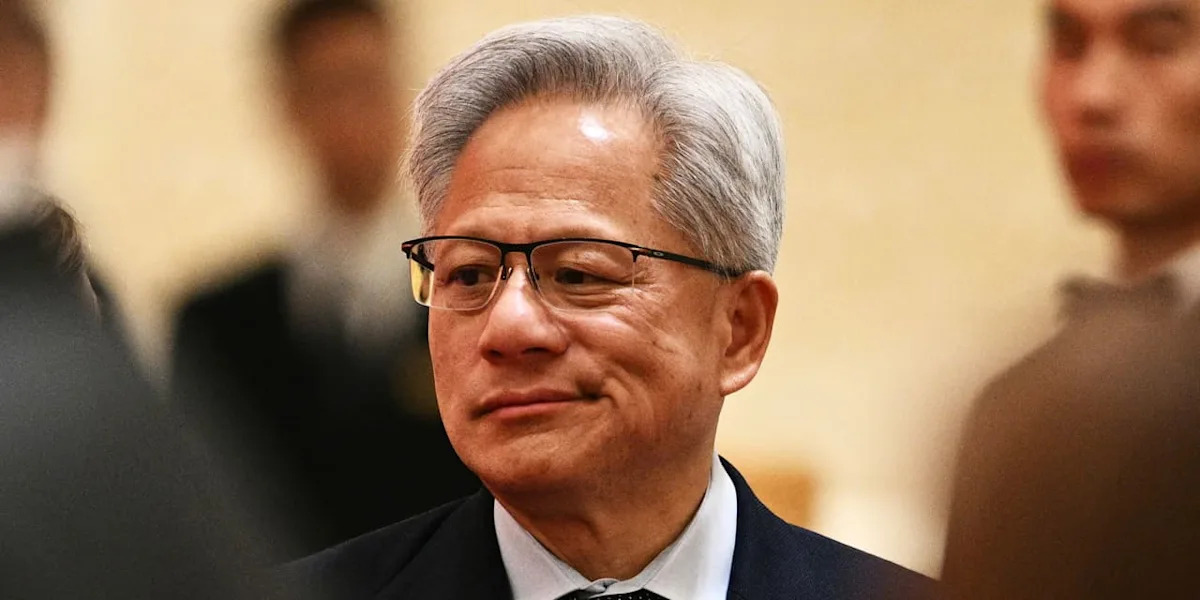
Jensen Huang has quit as Nvidia's (NASDAQ:NVDA) CEO, effective immediately.
Huang co-founded Nvidia in 1993 over a meal at a Denny's in San Jose. He has run it ever since. Under him, a maker of video game graphics chips became the engine of the artificial intelligence (AI) boom.
Missed AI's "Act 1"? Act 2 Could Be 16x Bigger. Most investors think they missed the AI boat because they didn't buy Nvidia in 2005. But according to our analysts, we're only at the end of "Act 1"—the R&D phase. "Act 2" is the global rollout. Continue »
He resigned after an extramarital affair raised national security concerns. Nvidia named its CFO, Colette Kress, as interim CEO. The board also named Harvey C. Jones, an entrepreneur and venture investor, as its first-ever chairman. Nvidia says it has no reason to think national security or company secrets were compromised. Its inquiry is still going on.
Investors didn't wait for answers. Nvidia shares fell over 10% at one point today, on top of steep losses earlier in the week.
Many of you own Nvidia because we recommended it. Yesterday in Stock Advisor, before Huang quit, Team Rule Breakers removed Nvidia from its list of Foundational Stocks. We explain where that leaves the stock at the end of this article.
First, we asked our analysts from Team Hidden Gems and Team RB the questions we think you're asking. Some are tough. Our analysts don't always agree, and we haven't asked them to. That's what makes us "motley."
With most companies, the answer to such a question would be simple, but Nvidia is no ordinary company. CEO Jensen Huang is extremely ingrained in the company that he co-founded and has run for more than three decades.
Nvidia's internal structure is unique in that Huang had an estimated 60 direct reports, which he dubbed "extreme co-design." For context, most CEOs have roughly 10 direct reports, on average. Moreover, as an electrical engineer, Huang was deeply involved in the development process for the graphics processing units (GPUs) the company pioneered.
I would submit that Nvidia is one of those unique companies where it's extremely difficult to extricate the CEO from the company he founded and is so much a part of.
As such, it will be difficult to find a successor with Huang's unique qualifications and leadership style. I suspect Nvidia will be a very different company going forward.
Nvidia named Colette Kress interim CEO, and this is a wise choice considering her performance as the company's CFO. Kress has spoken extensively during the company's earnings calls, not only about the financials but also about product rollout, product performance, and the company's strategy. She clearly has a deep understanding of where Nvidia is today and where it's going, and I could see her in the role as permanent CEO.
Another strong possibility is Ian Buck, Nvidia's vice president of hyperscale and high-performance computing. As the inventor of CUDA and the one to launch the use of GPUs for general computing, Buck would bring innovation and product strengths to the CEO role. This could be useful as Nvidia enters the next phases of AI growth.
Nvidia can find a new CEO. Finding a new ambassador to Washington is harder. Huang was the company's loudest voice against export controls, and he lobbied the president directly to ease limits on chip sales to China. That pitch now comes with a scandal attached. House China Committee Chair John Moolenaar says it changes how the whole debate looks.
That ties the leadership loss and the national security fallout into a single problem. Lawmakers in both parties want tighter controls, and Senate Democratic Leader Chuck Schumer wants answers on how Nvidia's lobbying shaped the administration's chip policy. Nvidia is heading into a tougher policy fight without the person who usually fights it. The business doesn't depend on any one person. But its standing in Washington did, and rebuilding it will take longer than a CEO search.
Let's be clear: Nvidia is bigger than one person. This is not a fly-by-night start-up trying to make its way in the world. Nvidia tech is the foundation on which the AI industry, and other industries before it, has been built.
Hyperscalers have spent years building around CUDA. I'd argue that Nvidia's best AI growth days were over before the CEO change, as competing chips came online. But there is plenty of business to be won, and Nvidia remains well positioned to compete.
Talent is a bigger risk. Nvidia's flat structure meant dozens of senior leaders reported to the founder. A new CEO will likely alter power dynamics, and some top people will inevitably leave. Engineers sitting on years of vested stock options might take this as a reason to walk.
Nvidia can weather some losses based on the quality of its offerings. But the new CEO's biggest challenge will be making sure the company is well positioned to win in whatever world follows this AI surge. The company will need all its best talent and partners for that to happen.
Let's not make this a call on what the stock will do from here. One thing we can count on is that the market is irrational and people's emotions don't always work in the most logical ways during times of stress.
Looking at the business as it stands right now, it's fair to say that the stock has probably fallen juuuuusst right. There will be a leadership vacuum for a while and likely some palace intrigue until the new permanent CEO is named. At the same time, it's hard to imagine that customers will be backing out of their commitments to buy Nvidia chips in the near future. So, in the shorter term, it looks fine.
The longer-term question comes down to our answers for No. 4. If we were to see an Nvidia brain drain, that could impair the company's ability to deliver the bleeding-edge chips we have become accustomed to from Nvidia. If you believe that is an inevitable outcome, then you'll probably find yourself in the "not far enough" camp.
If you're experiencing a weird sense of chip-sector déjà vu, you're not alone.
A dominant semiconductor company loses its CEO over a relationship scandal and immediately hands the keys to its CFO? Intel (NASDAQ:INTC) ran this exact play in 2018, when troubled CEO Brian Krzanich exited under scandalous circumstances and CFO Bob Swan stepped into the interim seat.
Intel bounced back from that setback, but not right away. The stock fell more than 70% over the next seven years as Pat Gelsinger took over and started an ambitious but difficult strategy shift. Then the board got antsy, showed Gelsinger the door, and brought in Lip-Bu Tan -- who largely kept Gelsinger's chip foundry blueprint intact and is now reaping the rewards as Intel's stock hit all-time highs in June 2026.
For Nvidia, the durability of its AI lead hinges on how smoothly Kress and a permanent successor bridge that transition. It's still the same company, only in search of a new all-star CEO.
This is bad news, and it's fine to feel rattled. Many investors bought Nvidia partly because of Huang. But one bad day doesn't tell you whether Nvidia can thrive without him.
Here's where we stand. Foundational Stocks are the companies we're most comfortable telling a new investor to buy and hold without a long list of caveats. Right now, Nvidia comes with too many, so Team Rule Breakers removed it from the list yesterday.
Nvidia is still a buy on the Stock Advisor scorecard. But the team is deciding whether to move it to the Penalty Box or potentially even issue a sell as more facts come out.
So, don't rush to buy or sell. Instead, ask yourself why you bought Nvidia. Is that reason still true? Check how much of your portfolio it now makes up. If it has grown very large, that's worth thinking about, whatever happens next.
Then watch for four things: what Nvidia says about demand when it reports earnings next Tuesday, who the board picks as permanent CEO, what the company's inquiry finds, and whether regulators act.
We'll keep following this story and update you as it develops.
The Motley Fool Stock Advisor analyst team just identified what they believe are the 10 best stocks for investors to buy now… and Nvidia wasn't one of them. The 10 stocks that made the cut could produce monster returns in the coming years.
Consider when Netflix made this list on December 17, 2004... if you invested $1,000 at the time of our recommendation, you'd have $338,083!* Or when Nvidia made this list on April 15, 2005... if you invested $1,000 at the time of our recommendation, you'd have $1,021,163!*
Now, it's worth noting Stock Advisor's total average return is 830% — a market-crushing outperformance compared to 209% for the S&P 500. Don't miss the latest top 10 list, available with Stock Advisor, and join an investing community built by individual investors for individual investors.
*Stock Advisor returns as of November 13, 2026.
The Motley Fool has positions in and recommends Intel and Nvidia. The Motley Fool has a disclosure policy.
Jensen Quits. Fools Tackle Your Toughest Questions was originally published by The Motley Fool