TSLA -1.88% NVDA -3.01% CAT -1.46% LMT -2.15% Explore stocks on Coinbase Trading disclosure Trading disclosure The above button links to Coinbase. Yahoo Finance is not a broker-dealer or investment adviser and does not offer securities or cryptocurrencies for sale or facilitate trading. Coinbase pays us for certain activity generated through this link. Prices displayed are informational.
Tesla (NASDAQ: TSLA) has been one of the most popular stocks on Wall Street for years, attracting legions of supporters. It has single-handedly changed the public perception of electric vehicles (EVs) and even earned a spot in the "Magnificent Seven" grouping of the most influential tech stocks.
But today's Tesla faces plenty of headwinds, including shrinking margins and a softening EV market. So perhaps it's time for investors to turn their attention to other industrial stocks that may be better buys over the next few years.
Missed AI's "Act 1"? Act 2 Could Be 16x Bigger. Most investors think they missed the AI boat because they didn't buy Nvidia in 2005. But according to our analysts, we're only at the end of "Act 1"—the R&D phase. "Act 2" is the global rollout. Continue »
Here are three that fit the bill: Caterpillar (NYSE: CAT), Lockheed Martin (NYSE: LMT), and GE Vernova (NYSE: GEV).
Caterpillar is best known for its giant yellow construction equipment, but there's another reason for investors to be excited. It's becoming an increasingly important supplier to the artificial intelligence (AI) industry. And its latest earnings report shows just how quickly that business is growing.
Revenue in the third quarter was $20.7 billion, up 17% from a year ago, with power-generation revenue increasing 75%. The company manufactures engines and turbines that power data centers, which are being built at a breakneck pace to support AI workloads.
Even better, it ended the quarter with a $78 billion order backlog, nearly double what it reported a year earlier. That's a substantial amount of future business already on the books.
The company is also becoming more profitable. Its operating margin improved to 20.4% from 17.3% a year earlier, helped by favorable pricing. Earnings per share climbed to $7.13 from $4.88.
Construction and mining equipment will remain important to the business. But with AI infrastructure spending showing little sign of slowing, its power generation division gives investors another compelling reason to own the stock.
With the war in Iran, continued fighting in Ukraine, and the U.S. proposal for a mammoth $1.5 trillion defense budget next year, there's plenty to like about leading defense contractor Lockheed Martin.
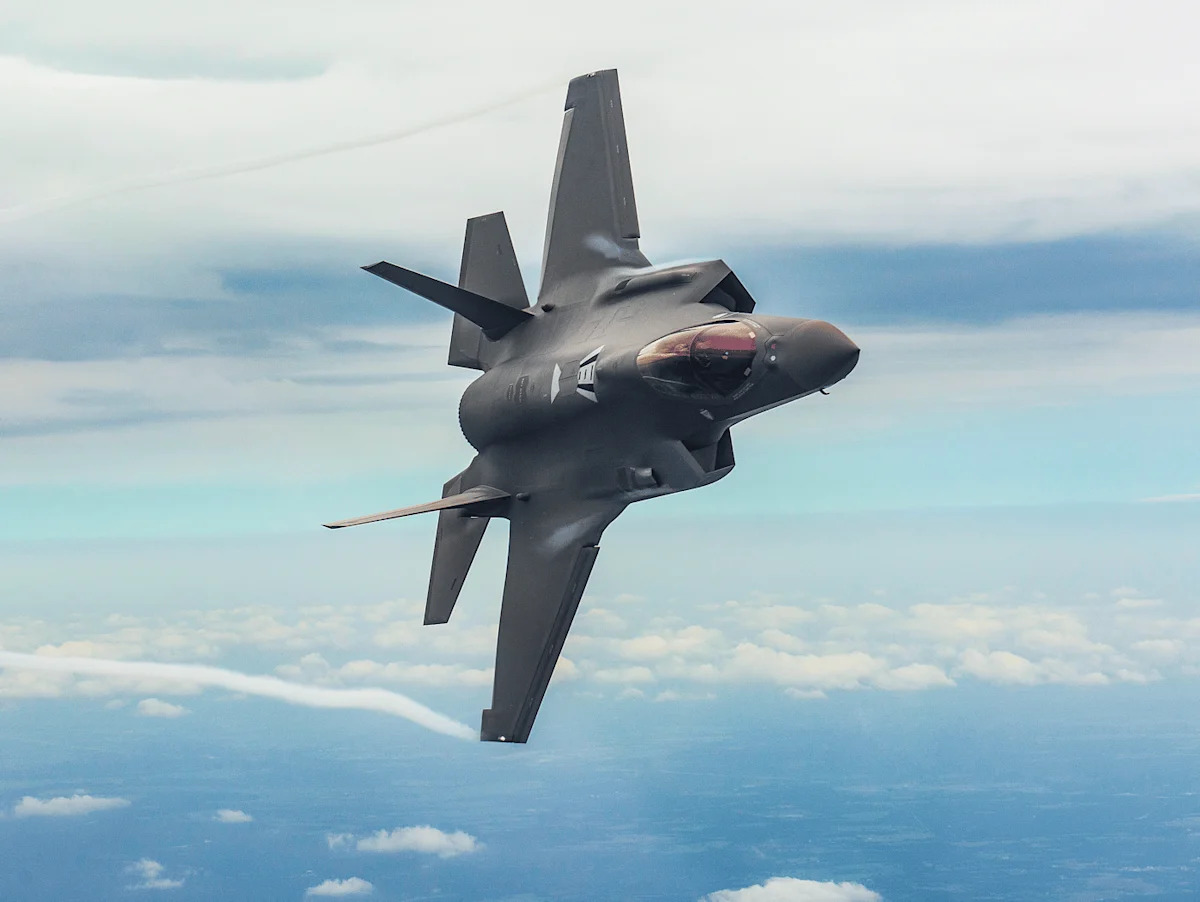
The company makes F-35 fighter jets and missile interceptors, among other weaponry. And as the U.S. seeks to replenish its weapons stockpiles, the order book is growing at an impressive pace. Its backlog in the third quarter was a record $292 billion, up 27% sequentially. That includes a $52.5 billion multiyear contract for PAC-3 missile interceptors.
Management now expects free cash flow of $7.8 billion to $8 billion this year, up from its previous forecast of $7 billion to $7.2 billion.
AI companies are spending billions on data centers, but all those computers need something that isn't always easy to find: electricity. That's creating an enormous opportunity for GE Vernova, which manufactures gas turbines and equipment that moves electricity across the power grid.
And business is booming. Revenue in the third quarter was $12.6 billion, up 27% from a year ago. Management said that the Power division increased by 25%, while Electrification revenue jumped 51%, including contributions from acquisitions.
But the real eye-opener was the order book. GE Vernova booked $29.3 billion in new business during the quarter, which nearly doubled its organic orders from a year earlier. The company's backlog increased to $197 billion, up $20 billion sequentially.
With electricity demand growing and customers lining up for equipment, it has years of business already on its books. That's a compelling reason for investors to remain bullish.
All three of these companies are outperforming Tesla, whose stock is in the red so far in 2026 (down 13%), while both Lockheed Martin and GE Vernova are up more than 20%. Caterpillar has a modest 6% gain, but that's only because of a recent dip on some bearish post-election sentiment around data center construction.
Looking ahead, I like all three of these more than Tesla in 2027, and I think they deserve attention from any investor seeking strong industrial stocks.
Before you buy stock in Caterpillar, consider this:
The Motley Fool Stock Advisor analyst team just identified what they believe are the 10 best stocks for investors to buy now… and Caterpillar wasn't one of them. The 10 stocks that made the cut could produce monster returns in the coming years.
Consider when Netflix made this list on December 17, 2004... if you invested $1,000 at the time of our recommendation, you'd have $338,083!* Or when Nvidia made this list on April 15, 2005... if you invested $1,000 at the time of our recommendation, you'd have $1,021,163!*
Now, it's worth noting Stock Advisor's total average return is 830% — a market-crushing outperformance compared to 209% for the S&P 500. Don't miss the latest top 10 list, available with Stock Advisor, and join an investing community built by individual investors for individual investors.
*Stock Advisor returns as of November 13, 2026.
Patrick Sanders has no position in any of the stocks mentioned. The Motley Fool has positions in and recommends Caterpillar, GE Vernova, Lockheed Martin, and Tesla. The Motley Fool has a disclosure policy.
You Can Do Better Than Tesla: 3 Industrial Stocks With More Upside was originally published by The Motley Fool