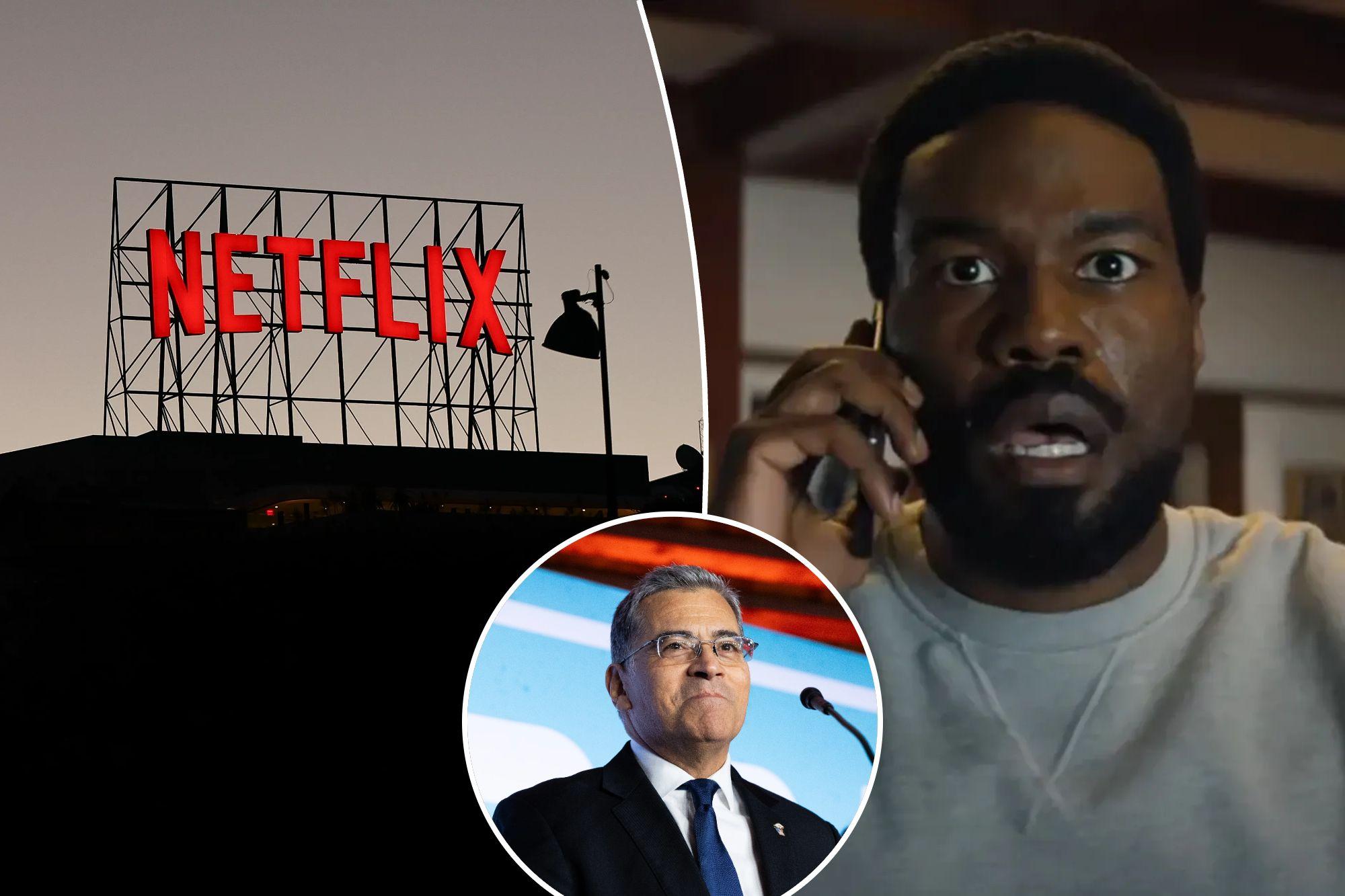
After newly elected California Governor Xavier Becerra is sworn in on January 4, one of the entertainment industry’s most closely guarded secrets — who actually watches the shows and movies on the various streaming platforms — could finally be cracked open.
During the campaign, Becerra pledged to finally force the streamers to disclose more of their viewership data, something the industry has long been loath to do.
Becerra pitched a law called the “California Content Performance Disclosure Requirement” that in theory would require studios and streamers to provide “meaningful performance data” to the town’s creative community.
The law could give creative guilds new power during collective bargaining negotiations with movie studios, and lift the veil on streamers’ business decisions. Many showrunners and scribes around town have been left bewildered after their shows get unceremoniously axed by a streaming service.
When Marvel’s Disney+ show “Wonder Man,” which landed an Emmy nomination for star Yayha Abdul-Mateen II, was renewed — and then unrenewed just a few months later — even the show’s creative team was in the dark.
“The writers’ room was supposed to start this month. The production was supposed to begin early next year, and there was a decision made internally between Disney and Marvel that this didn’t make sense for them, even though a few months ago it did,” the show’s co-showrunner Andrew Guest said on TikTok shortly after the news broke. “That’s essentially all I really know.”
“There’s a wealth of information that could give us context, and we often don’t get that — if we get anything,” says writer Mark Goffman of the lack of transparency from streaming services.
A writer and producer for series including “The Irrational,” “The Company You Keep” and Netflix’s “The Umbrella Academy,” Goffman is already part of a growing list of creatives tapping into data from a San Francisco-based tech firm called Samba TV. Samba uses AI to help track viewing behavior via technology that’s embedded in smart TVs and cable set-top boxes.
Actress Karen David, whose credits include “We Were Liars,” “Tracker” and “The Irrational,” is using Samba TV data as she transitions into producing and working on her first TV pitch. “It’s about comparing our thoughts and creative strategy and notes and seeing how Samba can fill in the gaps on the creative side with the data.”
“The promise of a digital world is that we’d be swimming in data,” Samba TV CEO Ashwin Navin tells us, but adds: “none of the data is accessible.”
Navin says that while Samba has a good relationship with the streamers, the occasional flare-ups are inevitable — especially when your data doesn’t tell the rosy story they want.
“It’s kind of like being a referee: when you are winning everyone loves you but when you’re struggling everyone is upset with you,” says Navin. “Our devotion is to the creative community and they are telling us that they don’t get enough data from the streamers and that their audiences would be better served if they did.”
The lack of data transparency and the general mistrust of streamers bubbled up during the 2023 Hollywood strikes as writers in particular were outraged that the lack of insight into how well their shows performed affected their earnings.
The streaming model pioneered by Netflix wiped out backend payments — which allow for creatives and star talent to be compensated for a mega-hit show — in favor of higher upfront fees.
This only served to incentivize the lack of data transparency. (If showrunners don’t know how big a hit their show is, they can’t feel underpaid). That model is starting to change as the streamers have shifted to ad supported models that are forcing them to share data strategically.
“What I was hearing is that it was an AI strike,” Navin adds. “It was actually a data strike.”
In recent years, streamers have made some overtures in sharing data. In 2021, Netflix began listing its top 10 shows and movies on its platform, and competitors soon followed suit.
A few years ago, the streamer began releasing biannual lists of viewership data for everything that was watched on its platform — though it already plans to pull back on those massive data dumps to just once per year in 2027. Apple, meanwhile, is the biggest black box in all of streaming (it’s never released how many people even subscribe to the 7-year-old service), and Hulu, HBO Max, Paramount+ and Amazon aren’t much better.
Even when there is available data, it’s often incomplete or too late.
“If we get it at all, [it’s] after the season ends,” Goffman says. “There’s not a lot that you can do to change what the show is at that point.” And the data doesn’t compare across other services. “We’d love to compare it to some other networks,” Goffman adds.
The outreach between Samba and Hollywood was organic. David said she first met Navin through other creatives. Similarly, Goffman said he was put in touch with Navin through VENN, the membership community filled with tech and entertainment creatives.
Goffman said upon Navin showing him data on both “The Irrational” and “The Company You Keep” he was sold — and a little upset at his former network partners for not sharing it with him. “It was really insightful. Things we didn’t know about who our viewers were, how often they were staying, what that retention was, some season-to-season data, and I thought this would have been so incredibly helpful, both in terms of positioning and how we would make changes in future seasons to grow that audience.”
Goffman, who is in development on two series, is using Samba’s data to help make the case for how his series would perform to network and streaming execs during the pitching process. “It’s really useful for me to look at the competition,” he says.
“It’s better than flying blind,” Navin says.