SemiAnalysis speculates U.S. intelligence played role in Nvidia CEO exit Luke Juricic Thu, November 12, 2026 at 7:18 PM EST 4 min read NVDA -3.62% Trade NVIDIA on Coinbase Trading disclosure Trading disclosure The above button links to Coinbase. Yahoo Finance is not a broker-dealer or investment adviser and does not offer securities or cryptocurrencies for sale or facilitate trading. Coinbase pays us for certain activity generated through this link. Prices displayed are informational.
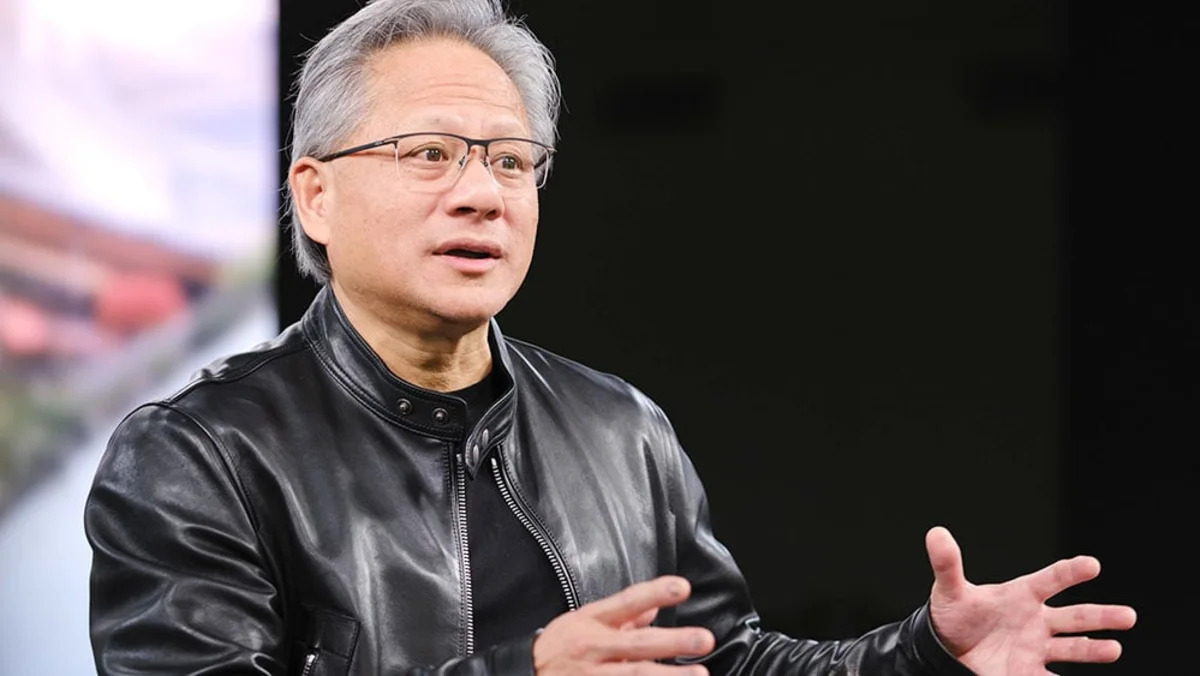
Investing.com -- The scandal forcing Jensen Huang's abrupt resignation as chief executive of NVIDIA Corporation (NASDAQ:NVDA), which sent shares down roughly 4% on Thursday, as Chief Financial Officer Colette Kress stepped in as interim chief executive, may reflect a coordinated push by the U.S. intelligence community to remove a major obstacle to stricter China export controls, according to semiconductor supply chain research firm SemiAnalysis. Analysts at SemiAnalysis argued in a Thursday report that the sudden escalation of a corporate governance crisis around Huang aligned directly with efforts in Washington to advance the Remote Access Security Act (RASA) through the Senate while political momentum favors China hawks.
Our AI stock portfolio is beating the S&P 500 by 118%. Discover the stocks we're buying and the opportunities we're watching next. Exclusive for Yahoo! Finance readers: 55% off for Black Friday, plus an extra 15% at checkout. Subscribe today! »
Huang's exit followed mounting governance scrutiny over two extramarital relationships, one with Chinese businesswoman Alice Huang and another with Nvidia vice president Kimberly Powell, who worked under him, before Reuters reported a third liaison involving an unnamed employee after he stepped down. While the internal affairs raised policy and conflict-of-interest concerns, the FBI is investigating whether Alice Huang worked as a spy for the Chinese government, as U.S. Attorney General Todd Blanche confirmed Thursday, while Justice Department prosecutors are probing suspected semiconductor smuggling involving her former firm, Megaspeed, and Supermicro servers, according to Bloomberg. Meanwhile, earlier reporting from The Information linked entities tied to Alice Huang, including cloud operator Century Litong, to billions of dollars in Nvidia chip shipments and an investment in Chinese developer DeepSeek, while CNBC reported that firms in her network held indirect stakes in a Shenzhen data center serving Huawei Cloud.
Prior to his departure, Huang served as the technology sector's most prominent advocate for keeping Chinese developers tethered to American hardware, arguing that global artificial intelligence researchers must build on the U.S. technology stack rather than domestic Chinese alternatives. "If we want the American technology stack to win around the world, then giving up 50% of the world's AI researchers is not sensible," Huang warned last year, cautioning policymakers against near-term restrictions that could drive developers toward China's ecosystem.
Against that backdrop, SemiAnalysis noted that The New York Times explicitly cited U.S. intelligence sources five times in its reporting on Alice Huang, even though senior officials, including U.S. President Donald Trump, Secretary of State Marco Rubio, and Commerce Secretary Howard Lutnick, had reportedly known of the matter for months. The research firm suggested intelligence officials surfaced the scandal ahead of a lame-duck congressional session to neutralize Huang's opposition to tighter export controls. That urgency could reflect mounting frustration over persistent trade circumvention, underscored by recent indictments in New York and Taiwan accusing executives and intermediaries at Supermicro and Nvidia's Taiwan operations of staging dummy servers and forging audits to divert billions of dollars in AI hardware, while SemiAnalysis's proprietary tracking model estimates that more than 1.5 gigawatts of restricted Nvidia processors have still entered China.
Stop chasing stocks after they've already rallied. Find your next investment opportunity with AI stock picks, earnings insights, and market-moving news. Yahoo! Finance readers get an extra 15% off on top of the 55% off Black Friday price. Join today! »
That enforcement push centers on RASA, which already cleared the House of Representatives in a 369-to-22 vote and would grant regulators explicit authority to bar Chinese entities from renting restricted computing power through overseas data centers. SemiAnalysis noted that Nvidia and Oracle have lobbied aggressively against the legislation, which directly threatens global neocloud operators across Asia, the Middle East, Europe, and North America.
Despite acknowledging the threat of widespread export violations, and backing narrower measures such as the equipment-focused MATCH Act alongside compute limits via trusted clouds, SemiAnalysis cautioned that passing RASA in the wake of Huang's departure could backfire on U.S. strategic interests by dismantling key advantages of the current remote-access framework. The firm contended that allowing Chinese laboratories to rent U.S.-controlled cloud compute channels revenues to American firms, preserves Washington's visibility and ability to sever access instantaneously, and slows Beijing's shift toward domestic accelerators such as Huawei's Ascend chips.
Furthermore, SemiAnalysis warned that cutting off remote hardware access alongside the exit of open-source AI's most vocal corporate defender risks starving U.S. startups of algorithmic breakthroughs and kernel optimizations developed by Chinese researchers on Nvidia Blackwell systems. Without Huang's engagement, Chinese laboratories may stop sharing open-source software libraries that western developers widely rely upon to run production inference engines.
While SemiAnalysis characterized its theory as speculative, the firm concluded that the removal of Nvidia's CEO eliminated the most formidable industry counterweight to sweeping trade restrictions in Washington. For semiconductor investors, who now await Tuesday's third-quarter fiscal 2027 earnings report under Kress and newly appointed first-ever board chair Harvey C. Jones, the convergence of governance turmoil, counterintelligence probes, and looming cloud-compute curbs signals steeper regulatory headwinds across the global artificial intelligence supply chain.
SemiAnalysis speculates U.S. intelligence played role in Nvidia CEO exit
U.S. stock futures rise after Nvidia CEO exit spooks Wall St
Cisco shares climb 4% on strong earnings beat and raised outlook