Adam Spatacco, The Motley Fool Thu, November 12, 2026 at 7:20 PM EST 4 min read NVDA -3.66% KLSH.PVT Trade NVIDIA on Coinbase Trading disclosure Trading disclosure The above button links to Coinbase. Yahoo Finance is not a broker-dealer or investment adviser and does not offer securities or cryptocurrencies for sale or facilitate trading. Coinbase pays us for certain activity generated through this link. Prices displayed are informational.
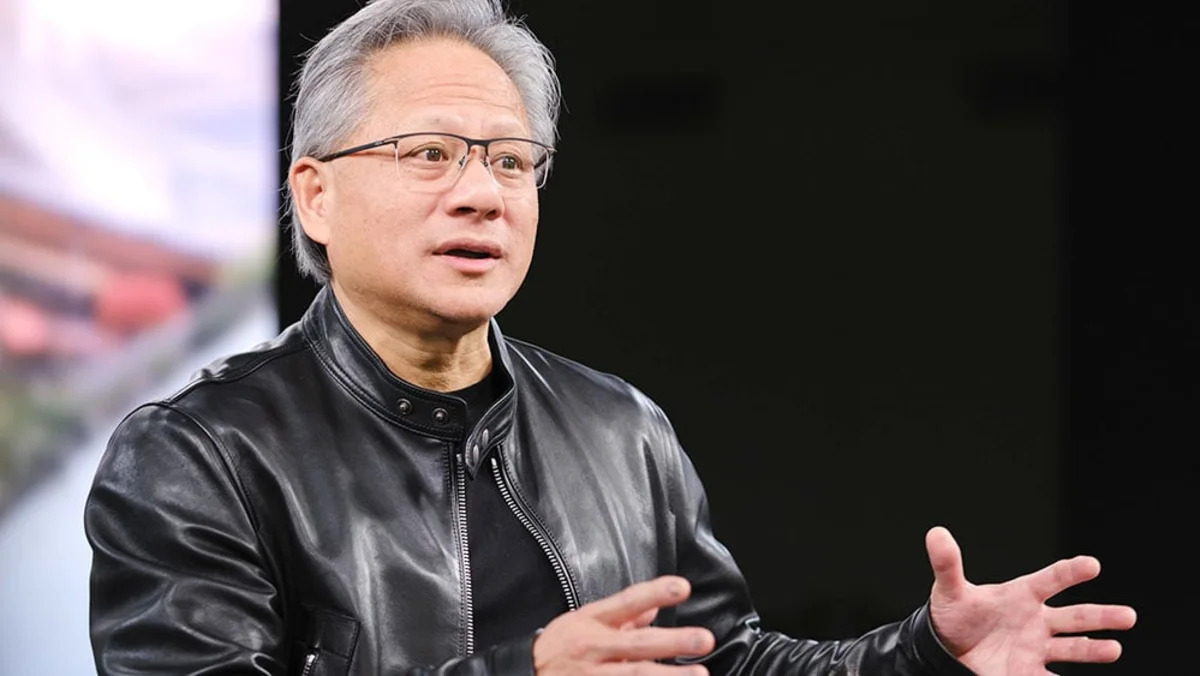
Throughout the artificial intelligence (AI) revolution, Jensen Huang has been synonymous with Nvidia (NASDAQ:NVDA). As the company's co-founder and longtime CEO, Huang helped transform Nvidia from a graphics chip manufacturer into a dominant supplier of AI computing infrastructure.
Recent reports concerning Huang's personal relationships and potential exposure to foreign intelligence have prompted an independent board investigation and raised questions about his future. Huang resigned as Nvidia CEO on Nov. 12. As investors focus on leadership succession plans, prediction market platform Kalshi offers an interesting glimpse into who might lead Nvidia next.
Missed AI's "Act 1"? Act 2 Could Be 16x Bigger. Most investors think they missed the AI boat because they didn't buy Nvidia in 2005. But according to our analysts, we're only at the end of "Act 1"—the R&D phase. "Act 2" is the global rollout. Continue »
According to Kalshi's trading odds, Ian Buck is currently in the lead, with an implied probability of approximately 36% of becoming Nvidia's next CEO. Buck joined Nvidia in 2004 and helped develop CUDA, the software platform that allows developers to program GPUs for applications beyond graphics processing.
That's particularly relevant because hyperscalers like Microsoft, Amazon, Alphabet, and Oracle account for most of the investments in AI infrastructure. During Nvidia's fiscal second quarter, hyperscalers accounted for $48.7 billion of the company's total data center revenue.
Nvidia's chief financial officer (CFO), Colette Kress, currently has a 19% chance to emerge as Nvidia's next CEO. For now, Kress has been named interim CEO.
Kalshi traders are also considering candidates from outside Nvidia. Rene Haas, CEO of semiconductor designer Arm Holdings, currently has 10% odds. Haas previously spent seven years at Nvidia, giving him familiarity with the company's operations and semiconductor strategy. His experience running Arm, whose chip processor designs are used across various devices, makes him a logical candidate.
Former Apple CEO Tim Cook is also among the possibilities, with recent odds around 4%. Of note, Cook's name may only be among the top ranks because President Trump floated the idea of Nvidia appointing him as its CEO.
While Cook's experience managing Apple's global supply chain and navigating international business relationships could be valuable, his candidacy seems speculative, as there's no confirmed indication Nvidia is pursuing him.
Prediction markets can offer useful insights into investor expectations, but they are hardly infallible. Kalshi's probabilities change in real time as they reflect trading activity rather than inside knowledge. Limited liquidity in niche markets can also cause outsize swings in the odds.
Nvidia's next CEO will inherit a business with enormous competitive advantages. The company's Blackwell and Vera Rubin computing platforms, proprietary networking technology, and CUDA software ecosystem have established robust barriers to competition.
These assets are not going to disappear because of a leadership change. Ultimately, investors should pay more attention to Nvidia's ability to execute its technology roadmap than to the latest fluctuations in prediction market odds or rumors.
The Motley Fool Stock Advisor analyst team just identified what they believe are the 10 best stocks for investors to buy now… and Nvidia wasn't one of them. The 10 stocks that made the cut could produce monster returns in the coming years.
Consider when Netflix made this list on December 17, 2004... if you invested $1,000 at the time of our recommendation, you'd have $348,060!* Or when Nvidia made this list on April 15, 2005... if you invested $1,000 at the time of our recommendation, you'd have $1,067,492!*
Now, it's worth noting Stock Advisor's total average return is 849% — a market-crushing outperformance compared to 210% for the S&P 500. Don't miss the latest top 10 list, available with Stock Advisor, and join an investing community built by individual investors for individual investors.
*Stock Advisor returns as of November 12, 2026.
Adam Spatacco has positions in Alphabet, Amazon, Microsoft, and Nvidia. The Motley Fool has positions in and recommends Alphabet, Amazon, Apple, Arm Holdings, Microsoft, Nvidia, and Oracle. The Motley Fool has a disclosure policy.
Who Will Replace Jensen Huang? Here's What Prediction Markets Think. was originally published by The Motley Fool