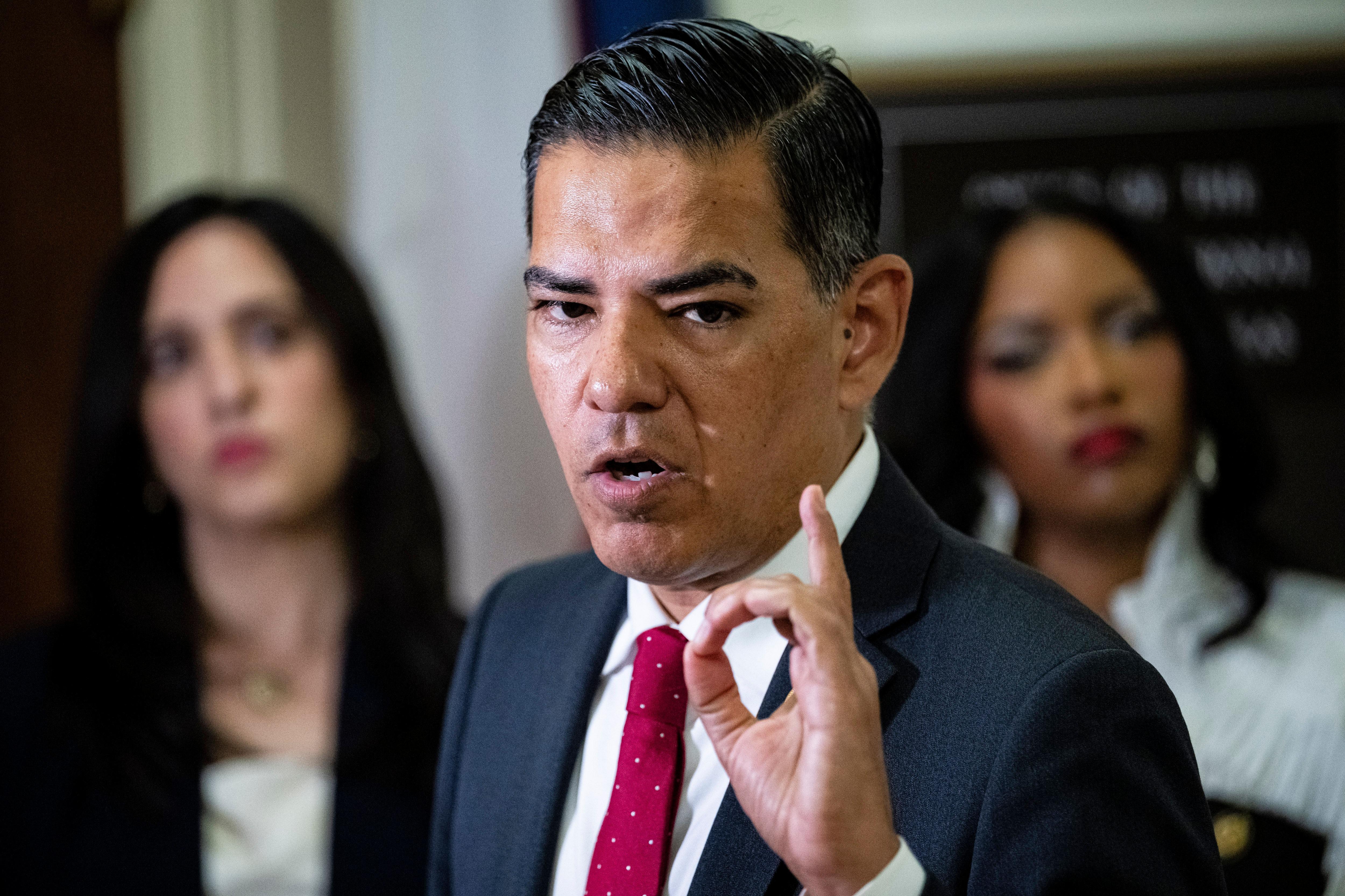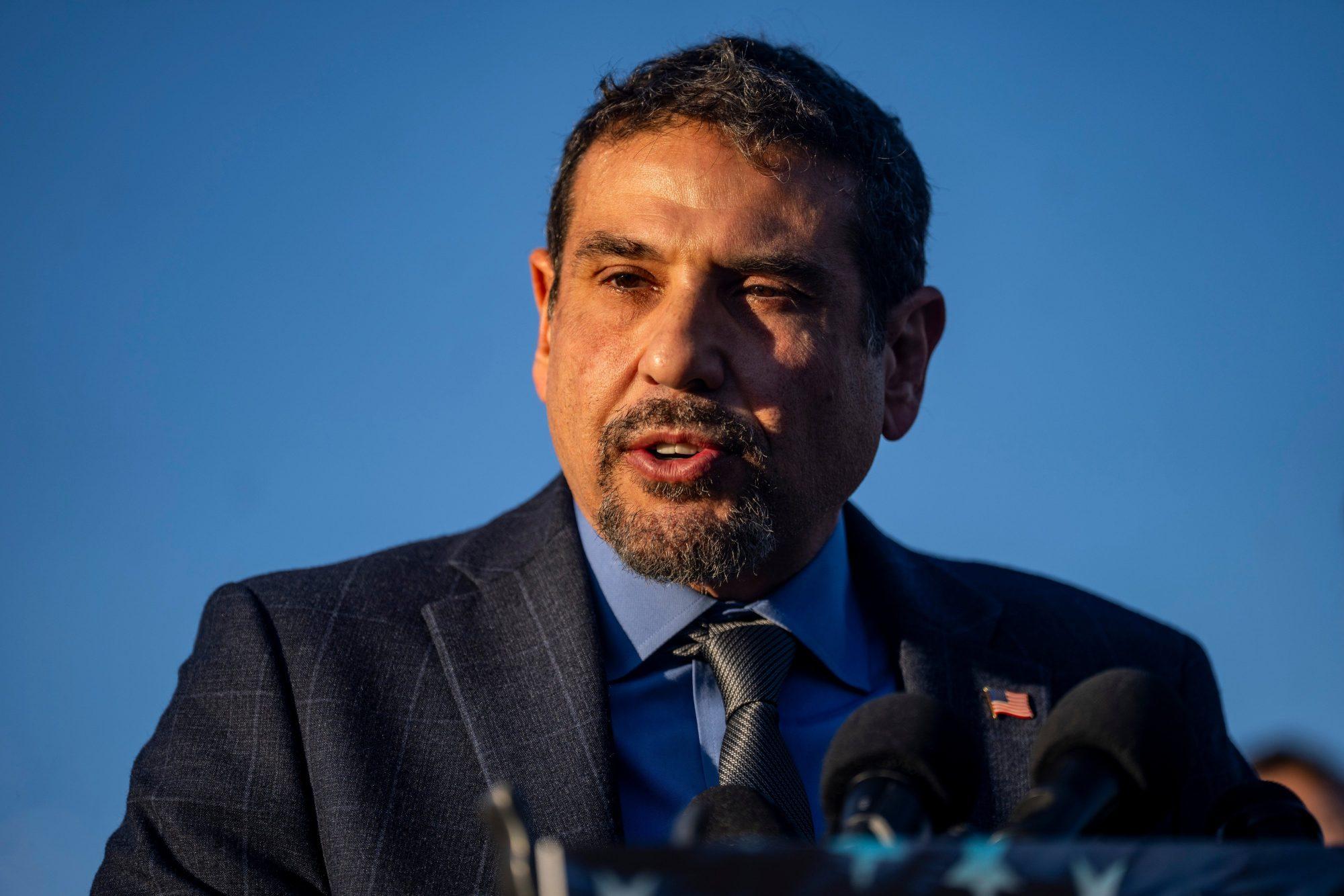
Make New York Post a Preferred Source Rep.-elect Adam Hamawy (D-NJ) speaks at a news conference on ending the war in Iran at the US Capitol in Washington on, Nov. 11, 2026. Bonnie Cash/UPI/Shutterstock Rep.-elect Adam Hamawy sounded more like a spokesman for the Iranian regime this week than an American lawmaker heading to Congress.
Appearing on CNN Tuesday, the New Jersey Democrat refused to call Iran an adversary, claiming instead that the United States had “pushed them into a fight.”
When astonished anchor Pamela Brown noted that Iran has been chanting “death to America” for decades, Hamawy countered, “We’ve been saying ‘Death to Iran’ for decades as well.”
I can’t be the only American who has never heard that phrase uttered.
How did the Democratic Party get here, with one of its own elected leaders refusing to acknowledge that a regime responsible for killing Americans is an American enemy?
More troubling, why were Democrats so afraid to challenge Hamawy before he got their party’s nomination?
Over the last decade, the Democratic Socialists of America and other far-left activists have made enormous inroads into Democratic politics.
They haven’t been shy about their contempt for the party establishment, or their determination to replace it with candidates who share their worldview.
And now, the party establishment seems too paralyzed by its own cowardice to put up much of a fight.
Washington Free Beacon reporter Jon Levine was among the few journalists to sound the alarm about Hamawy in the run-up to his primary victory in a safe blue district.
“I wrote half a dozen articles about Hamawy’s direct personal involvement with Islamic terrorism — nobody cared,” Levine told me.
“All of his major primary opponents ignored me,” he recalled. “One campaign told me they were afraid of being called Islamophobic if they touched it.”
In the weeks before New Jersey’s June primary, I spoke with a campaign manager for another of Hamawy’s opponents to see whether I could offer advice or support.
In a crowded 10-candidate field, the Democrats opposing Hamawy were unable to coalesce around a single alternative opponent who could defeat his well-funded operation.
Like the campaign official Levine interviewed, the one I talked to was terrified of being labeled “Islamophobic.”
Rather than raise questions about Hamawy’s past, all nine of his rivals preferred to leave the issue alone.
The 1993 World Trade Center bombing killed six people and wounded more than 1,000.
Omar Abdel-Rahman, better known as the “Blind Sheikh,” was later prosecuted for his role in a broader terrorist conspiracy.
Hamawy appeared as a defense witness during that 1995 trial — and just last week described Rahman as a “leader of the community.”
Surely that history deserved scrutiny from Hamawy’s fellow Democrats.
Yet none of his rivals mentioned his disturbing background to the district’s voters.
Hamawy as a primary candidate should have been on the national Democratic Party’s radar — and its leaders should have mounted a real effort to block him from becoming the district’s Democratic nominee.
It was in the party’s best interest to narrow the playing field, encouraging longshot candidates to drop out so that voters could coalesce around Hamawy’s strongest opponent.
After all, he won the nomination with less than 29% of the vote in the fractured field.
Every DSA-backed primary candidate has an entire machine behind them, from graphic designers to fundraisers to foot soldiers eager to hold rallies and go door-to-door to get out the vote.
Outside groups and donors reportedly poured roughly $1.8 million into supporting Hamawy’s candidacy.
Hamawy’s opponents had no similar advantage, either materially or in manpower.
These groups aren’t spending millions because they’re particularly interested in preserving the Democratic establishment.
They’re investing in candidates who will change the party, and the country, from within.
And the Democratic establishment put up no resistance — instead, it kept helping them.
Look at Michigan, where the Chuck Schumer-linked Senate Majority PAC reportedly spent tens of millions of dollars supporting Abdul El-Sayed’s Senate campaign.
After the election, El-Sayed was asked who should lead Senate Democrats.
“I think it is a moment right now for us to be thinking about new leadership,” he said.
“Sen. Schumer has led ably in the past. But this is a moment for a refresh.”
After all that money spent helping him win, El-Sayed was already suggesting that the man whose political operation had supported him should be replaced.
Democratic leaders are so frightened of a confrontation with their party’s left flank that they’re willing to spend millions supporting candidates who have no intention of returning the favor.
The Democratic Socialists and their allies have been perfectly clear about what they want.
The Democratic establishment is inexplicably still unwilling to believe them.
Bethany Mandel writes and podcasts at The Mom Wars.