Make New York Post a Preferred Source If the city has such a desperate housing shortage, why do so many new apartment buildings around town seem tiny?
The magic number for residential developers in the Big Apple is 99 — the maximum number of units they can build to keep construction and labor costs low and to maximize future profits under a city-state tax-relief program.
The Real Estate Board of New York found that new or planned apartment projects in the five boroughs with under 100 units surged to 172 from July 2024 to September 2026, as tallied by the city’s Housing Preservation and Development agency and the Department of Buildings. In comparison, a mere 13 such small-scale projects were recorded from 2008 to 2023.
Since 2024, Brooklyn and Queens had 65 and 58 new projects, respectively, with fewer than 100 units, while Manhattan had 17, according to REBNY.
A mere 99 units in some buildings is minuscule in light of the city’s need for 700,000 new homes in the next decade. But the reason they’re so popular with builders is simple, say REBNY vice president of market data Keith DeCoster and executive VP of external relations Zachary Steinberg.
For new buildings with 100 or more units, the state’s 485-x tax exemption program requires more affordable apartments and higher minimum wages for construction workers in exchange for tax breaks, compared to requirements under the 421-a program that expired in 2022.
“We should be encouraging larger projects and making sure every neighborhood contributes to addressing the housing crisis,” said REBNY executive vice-president of public policy Basha Gerhards.
“New York cannot meet its housing needs by building small. We need policies that make it possible to build substantially more housing, particularly in transit-rich neighborhoods that can support greater density.”
The imperative to keep any given new building under the 100-apartment threshold results in some odd new situations.
The 23-story Eastline, a luxury rental project by Chess Development, is divided into two connected structures designed by the same architect of 99 units each at 1655 First Ave. and 355 E. 86th Street. The addresses share a common courtyard, as well as certain indoor amenities and an open-air, rooftop lounge.
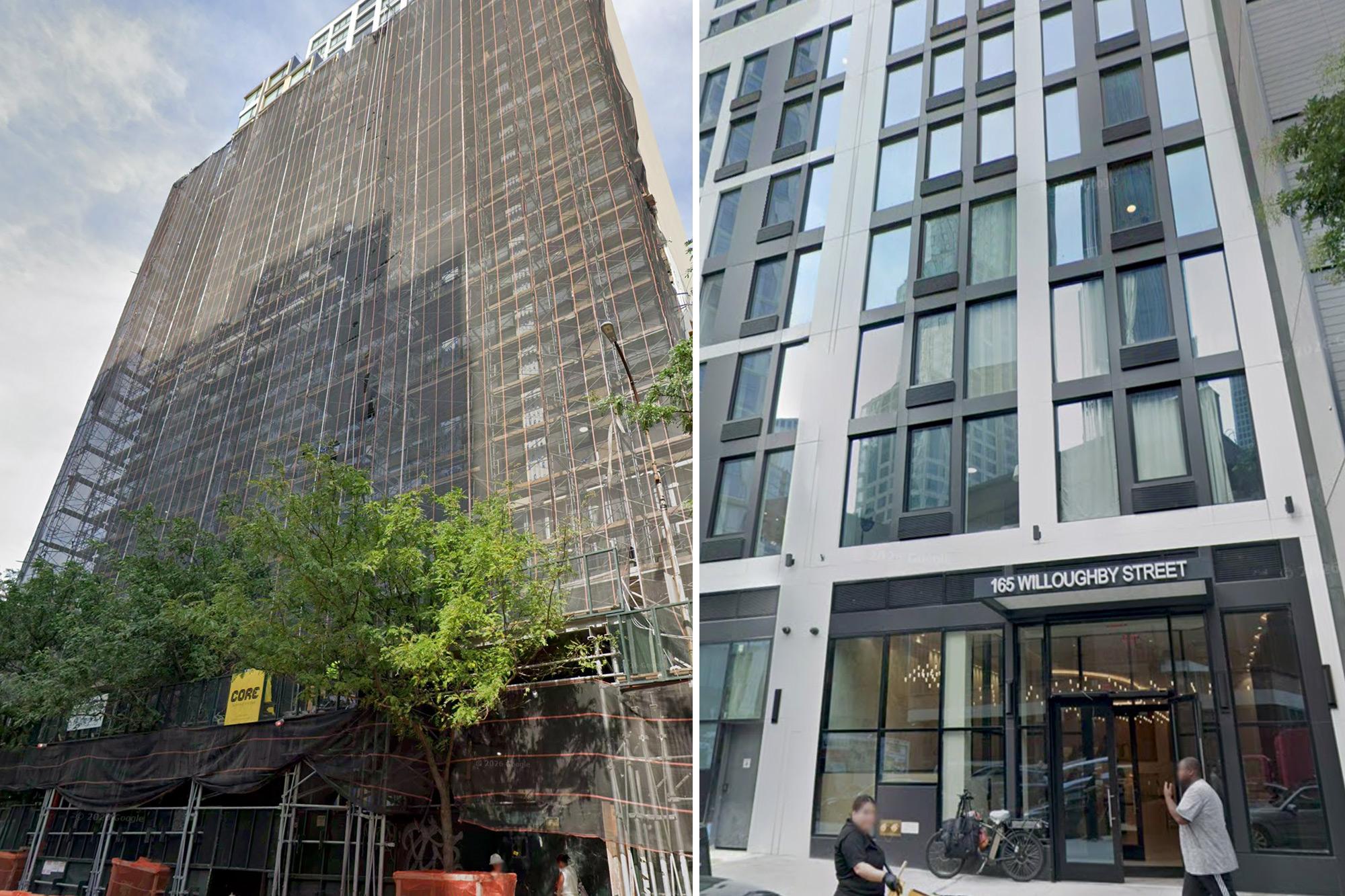
In downtown Brooklyn, The Fleet, with a total of 450 rental homes, is divided into five separate addresses rising to 30 stories including 163 and 165 Willoughby St., none with more than — you guessed it — 99 apartments.
Developers’ tax benefits under 485-x are complicated and variable. They may last from 10 to 40 years depending on project size and location. For those with fewer than 100 apartments, developers may receive a 25-year exemption from taxes on the increased property value that results from new construction.
To qualify for the tax exemptions, a new building with under 100 apartments is required only to make 20% of them affordable, based on the “affordable” definition of 80% of area household median income. There are no construction-wage requirements.
But with between 100 to 149 apartments, 25% must be affordable and construction workers on the site must be paid at least $41 an hour. The latter rule alone costs developers at least 2% more, REBNY says.
In large new projects with 150 or more units in certain areas, the 25% earmarked as affordable must be based on 60% of AMI, meaning rents must be within reach of lower-income households. Construction workers’ wages must be significantly higher than $41 an hour.