Oracle Is Down 34% in 2026: Is ORCL Stock Dead Money or Due for a Bounce? David Moadel Thu, November 12, 2026 at 3:04 PM EST 6 min read ORCL -0.30% MSFT +0.23% CRWV -6.29% Explore stocks on Coinbase Trading disclosure Trading disclosure The above button links to Coinbase. Yahoo Finance is not a broker-dealer or investment adviser and does not offer securities or cryptocurrencies for sale or facilitate trading. Coinbase pays us for certain activity generated through this link. Prices displayed are informational.
Oracle (ORCL) has dropped 34% this year as $90 billion-plus in AI capital spending, negative free cash flow and rising debt overshadow 30% revenue growth.
Microsoft (MSFT) is up 9% because diverse cash generators fund its AI spending, while CoreWeave (CRWV) is down 21% under heavy debt.
Bulls see a 14x forward P/E and a backlog CFO Hilary Barbara Maxson expects to half-convert within 36 months; bears want proof that free cash flow turns positive.
The biggest 401k decisions tend to get made once and never revisited: when to roll it over, what to hold inside it, and when to start taking money out. That is exactly what the report: 401k & IRA Tips and Answers was created to address, and it is free today. Read more here. (Sponsor)
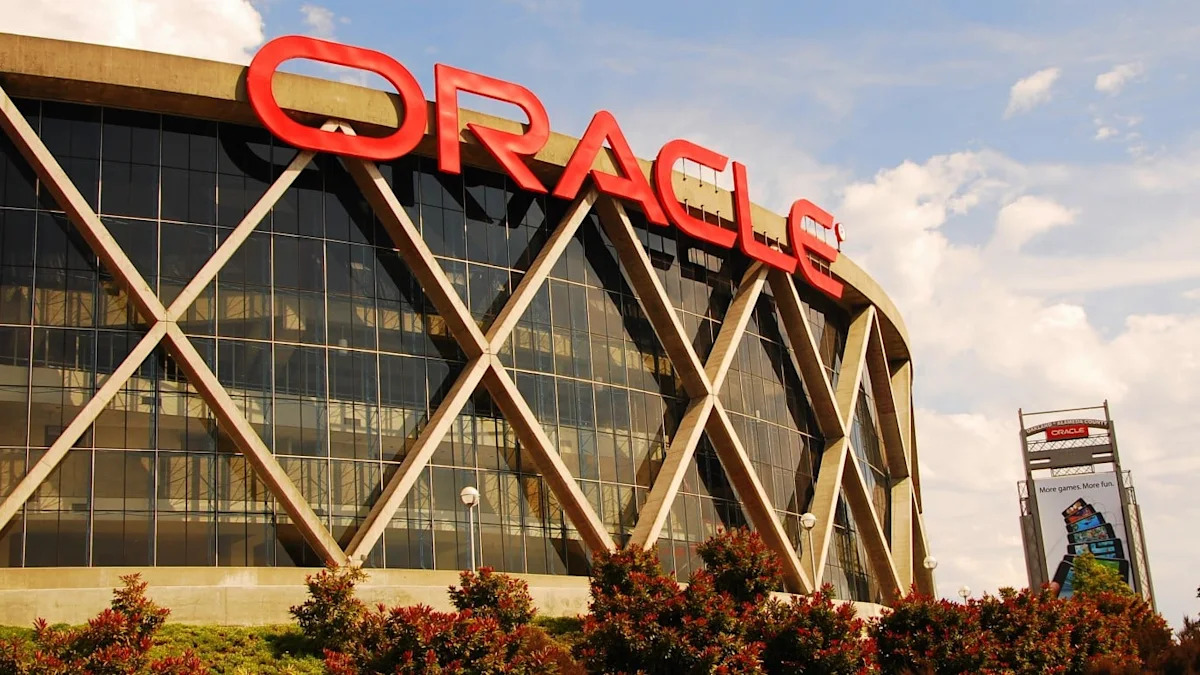
Few AI stocks have fallen as hard in 2026 as Oracle (NYSE:ORCL), which went from market darling to victim of the AI spending debate. Oracle stock is down 34% year to date (YTD) to $127.17 in afternoon trading. A 0.9% dip from the prior close adds to the damage, though it's small next to the year's decline.
Over the past 52 weeks, Oracle stock has traded as high as $248.46 and as low as $109.21. Heavy investment in AI cloud capacity made the company a Wall Street favorite, then a target of investor concerns about what that build-out costs.
Oracle's fiscal 2026 results, released June 10, set a conservative tone. Oracle reported full-year free cash flow of negative $23.69 billion on capital spending of $55.66 billion, and the stock slipped after the report.
For many Americans, funding a 401(k) only leads to more retirement questions. Should you roll your 401k into an IRA, and when? What's the tax impact if the rollover check gets made out to the wrong name? When do required withdrawals begin, and how much do you have to take?
Fisher Investments put the answers in one place. 401k & IRA Tips and Answers is free, and it covers rollovers, contribution limits, required withdrawals, and what actually belongs inside the account once the balance gets serious. Read More Here ›
A stronger quarter on September 10 didn't change the narrative. In Q1 FY2027, Oracle's revenue rose 29.6% year over year (YoY) to $19.34 billion, cloud infrastructure revenue jumped 121%, and adjusted earnings per share (EPS) of $1.92 beat the $1.74 consensus. Behind that growth, the company's capital spending reached $28.50 billion, leaving its free cash flow at negative $5.40 billion. Oracle gave up an early post-earnings pop as financing concerns weighed on the stock.
Microsoft (NASDAQ:MSFT) stock is up 9% YTD to $523.42, cutting against Oracle's slide. Azure, Microsoft 365, Windows, Xbox and LinkedIn give the software giant several cash generators, and its free cash flow stays positive despite heavy AI spending.
CoreWeave (NASDAQ:CRWV) stock is down 21% YTD to $56.24, a sign of how generally investors have soured on AI infrastructure. As a pure-play AI cloud, CoreWeave leases graphics processing unit (GPU) capacity to AI labs, hyperscalers and enterprises. That model pairs explosive growth with heavy debt and deeply negative free cash flow.
Oracle sits between those two models. Mature database and applications software still generates steady support revenue for Oracle, while Oracle Cloud Infrastructure demands the same capital intensity as CoreWeave's business. Compared with Microsoft, the company has far fewer business lines to absorb that spending.
The bulls point to Oracle's very large contracted backlog of AI cloud commitments, reported as remaining performance obligations (RPO). Chief financial officer Hilary Barbara Maxson said on the September 10 call that Oracle expects "around half of our RPO to convert into sales over the next 36 months." After the selloff, Oracle trades at a forward price-to-earnings (P/E) ratio of 14x.
Wall Street analysts have a consensus price target of $235.77 on Oracle. Ratings lean heavily positive, with 7 Strong Buy and 28 Buy ratings against 7 Holds. For earnings, management guided for fiscal 2027 adjusted EPS of $8.10, and analysts' average fiscal 2028 estimate sits higher.
The bears focus on what the build-out costs. Oracle expects full-year capital spending of $90 billion to $95 billion, much of it funded with debt and new equity, which raises balance-sheet risk. That spending also flows straight to the power, cooling and networking suppliers behind every data center, and we featured seven of them in a free report here. Rising interest costs are already visible, with the company's interest expense up 55% to $1.4 billion in Q1.
Backlog only turns into profit if customers pay and Oracle brings capacity online on time, and some of its biggest AI customers are burning cash themselves. Volatility adds another layer, since Oracle carries a beta of 1.778, meaning the stock has historically moved more sharply than the broader market. One analyst rates Oracle a Sell, a lone dissent among the analysts covering the stock.
Oracle has guided for Q2 FY2027 revenue growth of 30% to 34% and adjusted EPS of $1.85 to $1.93. The next test for Oracle is whether cloud infrastructure growth keeps accelerating as more backlog turns into revenue. A second test for Oracle is whether its free cash flow improves as new capacity ramps, since management hasn't given a time frame for turning it positive.
Investors should watch for any update on how Oracle funds the build-out, including customer prepayments and bring-your-own-hardware deals. Strong answers could support the bounce case, while another quarter of heavy spending might reinforce the dead money view. It could make sense for ORCL stock traders to stay cautious while the debate over Oracle's AI spending resolves.
(sponsor) 401(k)s are powerful retirement tools. But even savvy savers can make mistakes that quietly cost you money for decades. Choosing the wrong fund, ignoring small fees nobody adds up, rollover steps done in the wrong order, the list goes on.
These sort of mistakes is exactly what 401k & IRA Tips and Answers was created to help prevent. It is a free guide from Fisher Investments on rollovers, contributions, required withdrawals and the mistakes that do the most damage to a retirement account. Learn More Here ›
Contact editorial@247wallst.com for any questions or corrections.