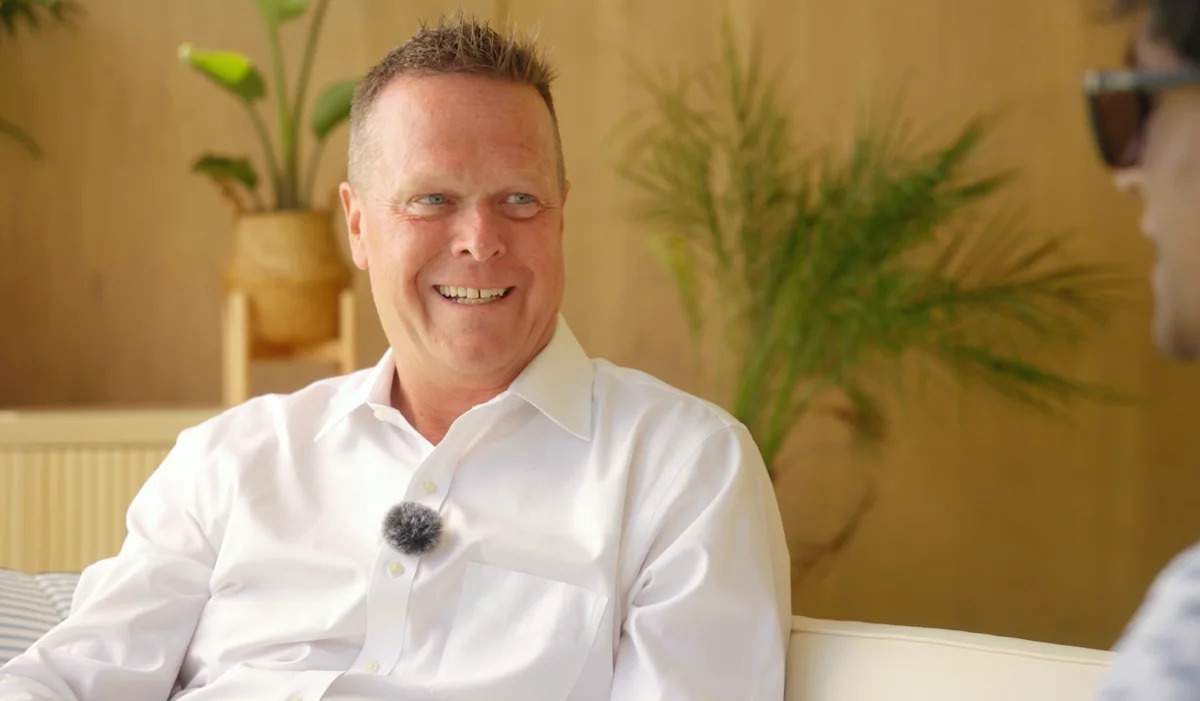
How Commodities Went from Ignored to Unmissable ETF.com Staff Thu, November 12, 2026 at 2:53 PM EST GC=F -2.82% SI=F -3.93% ABDN.L -0.78% Bob Minter smiles while talking at the ETF Oasis At the ETF Oasis at Future Proof in Southern California, ETF.com's Sumit Roy sat down with Robert Minter, CFA, CMT, CAIA, Director of Investment Strategy at Aberdeen, to unpack a volatile 2026 marked by triple-digit oil, swinging precious metals, and markets navigating ongoing geopolitical turmoil. Minter breaks down why gold held firm despite rising rates, how central bank buying broke its link to real yields, how silver differs, and three ways investors can add commodities to their portfolios. The following is a transcript of their conversation.
Sumit Roy: Bob, great to see you. How are you doing?
Robert Minter: Terrific. It's a pleasure to be here in beautiful Southern California.
Sumit Roy: Absolutely. We're here at Future Proof. I have to ask you about commodities. It's been a very interesting year. We're seeing oil back above $100 per barrel. It's been very volatile. Precious metals have made some moves as well. Gold, of course, had a blockbuster year in 2025. 2026 has been up and down, but I think it's back in the green. What's your outlook for commodities broadly? And maybe you can talk about some specifics that stand out as well.
Robert Minter: Yeah, this year has been really volatile in commodity prices, for good reason. From February for the next four months into the end of June, we had a number of commodities pricing in two regional wars. Then for the following two months after that, in July and August, we were pricing in, maybe there's a chance at peace and maybe this tightness in supply goes away. And then we realized everyone was really not quite so close to a peace plan, and we started pricing in this tightness in supply going forward. So that's what's driving volatility. It's been really dramatic. Gold, for example, volatility so far this year is about double what the ten year average is.
It's interesting because it draws attention to the asset class. When I started covering commodities in 2012, no one else wanted to cover it. It was boring and nothing happened. Why would you want to cover an asset class like that? And now the opposite is the problem, that there's so much news out there that it's hard for investors to get the context in which those data points are happening and to give perspective on the hour.
Sumit Roy: Because there's a short term and a long term, right? The war seems to be driving things at least this year. But long term, there are other factors driving things like debt levels and such. Is that right?
Robert Minter: Correct. And gold is a perfect example of what you're talking about. We're talking today on a day when the Fed just raised rates by 25 basis points. Typically ETF investors, which is a broad group of people, there's retail and of course there's institutional across that sector, as well as the advisors. And typically, ETF investors have sold gold when rates rise.
What's interesting is that rates have risen, market rates especially have risen over the last month or two, and gold hasn't sold off that much. So something's changing in their thinking. And it's exactly what you said, it's the debt level. It's not just the US, of course, it's every developed country. So what would change our outlook of liking the prospects for gold going forward? You could see a government somewhere trying to lower the amount of debt that they have.
Sumit Roy: These are such difficult things to do. There used to be this chart that people passed around looking at real interest rates versus gold, and there was this tied relationship. And then gold just broke away from that. Real interest rates went up but gold also went up. Do you think that pretty much highlights what's going to happen going forward? These problems are so big they're unlikely to be resolved, so gold is just in this uptrend. Is that it?
Robert Minter: You just drew a bull's eye right on the geopolitical problem. If you notice when that break happened, and that's why I like charts, because people can visualize the chart. They can see that break. And it happened in 2022. Russia invaded Ukraine and the West reacted by seizing $300 billion of Russian assets that were held at Western banks.
That was a wake up call for emerging market central banks. They said, "Listen, if I own treasuries or US dollars, I can be shut out of trading that by the US, so I would own something else." There aren't really many good alternatives to the US dollar as a reserve currency for a bunch of reasons, but gold is an alternative. So they started buying gold. In fact, in 2022, '23, '24, '25, central banks in total bought about 1,000 tons of gold each year, which is a third of all the mine supply for those years. So if you have someone buying a third of the gold, the price should go up, right? Or it's not a market. So that's what broke the correlation you were talking about.
Sumit Roy: Do you think gold obviously has a lot of these tailwinds over the long-term, structural drivers that silver, platinum, palladium can also rally? Or are they completely different markets?
Robert Minter: They are completely different. It's a really good question, because it's a common misconception that when gold rises, silver just follows it. We've just talked about how a major pillar of that gold growth has been central banks. No central bank is buying silver. But when you look, that's where the longer term trend helps. So over the last ten years, silver demand has risen 17%. Silver supply has dropped 8%. So in 2019, those two trends crossed. We went into a deficit market, and we started eating through the aboveground inventory that had already been mined and refined, and we've been in a deficit since then.
So what does it take to get out of the deficit? Some additions, some investment in supply. We're starting to get into these geopolitical things that are taking us from a globalized world into a segmented world. And there's always supply disruptions in commodities, the physical market. In a segmented world, supply is less able to react to any disruptions, so price becomes more volatile.
Sumit Roy: Say an investor wants to add commodities to their portfolio. Two of the big choices that I see investors making is adding broad commodities versus adding a precious metal like gold. Which is the right move?
Robert Minter: Sure. So there are three main ways to get commodities exposure in your portfolio. One is physical. There are some commodities that lend themselves to being held physically, the gold, silver, platinum, palladium, right there, bars in a vault. Or you can buy small amounts and keep them at home. That's actually a completely separate market, but that is still physical gold, silver, platinum, palladium. For broader exposure, you can buy futures. We would suggest a broad commodity index, because broad commodity indices are great at capturing surprise inflation. They're the cause of the surprise inflation, so it's great to use them for that. And then we also hear from people that want to look at, say, future metals, battery metals, cobalt and lithium, some of these metals that are tied to AI or batteries. You can't buy the physical, and the futures are not traded enough to be liquid, so they can't go in an open end fund of any size. So the best way in that case is to buy the equity of the miners, the stocks of the miners that are bringing those to market, or battery makers, as another instance. So there are three main ways.
Sumit Roy: Gotcha. Bob, great stuff. A pleasure speaking with you.
Robert Minter: Thanks for having me.
For informational/educational purposes only, not a recommendation, solicitation, or offer to buy/sell securities. Commodities involve risks including market volatility, liquidity issues, and potential loss of principal. Past performance does not guarantee future results.
EFS000375 2/28/27 AA-031126-215004-1
Permalink | © Copyright 2026 etf.com. All rights reserved