Jensen Huang's exit puts Nvidia's $530 billion web of AI deals under the microscope Jared Blikre Thu, November 12, 2026 at 2:05 PM EST 3 min read NVDA -5.19% CRWV -7.18% NBIS -17.71% COHR +0.31% AVGO +5.84% Explore stocks on Coinbase Trading disclosure Trading disclosure The above button links to Coinbase. Yahoo Finance is not a broker-dealer or investment adviser and does not offer securities or cryptocurrencies for sale or facilitate trading. Coinbase pays us for certain activity generated through this link. Prices displayed are informational.
Jensen Huang didn't just sell chips for the AI boom. He helped pay for it, and Wall Street is now repricing everyone on his tab.
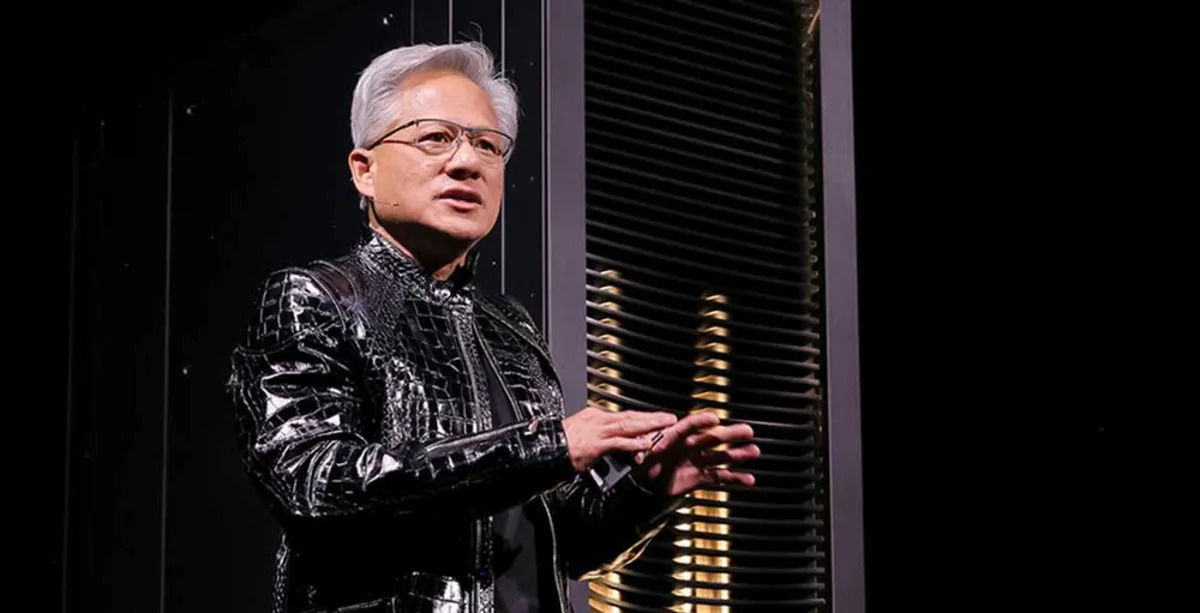
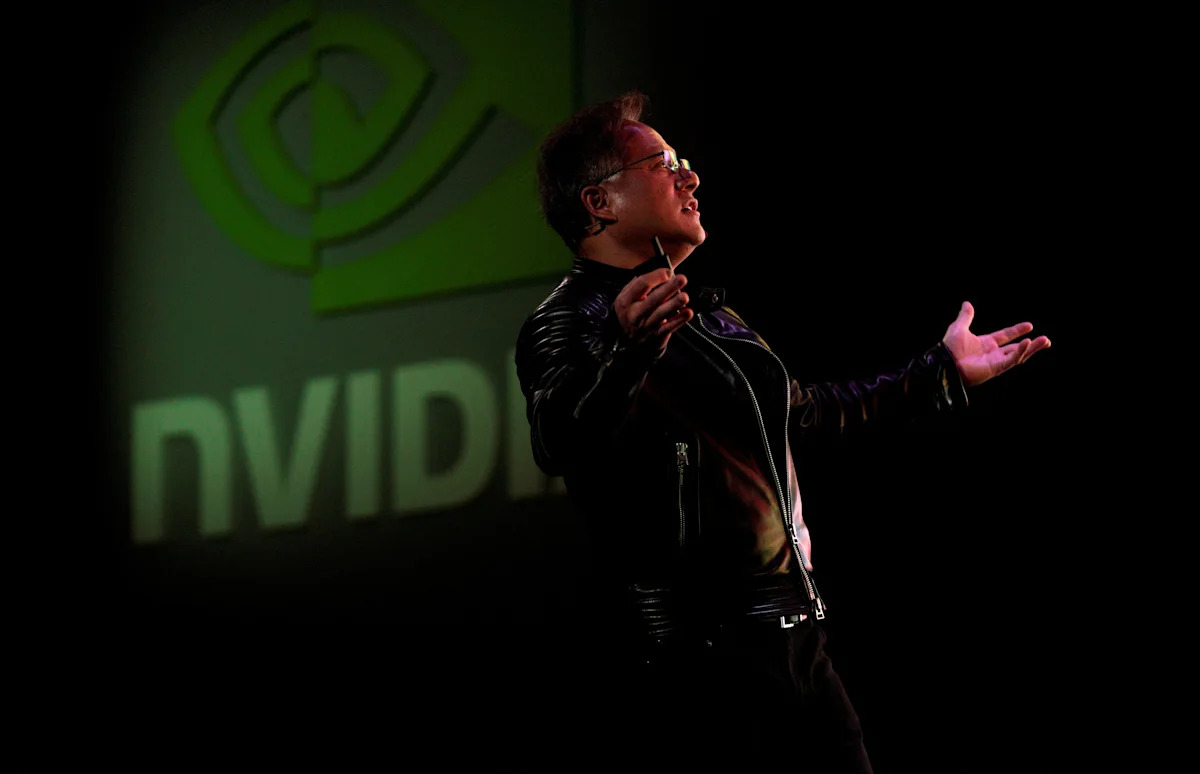
Huang resigned as Nvidia's (NVDA) CEO and left its board Thursday, effective immediately, after reports of two affairs, one involving an alleged Chinese spy. CFO Colette Kress is now interim CEO, and the company still plans to report earnings Tuesday.
Nvidia stock sank to its lowest level in more than a year, putting it briefly $2 trillion below its October record. But the selling hasn't hit the AI trade evenly. Nebius (NBIS) and CoreWeave (CRWV), cloud companies that rent out Nvidia chips, took the worst of it, while rivals Broadcom (AVGO) and AMD (AMD) and most of Big Tech held up.
Nvidia owns stakes in Intel (INTC), SpaceX (SPCX), CoreWeave, Coherent (COHR) and Safe Superintelligence, bought $3 billion of Meta's (META) stock offering, and has pledged up to $10 billion to Anthropic ahead of its IPO next week. It holds a $30 billion stake in OpenAI and has a preliminary deal to invest as much as $100 billion more. Many of those companies turn around and buy Nvidia's chips.
Nvidia's latest quarterly filing lists about $530 billion in commitments and guarantees, by Yahoo Finance's count, including roughly $65 billion to rent back cloud capacity from companies like CoreWeave and a guarantee of up to $105 billion on OpenAI's Ohio data center leases.
"It does bring into question what we've been talking about for ... the better part of the last year, which is a lot of these circular relationships," Liz Thomas, chief market strategist at SoFi, said at Yahoo Finance Invest.
The first is the dealmaker himself. Huang sat at the center of these deals, and Kress, who signed off on them as CFO, now decides how many more to write.
The OpenAI guarantee pays out only if OpenAI defaults, and the kind of downturn that would sink OpenAI would likely hit Nvidia's own sales at the same time.
Customers are paying slower too. Nvidia's receivables hit $63 billion last quarter, with bills taking about 60 days to collect, up from 45. Nvidia blamed longer terms on big deals.
And its own portfolio is shrinking. The value of Nvidia's largest public stock holdings has lost more than $20 billion in value since June, led by Intel.
The money behind the AI build-out was already getting harder to find. CoreWeave's CEO said this week the company won't borrow without collateral at today's high rates. BofA's Savita Subramanian told Yahoo Finance the tech giants are now selling more of their own stock than they buy back, saying they're "net issuers today rather than buying back their stock."
Nvidia's balance sheet is the counterweight, with about $99 billion in cash and securities against $33 billion of debt at the end of July.
Tuesday's earnings report will show whether Kress stands behind the guidance and the commitments, and whether customers are paying on time.
"Can the market survive without positive results from Nvidia?"
Internal AI tools helped analyze interview transcripts, research, and draft this post. Humans reviewed, edited, and fact-checked this post before publication.
Jared Blikre is the global markets and data editor for Yahoo Finance. Follow him on X at @SPYJared or email him at jaredblikre@yahooinc.com.
Click here for in-depth analysis of the latest stock market news and events moving stock prices
Read the latest financial and business news from Yahoo Finance