Patrick Sanders, The Motley Fool Thu, November 12, 2026 at 12:23 PM EST 5 min read AAPL +0.20% NVDA -5.11% Explore stocks on Coinbase Trading disclosure Trading disclosure The above button links to Coinbase. Yahoo Finance is not a broker-dealer or investment adviser and does not offer securities or cryptocurrencies for sale or facilitate trading. Coinbase pays us for certain activity generated through this link. Prices displayed are informational.
Apple (NASDAQ:AAPL) had a market capitalization of $347 billion when Tim Cook became CEO in August 2011. When he stepped down 15 years later, the company was worth $4.6 trillion, and it has only gotten bigger since. Today, Apple has a market cap north of $5 trillion, making it the most valuable company in the world.
Cook inherited a company with one wildly successful product: the iPhone. He left his successor, John Ternus, with something considerably bigger -- a technology giant generating nearly half a trillion dollars in annual revenue, with enormous financial resources, and an installed base exceeding 2.5 billion active devices.
Missed Nvidia in 2009? This Rare Signal Is Flashing Again. In 2009, a "Double Down" signal flashed for a little-known chipmaker called Nvidia. For the first time in years, that same "Total Conviction" signal is flashing for a company 1/100th the size of Nvidia. Continue »
I don't expect Apple under Ternus to replicate the extraordinary growth it delivered on Cook's watch. But I believe its financial strength gives its new CEO opportunities that few competitors can match. Ternus is already putting those resources to work.
Apple's annual revenue jumped from $108 billion in its fiscal 2011 to $478.8 billion in its fiscal 2026. That includes a 15% increase in the most recent fiscal year, demonstrating that Apple can still deliver impressive growth despite its enormous size.
Its fiscal fourth-quarter results reinforced that point. Revenue increased 12% to $114.5 billion, including $57.6 billion in iPhone sales, up 17%. Mac revenue jumped 24% to $10.8 billion, while services revenue reached a record $31.6 billion.
Apple's services business is particularly valuable. Its gross margin reached 76% during the quarter, providing a highly profitable revenue stream alongside the company's hardware operations.
The cash keeps coming. Apple showed $28 billion in operating cash flow in the quarter, and returned approximately the same amount to shareholders through dividends and stock repurchases. As of the end of its latest fiscal year, Apple held $137 billion in cash and marketable securities against approximately $80 billion in debt.
That's an impressive cushion for a company entering an expensive new phase of product development.
Ternus became CEO on Sept. 1, and his first months suggest he has little interest in simply maintaining the business Cook built.
Apple introduced its first foldable iPhone, the iPhone Duo, alongside the iPhone 18 lineup. It also unveiled its first touchscreen MacBook Pro, expanding its premium laptop offerings with a model starting at $2,899. Then there's HomeView, a $299 smart home display built around its upgraded Siri AI assistant.
These products give Apple opportunities to generate additional revenue from existing customers while attracting new ones.
Ternus may have even bigger ambitions. Apple has reportedly explored developing AI servers using its custom processors and Nvidia's NVLink technology. That would represent a return to the enterprise server market after a 15-year absence.
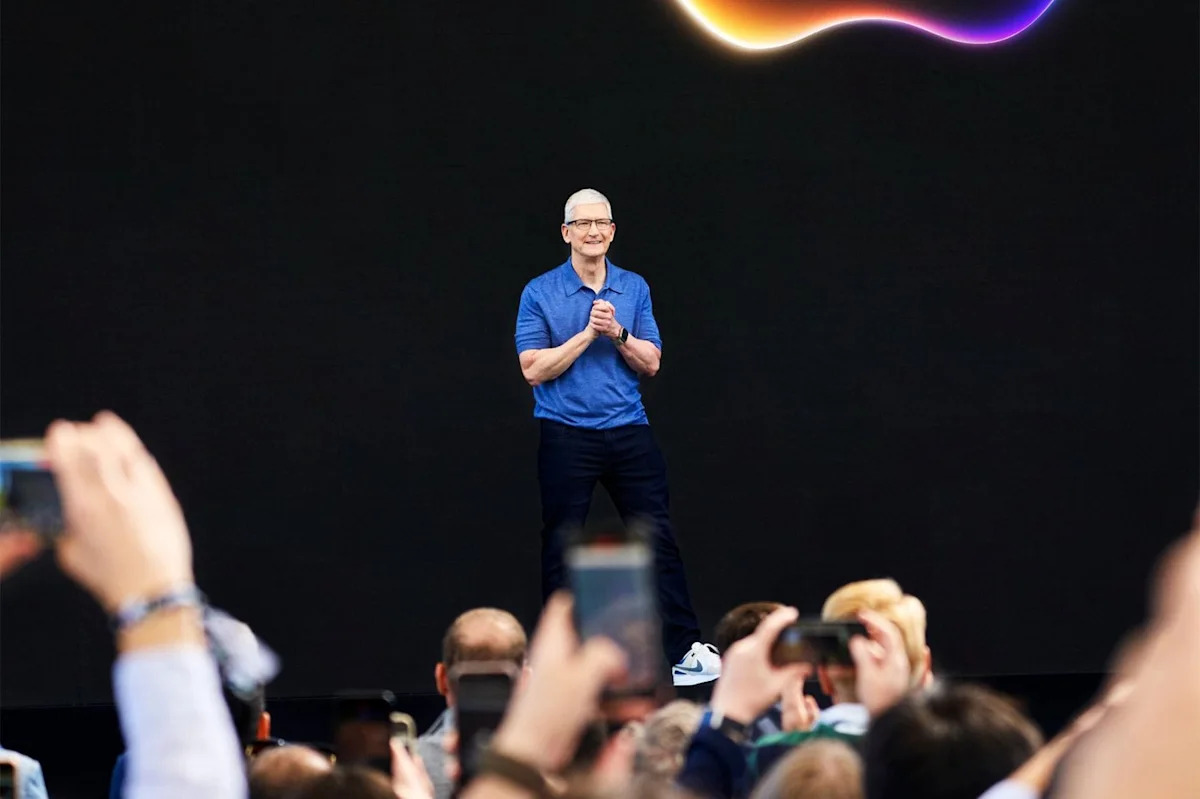
John Ternus became Apple CEO on Sept. 1 and is already making big moves. Image source: Apple.
The project remains unannounced, with no commercial launch expected before 2029. Still, it illustrates the possibilities available to a company with Apple's financial resources.
Apple is spending heavily to develop those possibilities.
Apple spent $45.8 billion on research and development (R&D) during fiscal 2026, up from $34.6 billion the previous year.
During its fiscal Q4 earnings call in November, management emphasized that AI investment remains a priority. Operating expenses increased 21% in the quarter, driven largely by additional R&D spending.
However, that budget expansion is creating financial pressures. Apple reported a 47.9% gross margin in the quarter, including approximately 1 percentage point of benefit from tariff refunds. Management expects that margin to decline to between 45% and 46% in the first quarter of its fiscal 2027, primarily because of higher memory costs and expenses associated with launching Siri AI.
Ternus described the current memory pricing environment as unprecedented. That's a meaningful challenge, particularly as Apple introduces more expensive hardware and expands its AI capabilities.
Still, I believe the company's financial strength provides considerable flexibility. Apple can invest billions in new products without depending on any single initiative to succeed.
The bigger challenge is its size. Adding $100 billion in annual revenue would have nearly doubled Apple's business in 2011. Today, it would represent growth of approximately 21% from fiscal 2026 levels.
Cook's extraordinary run established Apple's financial foundation. Ternus now has the resources to expand its products, develop AI capabilities, and pursue entirely new markets. I don't expect another 13-fold increase in Apple's valuation. However, I believe the company Cook built has plenty of room to become more valuable under Ternus.
The Motley Fool Stock Advisor analyst team just identified what they believe are the 10 best stocks for investors to buy now… and Apple wasn't one of them. The 10 stocks that made the cut could produce monster returns in the coming years.
Consider when Netflix made this list on December 17, 2004... if you invested $1,000 at the time of our recommendation, you'd have $348,060!* Or when Nvidia made this list on April 15, 2005... if you invested $1,000 at the time of our recommendation, you'd have $1,067,492!*
Now, it's worth noting Stock Advisor's total average return is 849% — a market-crushing outperformance compared to 210% for the S&P 500. Don't miss the latest top 10 list, available with Stock Advisor, and join an investing community built by individual investors for individual investors.
*Stock Advisor returns as of November 12, 2026.
Patrick Sanders has positions in Nvidia. The Motley Fool has positions in and recommends Apple and Nvidia. The Motley Fool has a disclosure policy.
Apple's Market Cap Grew From $347 Billion to $4.6 Trillion During Tim Cook's 15 Years as CEO. Here's What That Growth Curve Means for Apple's Next Chapter Under John Ternus. was originally published by The Motley Fool