Lucid Sinks 8% as Cash-Burn Worries Linger After Earnings; Rivian Falls 3%, Tesla Holds Steady After Musk’s Jensen Huang Remark David Moadel Thu, November 12, 2026 at 11:56 AM EST 6 min read LCID -8.72% RIVN -4.28% TSLA +0.35% NVDA -4.52% Explore stocks on Coinbase Trading disclosure Trading disclosure The above button links to Coinbase. Yahoo Finance is not a broker-dealer or investment adviser and does not offer securities or cryptocurrencies for sale or facilitate trading. Coinbase pays us for certain activity generated through this link. Prices displayed are informational.
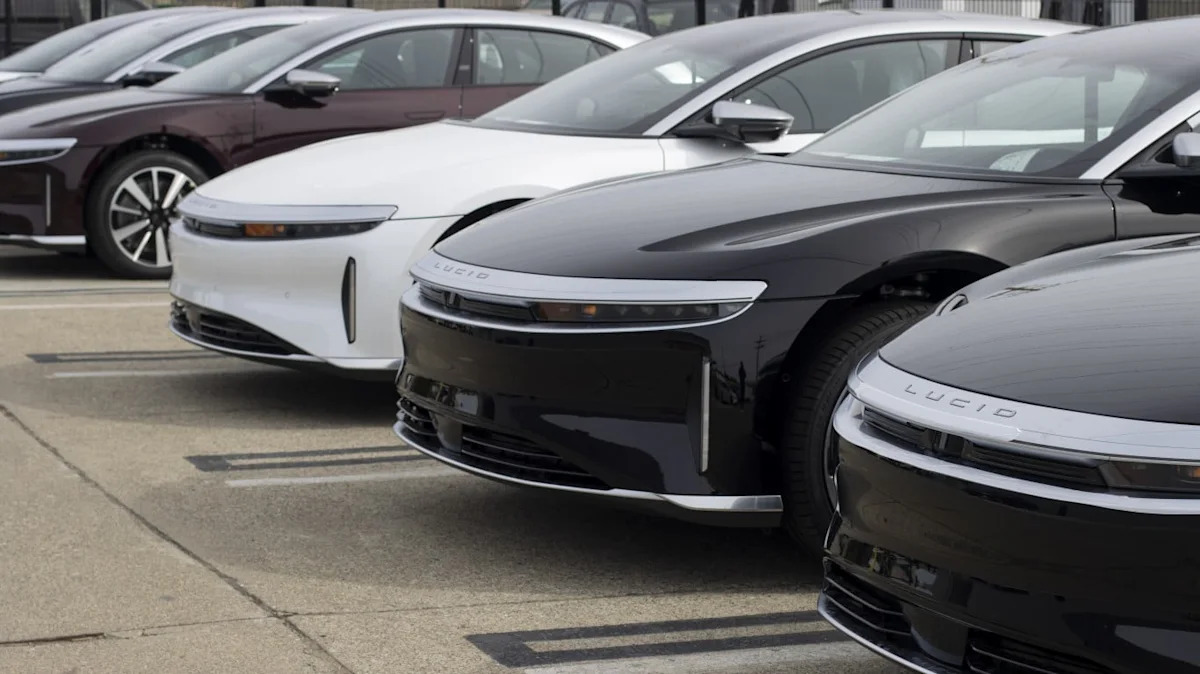
Lucid sank 8% to $3.39 as a $1 billion quarterly cash burn overshadowed its earnings bounce, while Rivian slipped 3%.
Saudi Arabia's PIF added $1.75 billion in financing, stretching Lucid's runway into late 2027 and bridging to Midsize production.
Elon Musk's offer to hire Nvidia's Jensen Huang barely nudged Tesla, which faces none of Lucid's funding pressure.
Building a portfolio and living off one are two completely different skills, and almost nobody teaches the second. This problem is what The Definitive Guide to Retirement Income helps, and it is free today. Read more here. (Sponsor)
Cash-burn worries are pulling Lucid Group (NASDAQ:LCID) stock lower as the electric vehicle maker's post-earnings bounce fades. Lucid stock recently changed hands at $3.39, down 8%. That pullback follows a short run to $3.67 by the prior session's close, and it leaves the shares down 68% year to date (YTD).
The company still leans heavily on its largest backer. Saudi Arabia's Public Investment Fund (PIF), the company's anchor shareholder, expanded its delayed-draw term loan facility by $1.75 billion, lifting Lucid's pro forma liquidity to $3.75 billion from $2 billion. Management expects that buffer to fund operations into Q4 2027, bridging to Midsize vehicle production in the second half of 2027.
Lucid reported its Q3 2026 results on November 9, missing expectations on both the top and bottom lines. Sales at the company totaled $350.32 million against a $399.14 million estimate, though they rose 4.1% year over year (YoY) while the U.S. battery electric vehicle market fell 41%. On an adjusted basis, Lucid lost $2.30 per share, also missing expectations. Including a $249.91 million accretion charge on preferred stock tied to the PIF, Lucid's diluted loss came to $2.74 per share.
Many successful investors eventually reach the same moment. The saving is done, the portfolio is built, and the question quietly changes from how much can I grow this to how much can I take out? Get that second question wrong and decades of good investing can come apart in a handful of years.
That is exactly what The Definitive Guide to Retirement Income helps answer. It covers what your retirement could actually cost, which income sources are worth using, and the withdrawal math that decides whether the money lasts. It is free today from Fisher Investments. Read More Here ›
Free cash flow at Lucid came in at negative $1.04 billion, heavier than analysts had expected. That outflow shrank 30% from the prior quarter. Lucid expects further improvement in Q4 2026, Alexander De Bock told analysts on the earnings call, though he cautioned the gain "will not be the same size as the improvement we had Q2 to Q3."
CEO Silvio Napoli struck a confident tone in Lucid's earnings release. "Our transformation is beginning to show progress. We are acting with urgency, strengthening the fundamentals and driving greater discipline, while continuing to invest in the priorities to deliver profitable long-term growth," Napoli stated.
Rivian Automotive (NASDAQ:RIVN) stock is trading at $13.12, down 3%. That decline tracks Lucid stock's direction as the group moves together, though RIVN stock's drop is the softer of the two. With its lower-priced R2 SUV now its best-selling vehicle by volume, Rivian heads toward 2027 with a broader sales base than Lucid.
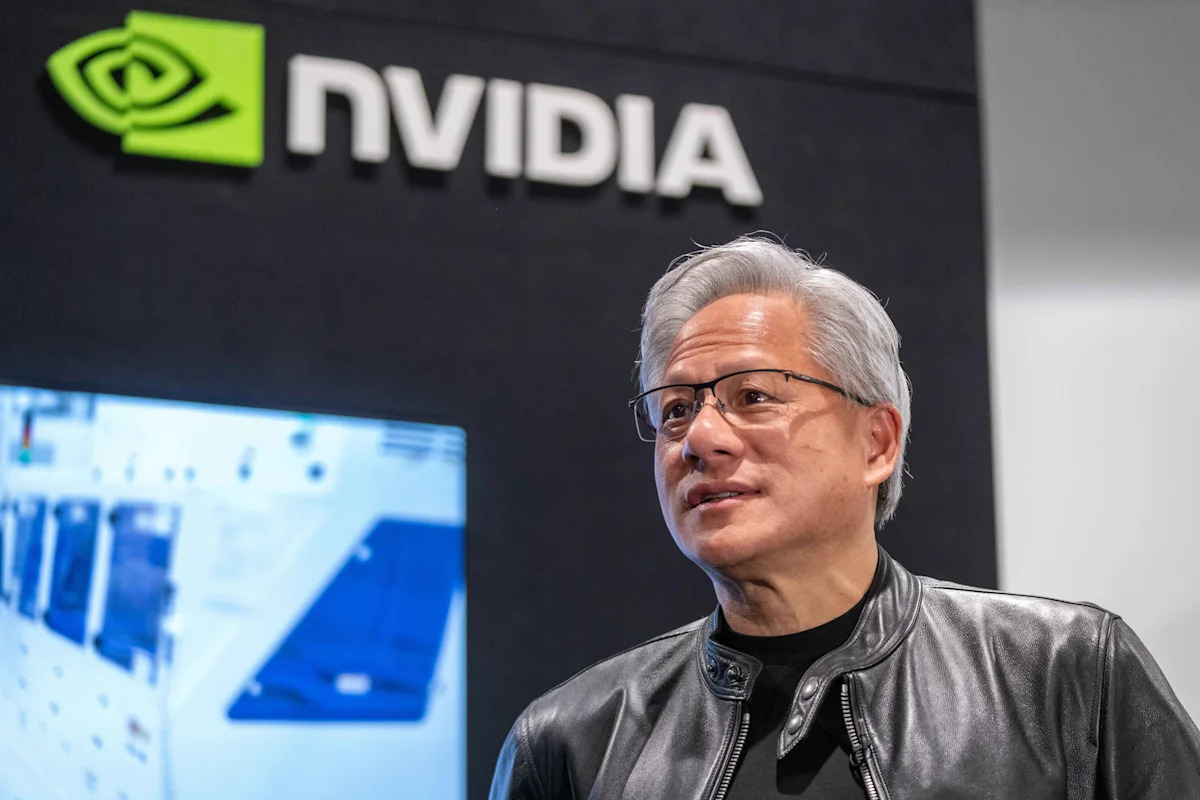
Tesla (NASDAQ:TSLA) stock is at $392.10, up 0.3%. Comments from Tesla CEO Elon Musk drew attention after he said it would be an "honor" to hire Jensen Huang, who resigned as chief executive of NVIDIA (NASDAQ:NVDA) on November 12. Musk's remark has barely moved Tesla stock, and a company of Tesla's scale faces far smaller funding questions than those weighing on Lucid.
Lucid builds premium electric sedans and SUVs on its own software-defined architecture, assembling them in Arizona and Saudi Arabia. The company's growth plan involves several initiatives. They include a lower-priced Midsize platform, a robotaxi program with ride-hailing partners and a second Saudi plant, with the PIF supplying much of the funding.
Rivian sells premium R1 trucks and SUVs, the R2 and commercial delivery vans, and it makes software and services revenue from its joint venture with Volkswagen Group. Tesla operates on a far broader scale, pairing its vehicle portfolio with energy storage, a global Supercharger network, a robotaxi service in Austin and the Optimus humanoid robot. A narrower portfolio leaves Lucid with fewer revenue streams to offset its spending, which is why the PIF backing carries so much weight.
Next up for Lucid is whether its free cash outflow keeps shrinking in Q4 as management works down inventory. The bulls can point to the quarterly drop in cash burn, the expanded PIF facility and a funding runway that reaches the Midsize launch. The bears counter with a stockholders' deficit of $2.1 billion, continued reliance on related-party financing and a weak U.S. battery electric vehicle market.
Lucid plans to issue formal 2027 guidance and its mid-term targets with full-year results, and to share Midsize reveal and production dates in Q1 2027. Investors may want to track Lucid's cash-burn trajectory closely before drawing firm conclusions about the shares. A name like this belongs in the speculative sleeve of a portfolio, not the core, and we wrote a free playbook on sizing and rules for exactly that kind of position here.
(Sponsor) Most people spend their entire working lives focusing on one thing: growing a pile of money. Then they retire and discover the skill they actually need is close to the opposite. Turning that pile into steady income, year after year, through good markets and bad, without ever running out.
It may be the least discussed and most consequential transition in personal finance, and plenty of otherwise careful investors walk into it with no real plan. That is exactly what The Definitive Guide to Retirement Income helps answer. It is a free guide from Fisher Investments covering what your retirement will really cost, where the cash flow should come from, and how much you can safely withdraw each year. Learn more here. Learn More Here ›
Contact editorial@247wallst.com for any questions or corrections.