David Dierking, The Motley Fool Thu, November 12, 2026 at 12:20 PM EST 5 min read NVDA -4.73% BRK-B +0.52% AXP -0.48% AAPL +0.11% ^GSPC +0.23% Explore stocks on Coinbase Trading disclosure Trading disclosure The above button links to Coinbase. Yahoo Finance is not a broker-dealer or investment adviser and does not offer securities or cryptocurrencies for sale or facilitate trading. Coinbase pays us for certain activity generated through this link. Prices displayed are informational.
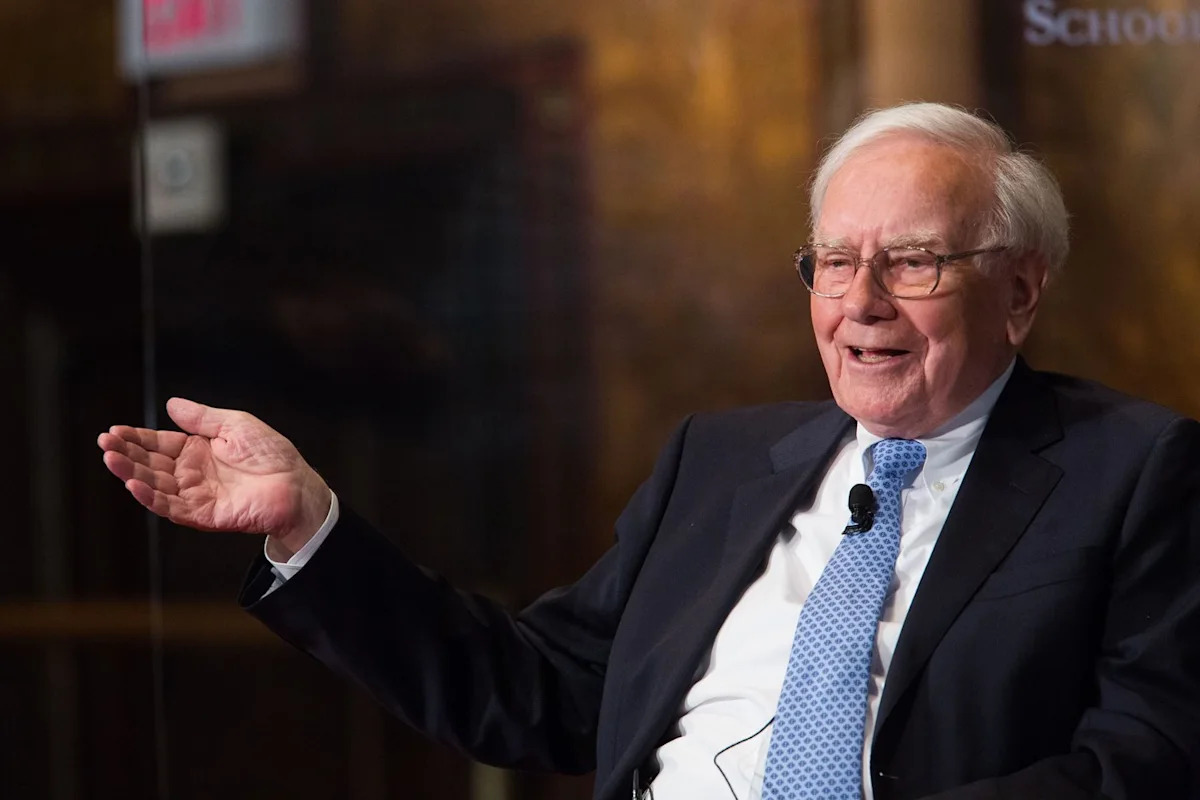
While Warren Buffett consistently recommended low-cost S&P 500 index funds, such as the Vanguard S&P 500 ETF (NYSEMKT:VOO), for individual portfolios, Berkshire Hathaway's (NYSE:BRKA)(NYSE:BRKB) own equity holdings are significantly more concentrated.
According to the company's latest 13F filing, as of June 30, just three stocks -- Apple (NASDAQ:AAPL), American Express (NYSE:AXP), and Coca-Cola (NYSE:KO) -- account for nearly 46% of Berkshire's equity portfolio.
Missed Nvidia in 2009? This Rare Signal Is Flashing Again. In 2009, a "Double Down" signal flashed for a little-known chipmaker called Nvidia. For the first time in years, that same "Total Conviction" signal is flashing for a company 1/100th the size of Nvidia. Continue »
Why has Buffett, who is now retired, advocated for broadly diversified portfolios over the years when Berkshire itself doesn't do so? More importantly, does this justify a more concentrated strategy for your own portfolio? Not really, and here's why.
These quarterly regulatory filings track U.S. equity ownership but leave out potentially large segments of Berkshire Hathaway's full portfolio of holdings. As of June 30, its publicly traded shares represent about $364 billion.
The first is the company's monstrous cash pile, which is currently roughly $377 billion. The second is the value of the privately held companies that it fully owns, such as GEICO, Pilot Travel Centers, Fruit of the Loom, and Johns Manville. Berkshire Hathaway is clearly much more than just the large-cap stocks that most people think about.
Buffett was never a trader, and much of the top-heaviness in the publicly-traded segment of his portfolio is the result of long-term organic capital growth rather than deliberate favoring of a few companies. He wasn't necessarily looking to be concentrated. His long-term focus and deep research capabilities are just resulting in a few high-conviction picks.
I think you have to look at the Warren Buffett investing style to really understand why Berkshire's high concentration in Apple, American Express, and Coca-Cola isn't necessarily the red flag that it might seem.
I think it's safe to say that Berkshire does a lot of research on its stock picks before buying a share. It's certainly more than the average retail investor does, and this helps it make informed decisions without the emotional ties.
Berkshire has a long-term buy-and-hold philosophy and doesn't sell when the S&P 500 falls by 10%. Over the years, Buffett was willing to be wrong in the short term in the pursuit of long-term gains. Plus, he actively looked for opportunities to buy the dip in order to enhance his portfolio's performance.
Berkshire has the cash sitting on the sidelines waiting to be put to work. When stock prices fall far enough, it's ready to buy if the opportunity presents itself.
Contrast this approach with that of a retail investor whose holding period is to often measured in months, not years, and who tends to panic when there's a correction. Buffett has the patience and mindset to make his portfolio work.
Buffett has suggested Vanguard's S&P 500 index fund for most investors. But it's important to remember that the Vanguard S&P 500 ETF has its own concentration issue right now. The index currently has nearly 40% of its allocation in tech stocks and nearly 40% in its top 10 holdings.
While Berkshire has a high concentration in just a few companies, broad index funds, including those targeting large caps, growth, and tech stocks, are also incredibly top-heavy at the moment. Funds like the Invesco S&P 500 Equal Weight ETF (NYSEMKT:RSP) do a better job of diversifying within U.S. large caps.
It's easy to look at Berkshire Hathaway's portfolio and call it undiversified. But that doesn't mean diversification doesn't work. For most investors, spreading investments across the U.S. economy is still the best way to create long-term wealth.
Before you buy stock in Vanguard S&P 500 ETF, consider this:
The Motley Fool Stock Advisor analyst team just identified what they believe are the 10 best stocks for investors to buy now… and Vanguard S&P 500 ETF wasn't one of them. The 10 stocks that made the cut could produce monster returns in the coming years.
Consider when Netflix made this list on December 17, 2004... if you invested $1,000 at the time of our recommendation, you'd have $348,060!* Or when Nvidia made this list on April 15, 2005... if you invested $1,000 at the time of our recommendation, you'd have $1,067,492!*
Now, it's worth noting Stock Advisor's total average return is 849% — a market-crushing outperformance compared to 210% for the S&P 500. Don't miss the latest top 10 list, available with Stock Advisor, and join an investing community built by individual investors for individual investors.
*Stock Advisor returns as of November 12, 2026.
American Express is an advertising partner of Motley Fool Money. David Dierking has positions in Apple. The Motley Fool has positions in and recommends American Express, Apple, Berkshire Hathaway, and Vanguard S&P 500 ETF. The Motley Fool has a disclosure policy.
Warren Buffett Doesn't Follow His Own S&P 500 Advice. Should You? was originally published by The Motley Fool