Make New York Post a Preferred Source Tag — you’re out!
Walmart shoppers are spotting a change in some stores — and it’s making budgeting a bit more difficult. The Arkansas-based retailer has taken the prices off of its tags in the clothing section and replaced them with what the company calls “pegs.”
The pegs are small, plastic pieces or fixtures attached to clothing racks to display price information. Walmart told The Post the switch started about 16 months ago in order to offer shoppers pricing consistency — and remove stress from employees who spend tons of time replacing individual tags.
While the move may make sense for the chain, shoppers are left confused — and doing more work.
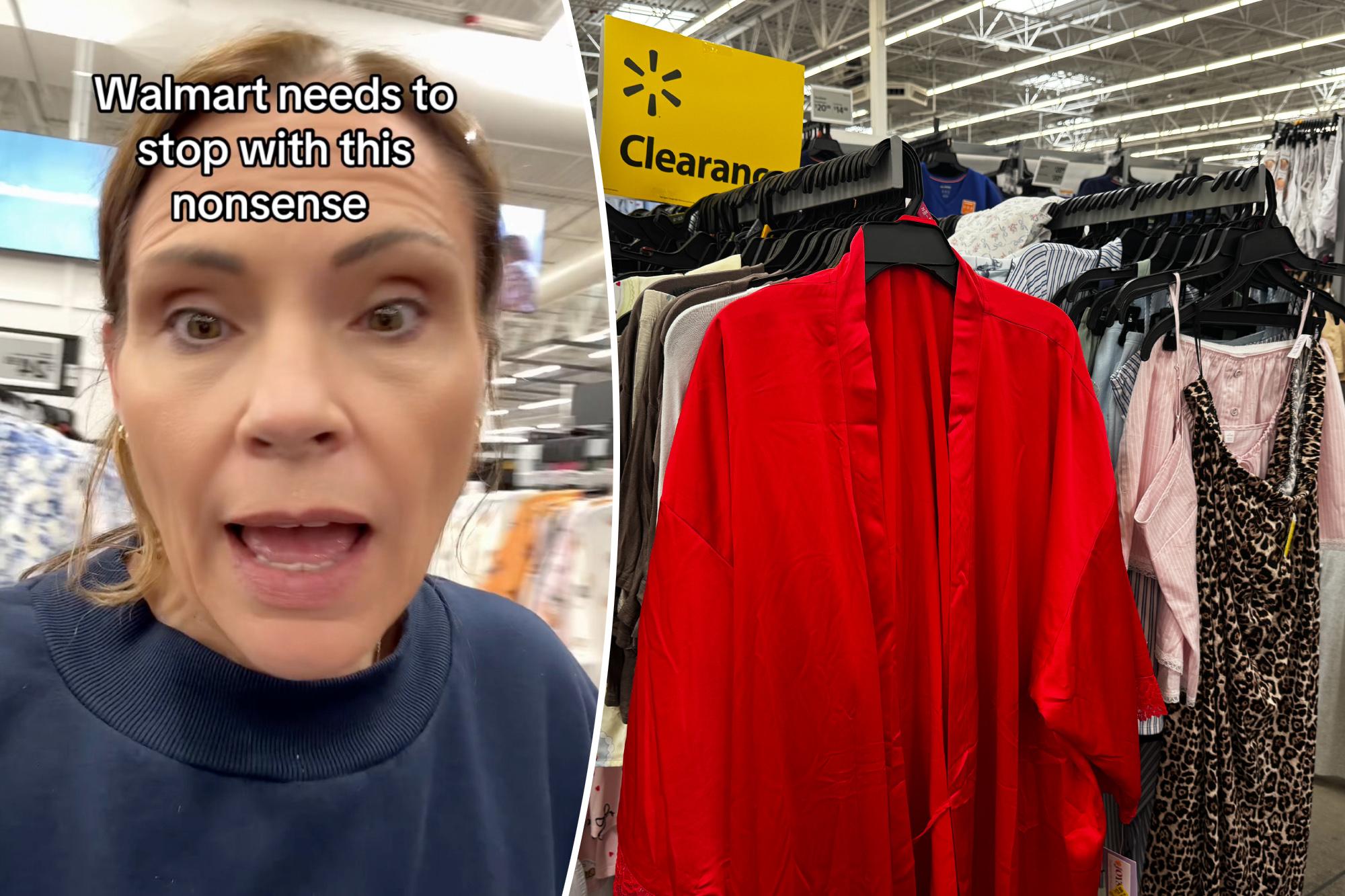
For example, in a recent TikTok, shopper Rhonda Black hit up her local location where she noticed all the sticker prices on tags were missing from clothes.
Instead of the price tag, the retail giant placed pegs above the items — in this case pajamas — that read “Pajamas $22.98 and below.” Infuriated, Black said on the video that since everything is digital, customers are encouraged to scan the tag for the price using the Walmart smartphone app.
“What do you mean it’s $22.98 and below? You’re telling me there are things in here that are like $14, but I gotta scan it to see,” Black said. “Walmart, why are you making it harder on me to try and shop at your store?”
The big box chain told The Post that removing the price tags and replacing them with the pegs and shelf tags allows the company to offer reliable pricing across the board as rollbacks — its lingo for a temporary price cut — happen frequently.
And with Black Friday and the holiday season around the corner, prices will likely fluctuate.
Regardless, shoppers are up in arms as many feel it’s more work and a lack of transparency — especially at a time when dynamic pricing has been making headlines.
Black’s TikTok saw a flood of comments from fed-up shoppers, including one who said the tag switch made her boycott stores.
“That has stopped me from buying things in there now,” the user wrote.
Another commented that the amount of time it takes to find the price is a game she does not want to play, stating it’s the “store’s responsibility to clearly display prices, not the customer’s responsibility to hunt them down.”
“I will not be pulling my phone out to scan items while I’m shopping. If the price isn’t clearly marked, then I simply don’t purchase it. Walmart seems to think everyone has the time or wants to scan everything just to find out how much something costs,” the user added.
Pricing has been a sore subject for the retailer. Just last month, President and CEO John Furner issued a statement rejecting any form of dynamic pricing, surveillance pricing or personalized pricing.
“I want to tell you where we stand: We price the product, not the person,” Furner said in its statement on the company site.
The chain has recently been accused of some form of all three, and it all started with the rollout of electronic shelf tags (ESLs) across thousands of stores. ESLs are small digital or e-paper displays attached to store shelves, showing product pricing and information instead of traditional paper tags.
Dynamic pricing is where the price of products can change on the ESLs in real time based on factors like market demand, competitor actions or inventory levels. Surveillance pricing, or personalized pricing, is where personal data and algorithms are used to charge different prices for the same products depending on the individual.
The big boss broke down three company commitments as the new technology will likely keep launching in more stores.
Furner explicitly promised not to set different prices based on “your income, shopping history, urgency or what we think you could pay won’t change the price.”
“And whether you’re buying groceries or electronics on a hot afternoon or in a sudden rush for an item, it’s never a reason to charge you more,” Furner added.
But for shoppers fed up with playing hide-and-seek with prices, the retailer’s promises may do little to restore their trust.