Rivian CEO says robotaxis won't end car ownership — he's betting on both RJ Scaringe spoke about robotaxis, the R2 rollout, and, of course, AI at Yahoo Finance Invest. Pras Subramanian · Senior Reporter Thu, November 12, 2026 at 10:30 AM EST 4 min read RIVN -4.65% TSLA -0.46% Explore stocks on Coinbase Trading disclosure Trading disclosure The above button links to Coinbase. Yahoo Finance is not a broker-dealer or investment adviser and does not offer securities or cryptocurrencies for sale or facilitate trading. Coinbase pays us for certain activity generated through this link. Prices displayed are informational.
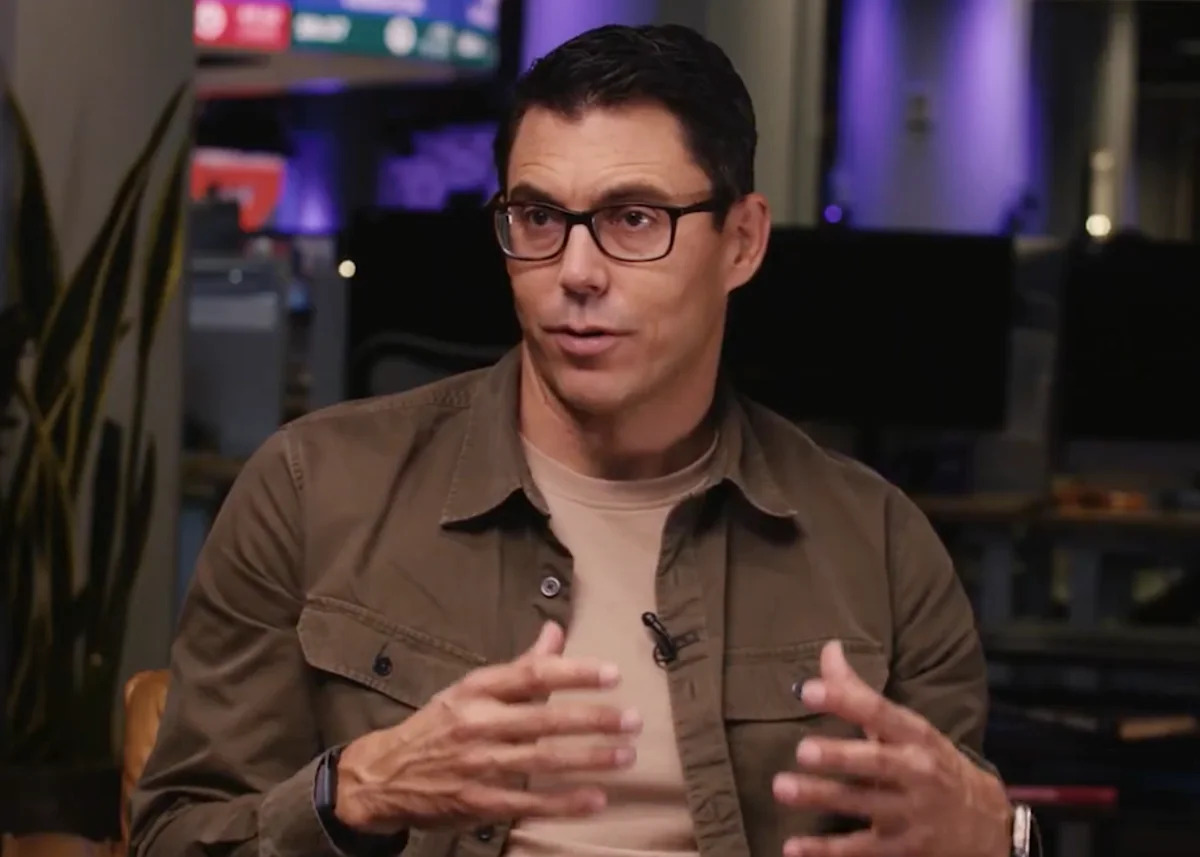
Rivian (RIVN) CEO RJ Scaringe doesn't think robotaxis will kill car ownership in America — and he's building the company's self-driving strategy around that belief.
"I don't think it's the end of car ownership. I think maybe it goes from 95% to 90% [of miles driven in personally owned vehicles]," Scaringe said at Yahoo Finance Invest.
His view comes as the EV maker pours investment into autonomy on both the software and hardware sides.
Scaringe expects driverless rides to grow fastest in dense cities like New York. But he doesn't see the whole country giving up its cars to "use rideshare services and unplug and plug in car seats."
So the company is betting on both sides — unlike Tesla (TSLA), which seems to be betting fully on autonomous products like the Cybercab and killing off vehicles like the Model S, Model X, and Cybertruck.
For Rivian, the robotaxi is on one side. The company struck a deal with Uber worth up to $1.25 billion to supply as many as 50,000 robotaxi versions of its R2 SUV. The first 10,000 are set for San Francisco and Miami by 2028.
"Particularly for places like New York, San Francisco, downtown Seattle, like these more urban dense environments, it's an incredible unlock," Scaringe said.
On the other side is a self-driving car for personal use. Scaringe described a Rivian that can "drive you to the airport and drive itself back home" or "go pick up the kids from school." (Scaringe, a parent to three young children, has said in the past that he would love to see that happen.) Fully self-driving cars could shrink a two- or three-car household to one or two vehicles, he said.
He expects new models in between, like neighbors co-owning a car that drops one person off at work and then comes back for the other. Those will likely emerge "in the 2030s," he said.
The first step is point-to-point driving, where the owner types in an address and the car drives there while the driver supervises. Rivian began inviting select Autonomy+ subscribers into an early access program on Oct. 15, with a wider rollout planned for next year.
Scaringe calls it a "staircase" toward Level 4, where the car can drive itself with nobody inside.
Getting there depends on how the software develops — and the company's own neural nets. Older self-driving systems relied on handwritten rules, like stay in the lane and don't hit the car ahead. That approach breaks down in complex situations.
"You get to a roundabout, and suddenly it's very hard to describe how to behave in a roundabout," Scaringe said.
Rivian's Large Driving Model (LDM) — powered by a neural net — learns behavior from millions of miles of real driving. Scaringe compared it to a driver from Missouri adjusting to Manhattan: "Okay, those yellow things [cabs] are really aggressive," he joked.
Because Rivian sells to consumers, its cars are everywhere, giving the company a diverse dataset for training. But that fleet is far smaller than Tesla's, and Waymo already runs driverless rides in several cities.
That's where the R2 comes in to fill in the data pipeline. R2 was Rivian's bestselling vehicle in the third quarter. It helped push deliveries to a record 19,248 and revenue up 38% to $2.155 billion.
Go deeper with AlphaSpace 12.91 -0.63 (-4.65%) As of 10:50:31 AM EST. Market Open. Still, "mass market" is a stretch for now. The only R2 on sale is the $57,990 Launch Package, and the roughly $45,000 base model isn't due until late 2027. Smaller, cheaper R3 and R4 models will follow.
Software is already paying off, however. Software and services revenue rose 45% to $605 million in the quarter, with $354 million coming from its Volkswagen joint venture. The car business still lost money, though, and Rivian expects an adjusted EBITDA loss of $1.75 billion to $1.85 billion this year.
Despite the spending on AI, Scaringe is no doomsayer about the technology.
"AI is ultimately a tool," he said. "It's capable of doing bad things if it's directed to do bad things. But it's not a sentient being."
Follow Pras Subramanian on X and Instagram.