5 Best Growth Stocks to Buy for the Next Decade Maham Fatima Thu, November 12, 2026 at 6:31 AM EST 9 min read ^GSPC +1.31% ^IXIC +1.60% TSM -2.28% AMZN +0.54% GOOG -0.06% Explore stocks on Coinbase Trading disclosure Trading disclosure The above button links to Coinbase. Yahoo Finance is not a broker-dealer or investment adviser and does not offer securities or cryptocurrencies for sale or facilitate trading. Coinbase pays us for certain activity generated through this link. Prices displayed are informational.
On November 5, the S&P 500 fell 4.36%, its worst day since the April 2025 tariff crash, with roughly $3 trillion in value wiped off S&P 500 companies. The Nasdaq Composite dropped 5.52% to slip into a correction, and chip stocks took the hardest hit, with the Philadelphia Semiconductor Index falling about 12%, its worst day since 2020. The slide followed a rough October, when the technology sector of the S&P 500 lost 6.8%, its biggest monthly drop since March 2025, while defensive groups such as consumer staples had a record month. Growth stocks tend to feel these swings first, because their prices rest on the promise of faster sales and earnings than the rest of the market.
The worry behind the selling is money. Investors are asking how companies will pay for their enormous artificial intelligence budgets and whether the returns will justify them. The midterm election results added a second concern, as investors began questioning whether the pace of data center construction could slow if new rules follow, which would weigh on AI spending. Our ranking of semiconductor stocks to hold for the next decade covers more of the group that took the sharpest hit.
A growth stock is a share in a company expected to grow its sales and earnings faster than the market average. These companies usually reinvest profits instead of paying dividends, so shareholders are rewarded through a rising share price, which is why the shares often carry high price-to-earnings ratios. A high multiple is not automatically expensive if the growth keeps coming, but it leaves little room for disappointment, and a stock priced for strong growth can fall sharply when the numbers fall short. Time helps in the other direction, because returns that stay invested earn returns of their own, a snowball effect that builds the longer the money is left alone.
The economy is adding another variable. October's jobs report showed payrolls up 165,000, far above the 65,000 economists expected, and traders now put the odds of a Federal Reserve rate hike in December above 75%. Edward Jones senior global strategist Angelo Kourkafas called it a "blowout jobs report." A strong economy is good for business, but higher interest rates make far-off earnings worth less today, which tends to weigh most on growth stocks. For readers hunting for bargains after the pullback, our list of undervalued growth stocks is a place to start. For long-term holders, the more useful question is not what the market does next month but which companies can keep compounding through several more months like this one.
We shared the expanded list of 10 Best Growth Stocks to Buy for the Next Decade here. You can find the top 5 stocks below.
To compile this list, we searched for the best stocks to hold for the next 10 years across investor forums, social media, and financial websites, keeping only growth stocks mentioned by at least three different sources. From those, we picked the 10 with the largest market caps and ranked them in ascending order of market cap. We also list hedge fund holders as of Q2 2026.
Note: All data was sourced on November 9, 2026.
Why are we interested in the stocks that hedge funds pile into? The reason is simple: our research has shown that we can outperform the market by imitating the top stock picks of the best hedge funds. Insider Monkey's quarterly newsletter strategy selects 14 small-cap and large-cap stocks every quarter and has returned 612% since May 2014, beating its benchmark by 375 percentage points (see more details here).
Number of Hedge Fund Holders: 249
Market Cap: $2.03 trillion
Stanley Druckenmiller's family office has made TSMC its second-largest holding, and he has said he sees "massive disruption" ahead for the chip industry. Cathie Wood's Ark Invest bought more after a strong earnings report, and David Tepper's Appaloosa made it his biggest addition of the second quarter. The pitch is simple: whichever company wins the race to design the best AI processor, it still needs someone to build it.
The latest quarter shows how big that position has become. Revenue was $46.72 billion, up 41.2% in US dollars, and net income rose 68.7%, a record for the sixth straight quarter. High-performance computing, the category that includes AI accelerators, made up 68% of sales. Chief Financial Officer Wendell Huang said the quarter was supported by strong demand for the company's leading-edge process technologies.
Management sees more of the same ahead. TSMC guided fourth-quarter revenue above the third quarter's level, and its newest process technology, 2-nanometer, is already part of the sales mix, with Huang calling the ramp steep. Customers moving to each new generation of chips is how the bulls expect the growth to last through the decade.
Our latest analysis on Taiwan Semiconductor Manufacturing (TSM) is available here: TSMC's Profit Soars 69%, but Can its Next Chip Breakthrough Justify the Valuation?
Number of Hedge Fund Holders: 369
Market Cap: $2.90 trillion
Bill Ackman's Pershing Square says Amazon "operates two of the world's great, category-defining franchises," online retail and Amazon Web Services, and has argued that AWS growth is speeding up on AI demand. Cathie Wood's Ark Invest believes AWS can grow into a business with a trillion dollars a year in revenue, and points to shoppers who use Alexa spending noticeably more per order.
The latest quarter gave both something to cite. Sales at Amazon Web Services rose 39%, the cloud unit's fastest growth in nearly five years, and the unit earned a wider profit margin than it did a year earlier. That helped lift Amazon's operating margin to 13.9%, the highest in the company's history. Amazon said the timing of Prime Day, which moved into the second quarter this year, held back its third-quarter sales growth.
The margin matters because Amazon is spending heavily to add computing capacity, and higher profit on the cloud side helps pay for that build-out. Chief Executive Officer Andy Jassy said AWS is projecting revenue growth above 40% in both 2027 and 2028, which would mean the speed-up is meant to last rather than fade after one good quarter.
Read our analysis on Amazon (AMZN) here: Amazon (AMZN) Trades at 24 Times Forward Earnings. Can Its Cash Engines Fund the Robotaxi Bet?
Number of Hedge Fund Holders: 275
Market Cap: $3.54 trillion
Berkshire Hathaway, a firm known for holding stocks for years, has made Alphabet one of its largest holdings. Bill Ackman's Pershing Square sold its entire stake in what he called a tactical reallocation into other holdings, but wrote, "We are very bullish long term on Alphabet." The latest quarter gives both views something concrete.
Google Cloud revenue rose 103% to $30.7 billion, and Alphabet said sales of its own TPU computing systems were also a meaningful contributor. Chief Executive Officer Sundar Pichai said the cloud's growth was powered by huge demand for the company's AI infrastructure and AI solutions. The cloud backlog, which is revenue customers have contracted for but Alphabet has not yet recognized, stood at $561 billion. Operating income at the cloud unit more than tripled, and Alphabet expects TPU system sales to scale further in the fourth quarter.
The rest of the company is moving too. Pichai said the Gemini app has passed one billion monthly users. Search, the older business, kept growing too, with query growth at its highest in five years. To the bulls, chips, models and a huge user base together make the story hold.
You can read our analysis on Alphabet (GOOGL) here: Alphabet (GOOGL): Does Its Valuation Account for Waymo's Potential?
Number of Hedge Fund Holders: 273
Market Cap: $4.04 trillion
Bill Ackman's Pershing Square disclosed a new Microsoft position, saying Microsoft 365 and Azure are two of the most valuable franchises in enterprise technology and together produce most of its profit. Pershing said it was able to buy near the market's average valuation, and described such holdings as "some of the most dominant long-term compounding franchises." Wedbush analyst Dan Ives calls Microsoft one of his favorite large-cap tech names to own over the coming years.
The cloud numbers give that view something solid to rest on. In the fiscal first quarter, Azure revenue rose 48%, and for the first time Microsoft reported the unit's sales in dollars rather than only as a growth rate. Total revenue grew 19%, and operating income rose 21%, and the company said results exceeded its own expectations.
Chief Executive Officer Satya Nadella said customers are getting more capability, choice, control and cost efficiency across the whole stack. The bulls read that as proof Microsoft can sell AI to customers it already has, using the same relationships that built its software business. It also returned cash to shareholders through dividends and buybacks.
Our latest analysis on Microsoft (MSFT) is available here: Microsoft (MSFT): Can Security Bundles Generate More Profit per Customer?
Number of Hedge Fund Holders: 285
Market Cap: $4.27 trillion
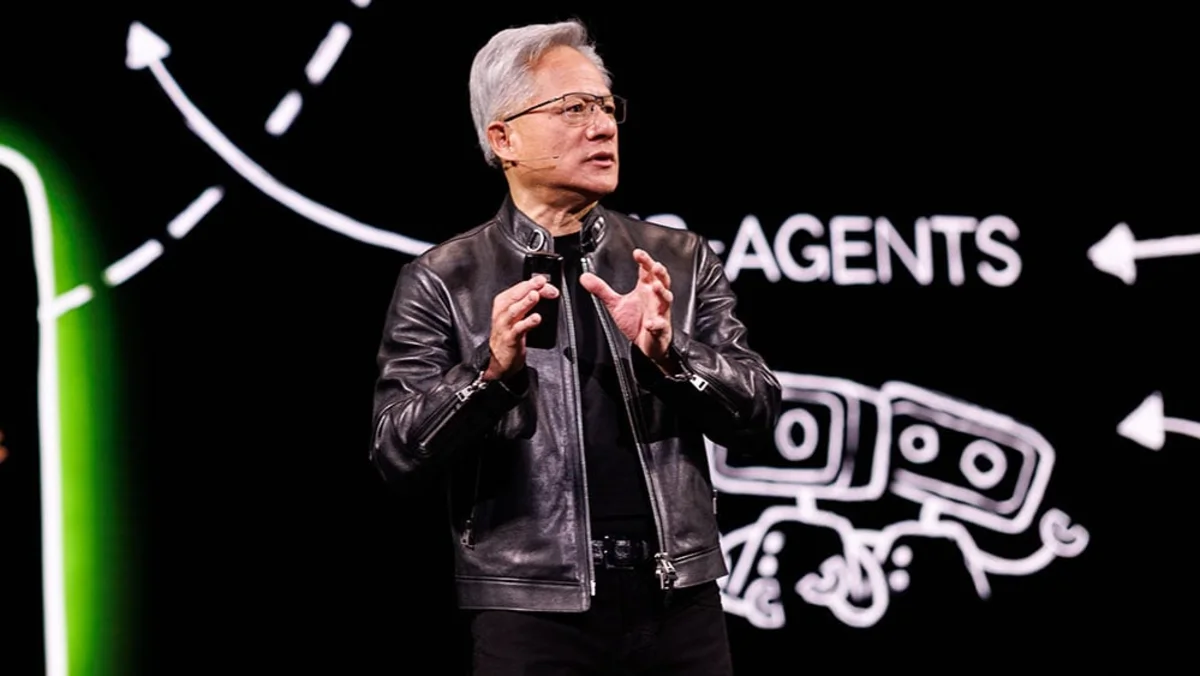
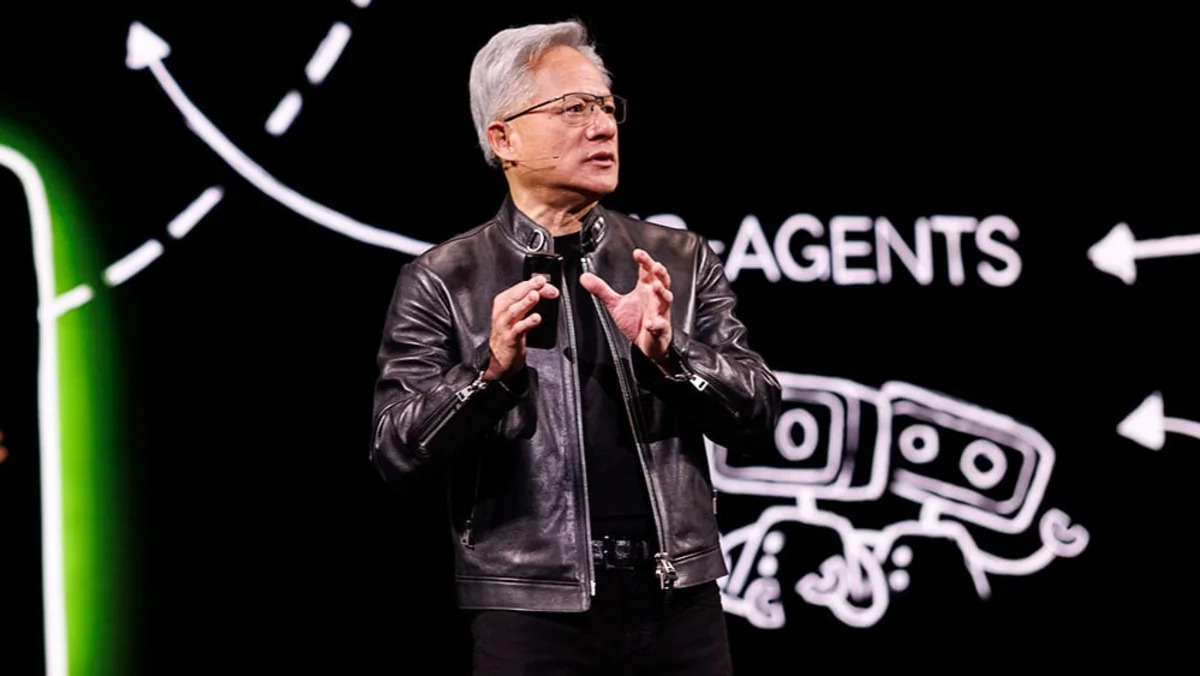
Gavin Baker, who runs Atreides Management, has owned Nvidia for about two decades and argues that its sales are limited by how many chips can be built, not by demand. Brad Gerstner, whose Altimeter Capital holds Nvidia as its largest position, has pointed to data center spending forecasts, saying "that's not speculative, that's purchase orders." Cathie Wood's Ark Invest keeps buying on dips, calling the stock a bargain given how fast earnings are growing.
The company's last report explains why. Revenue in the fiscal second quarter reached $96.2 billion, up 106% from a year earlier, with data center sales making up the vast majority. Nvidia guided the current quarter to about $108 billion, and said the outlook assumes no data center compute sales to China. Nvidia says it already holds purchase orders from every major hyperscaler, AI cloud and system maker.
The bulls care most about what comes after. Management gave a preliminary view that revenue for fiscal 2028 will grow about 70%, and described that outlook as limited by supply rather than demand. It also expects Vera Rubin, its next generation of systems, to start contributing meaningfully to data center sales this quarter.
Read our analysis on Nvidia (NVDA) here: NVIDIA (NVDA) Leverages AI Growth to Expand Its Autonomous Driving Opportunity
While we acknowledge the risk and potential of NVDA as an investment, we believe certain AI stocks offer greater upside potential and carry less downside risk. If you're looking for an extremely undervalued AI stock that also stands to benefit significantly from Trump-era tariffs and the onshoring trend, see our free report on the best short-term AI stock.
Disclosure: None. Follow Insider Monkey on Google News.