Smaller AI Spending Forecasts, Sold-Out Computing Power: Both Can Be True Trey Thoelcke Thu, November 12, 2026 at 6:33 AM EST 6 min read ORCL -2.29% CRWV -6.81% VRT -1.71% CSCO -0.69% NVDA -7.14% Explore stocks on Coinbase Trading disclosure Trading disclosure The above button links to Coinbase. Yahoo Finance is not a broker-dealer or investment adviser and does not offer securities or cryptocurrencies for sale or facilitate trading. Coinbase pays us for certain activity generated through this link. Prices displayed are informational.
Even a slashed $3 to 4 trillion data center forecast is huge, and CoreWeave's CEO Michael Intrator says, "We are largely sold out through 2027."
Oracle renewed expiring capacity at a 20% premium, and co-CEO Clayton Magouyrk says prices "do go up" when demand exceeds supply.
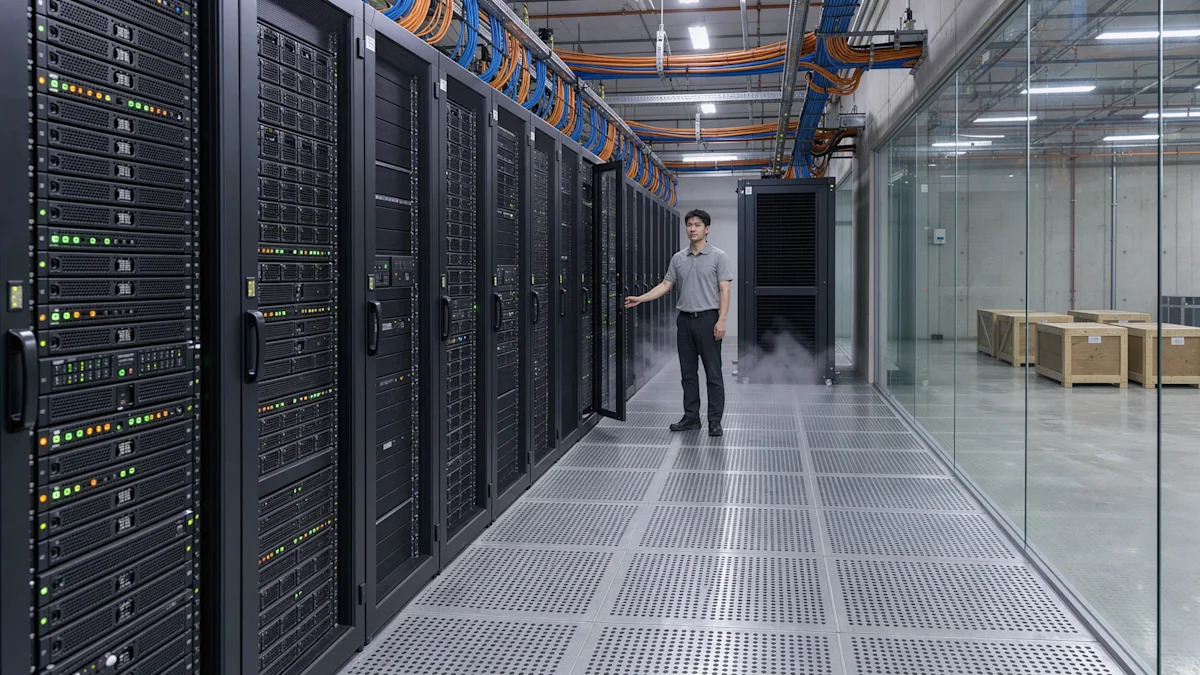
Turning spending into working compute takes months, and Vertiv CEO Giordano Albertazzi cites power availability, permitting, and skilled labor as limits.
Building a portfolio and living off one are two completely different skills, and almost nobody teaches the second. This problem is what The Definitive Guide to Retirement Income helps, and it is free today. Read more here. (Sponsor)
On November 11, 2026, Stephanie Link of Hightower told CNBC, "Maybe we're not going to spend $7 trillion on data centers between now and 2030. That was what we were projecting. Maybe it's 3 to 4 trillion. That's still a lot of money."
The last line of that quote is the one investors should remember. Even the lower forecast is measured in trillions of dollars, and the companies renting out AI computing power say they are sold out. Recent results from CoreWeave (NASDAQ:CRWV), Oracle (NYSE:ORCL), and Vertiv (NYSE:VRT) show how both statements can hold at once.
CoreWeave's results set off a rally in AI cloud stocks that also raised Nvidia (NASDAQ:NVDA), as the numbers eased bubble fears. That evening on Mad Money, Jim Cramer said CoreWeave's CEO told him, "They are 10 times oversubscribed for 2027 and the added demand for 2028 is also multiples of what he can provide." Cramer also relayed that "starting next year he'll begin earning more on Nvidia chips that he bought four years ago than he has been for any of the past four years."
Many successful investors eventually reach the same moment. The saving is done, the portfolio is built, and the question quietly changes from how much can I grow this to how much can I take out? Get that second question wrong and decades of good investing can come apart in a handful of years.
That is exactly what The Definitive Guide to Retirement Income helps answer. It covers what your retirement could actually cost, which income sources are worth using, and the withdrawal math that decides whether the money lasts. It is free today from Fisher Investments. Read More Here ›
CoreWeave's reported figures line up with what Cramer described. Third-quarter revenue rose 168.3% year over year to $3.66 billion, beating the $3.54 billion consensus. The loss of $1.27 per share was smaller than the expected loss of $1.55. Revenue backlog reached about $132.5 billion, and the company's third-quarter release raised full-year revenue guidance to $13.0 billion to $13.3 billion. On the earnings call, CEO Michael Intrator said, "We are largely sold out through 2027." Prices for older Ampere and Hopper chips rose 30% to 50% quarter over quarter.
Investors are still focused on how CoreWeave pays for all of this. The company plans to raise at least $4 billion through a high-grade loan. Shares are down 23.4% year to date, even after a 30.8% gain over the past week.
In Oracle's fiscal first quarter, cloud infrastructure revenue rose 121% to $7.39 billion, and remaining performance obligations reached $664 billion. Oracle booked more than $30 billion in new AI contracts, ran its GPUs at 97.9% usage and renewed expiring capacity at a 20% premium. On the September 10 call, co-CEO Clayton Magouyrk said, "Prices in a world where demand exceeds supply typically do not go down. They do go up." Oracle expects fiscal 2027 revenue of at least $90 billion, but shares are down 34.4% year to date.
Elon Musk posted on X on November 11, "'Actually usable' is an important metric. It takes us ~2 months working 24/7 to get a large compute cluster working reliably. I'd guess closer to 6 months for others." Money spent on buildings and working computing power are two different measures, and the time it takes to turn one into the other keeps capacity tight.
Vertiv sells the power and cooling equipment that helps close that gap. Third-quarter revenue rose 61.2% to $4.31 billion, and organic orders grew over 100% year over year. Full-year guidance now calls for net sales of $14.45 billion to $14.85 billion and adjusted EPS of $7.10 to $7.20. CEO Giordano Albertazzi said, "Time to first token matters a lot to our customers." He listed power availability, permitting, and skilled labor as constraints. Vertiv shares are up 26.62% this year.
Vertiv is one of the picks-and-shovels names cashing in on the expansion rather than the chips themselves. We covered seven of them, spanning power, cooling and networking, in a free report: 7 Stocks Powering the AI Boom (That Aren't Chipmakers).
Former Cisco (NASDAQ:CSCO) CEO John Chambers took the long view on CNBC on November 11: "AI is here to stay. We are in the second inning of it."
Spending forecasts can come down as financing costs rise and as customers pay for hardware themselves. Oracle says the vast majority of its new contracts use prepayment or bring-your-own-hardware terms. At the same time, power, permits, and months of cluster tuning limit how fast any dollar becomes working compute.
For CoreWeave, track whether it reaches its target of more than 1.85 GW of active power by year-end and how its new loan is priced.
For Oracle, track whether about half of its backlog turns into revenue within 36 months, as the company expects.
For Vertiv, compare actual results with its fourth-quarter sales guidance of $4.31 billion to $4.51 billion. If GPU renewal prices keep rising, it means capacity is still sold out.
(Sponsor) Most people spend their entire working lives focusing on one thing: growing a pile of money. Then they retire and discover the skill they actually need is close to the opposite. Turning that pile into steady income, year after year, through good markets and bad, without ever running out.
It may be the least discussed and most consequential transition in personal finance, and plenty of otherwise careful investors walk into it with no real plan. That is exactly what The Definitive Guide to Retirement Income helps answer. It is a free guide from Fisher Investments covering what your retirement will really cost, where the cash flow should come from, and how much you can safely withdraw each year. Learn more here. Learn More Here ›
Contact editorial@247wallst.com for any questions or corrections.