‘He Can’t Just Pick Up and Go to Florida’: Dan Ives on Musk’s $1 Trillion Texas Problem Jake FitzGerald Thu, November 12, 2026 at 4:11 AM EST 6 min read TSLA -0.12% SPCX +0.18% Explore stocks on Coinbase Trading disclosure Trading disclosure The above button links to Coinbase. Yahoo Finance is not a broker-dealer or investment adviser and does not offer securities or cryptocurrencies for sale or facilitate trading. Coinbase pays us for certain activity generated through this link. Prices displayed are informational.
Dan Ives says Elon Musk can't leave Texas because SPCX must become a hyperscaler there, so Musk will likely extend an olive branch to incoming state leaders.
Terafab, a chip plant that TSLA and SPCX are building, could cost $1 trillion, and a $24 billion Starbase project awaits a tax decision, anchoring Musk to Texas.
Florida and Texas both levy no personal income tax, so moving saves Musk nothing, while his Texas fabs and power plants stay taxable there regardless.
The biggest 401k decisions tend to get made once and never revisited: when to roll it over, what to hold inside it, and when to start taking money out. That is exactly what the report: 401k & IRA Tips and Answers was created to address, and it is free today. Read more here. (Sponsor)
Tech analyst Dan Ives, one of Wall Street's best-known Tesla (NASDAQ:TSLA) bulls, summed up Elon Musk's post-midterm position in one line on The Pomp Podcast: "He can't just pick up and go to Florida." His reasoning on SpaceX (NASDAQ:SPCX) was that "SpaceX needs to build themselves into a hyperscaler and Texas is a key part of it," so Musk "is going to have to, I think definitely olive branch a bit" with the state's incoming leadership.
On Nov 7, Musk posted on X that "SpaceX and Tesla have prospered in Texas, because we were not constantly operating under an oppressive and extractive state government."
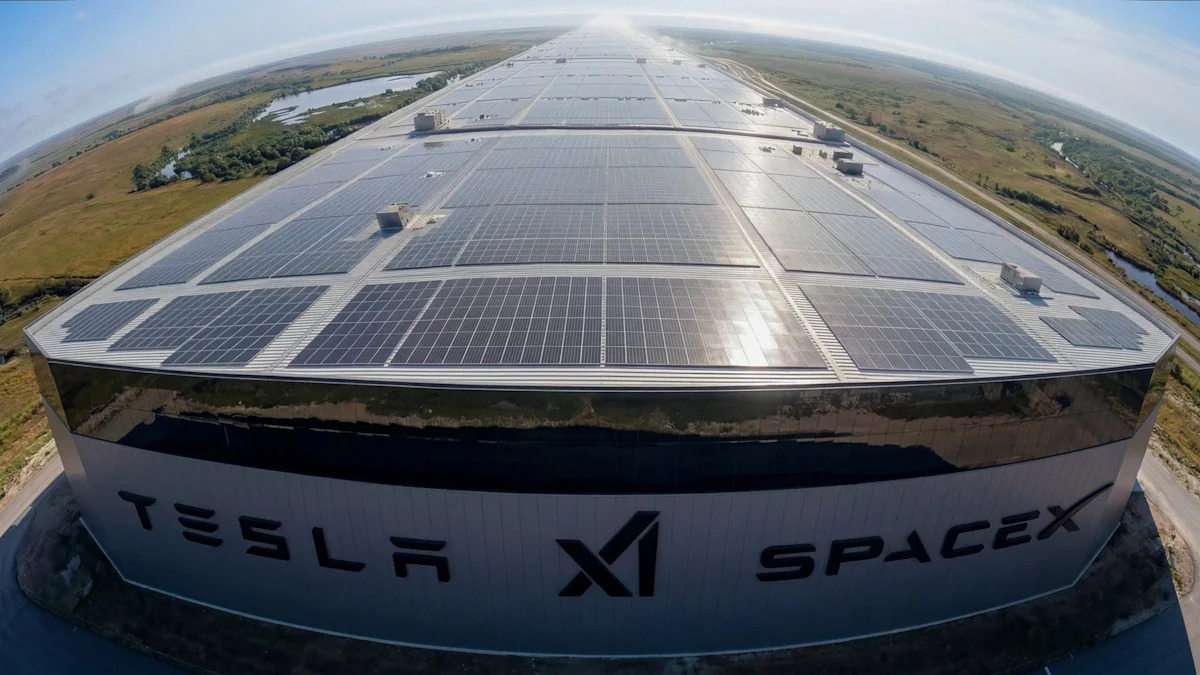
Terafab is a Texas chip plant that Tesla and SpaceX are building together. It targets 1 million wafers a month, and Musk himself estimates it could cost $1 trillion. SpaceX also wants a gas-fired power plant and supercomputer at Starbase, with a first phase estimated at $24 billion. That project is still waiting on a tax decision from Starbase's city commission. All of that fab, power, and compute capacity has to be built by somebody, and we highlighted seven suppliers riding the same AI infrastructure wave in a free report here.
For many Americans, funding a 401(k) only leads to more retirement questions. Should you roll your 401k into an IRA, and when? What's the tax impact if the rollover check gets made out to the wrong name? When do required withdrawals begin, and how much do you have to take?
Fisher Investments put the answers in one place. 401k & IRA Tips and Answers is free, and it covers rollovers, contribution limits, required withdrawals, and what actually belongs inside the account once the balance gets serious. Read More Here ›
Investors have already marked down the risk. SpaceX shares fell 12% over the past month to about $143. SpaceX board member Donald Harrison also resigned one day after the elections.
Tesla slipped less than 1% over the same month, though it is down 16% this year.
Ives has this one right, and the tax math shows why. Texas voters approved Proposition 4 in 2019 with 77% support. Any future state income tax now needs a two-thirds majority in the legislature. Florida has no personal income tax either. That means moving from Austin to Miami would not lower the state income tax Musk owes on his pay, including the stock compensation linked to Tesla's 2025 CEO Performance Award. Both rates are zero, so the savings are zero.
What a move cannot do is take the assets with it. Texas taxes business property in the local taxing unit where it has "taxable situs", meaning where it physically sits. A fab and a power plant sit in Texas no matter where their owner lives. Leaving would cost Musk political good will and save him nothing.
The same logic applies to anyone considering a move to cut taxes. Your savings equal the rate gap between the two states, applied only to income that actually moves with you. A state can still tax a nonresident on income derived from sources within that state. California, for example, taxes residents on all income but nonresidents only on California-source income.
Here is an example with illustrative numbers. A remote worker making $150,000 leaves a state with a 5% flat income tax for one with no income tax. She saves $7,500 a year.
Selling her $400,000 home costs about 6% in fees, or $24,000, and moving costs another $10,000.
She breaks even in about 4.5 years and comes out $41,000 ahead after a decade.
Now try the Texas-to-Florida version. The rate gap is 0%, so the annual savings are $0. She never breaks even, and the full $34,000 in moving costs is a loss. The result is just as bad if her income stays linked to her old state, such as a job she still performs on-site or equity awards making there. The old state keeps its claim on that income, and her savings shrink toward zero.
Find your real rate gap. Use both states' current brackets from their revenue departments and apply them to your actual taxable income. If both rates are zero, stop here: you have no income tax savings to capture.
Separate portable income from fixed income. Remote salary moves with you. On-site work, a local business, rental property and unvested stock earned in your old state may still be taxed there.
Ask payroll how equity will be allocated. Stock that vests after a move is often split between states by days worked in each. Get that split in writing before you set a moving date.
Count every switching cost. Include home sale fees, moving expenses, higher insurance and property taxes, then divide the total by your annual savings to get your break-even years.
The next signal for Musk is how Starbase's city commission rules on the power plant tax decision under Texas's incoming leadership.
(sponsor) 401(k)s are powerful retirement tools. But even savvy savers can make mistakes that quietly cost you money for decades. Choosing the wrong fund, ignoring small fees nobody adds up, rollover steps done in the wrong order, the list goes on.
These sort of mistakes is exactly what 401k & IRA Tips and Answers was created to help prevent. It is a free guide from Fisher Investments on rollovers, contributions, required withdrawals and the mistakes that do the most damage to a retirement account. Learn More Here ›
Contact editorial@247wallst.com for any questions or corrections.