SPCX -3.10% NVDA -4.76% Explore stocks on Coinbase Trading disclosure Trading disclosure The above button links to Coinbase. Yahoo Finance is not a broker-dealer or investment adviser and does not offer securities or cryptocurrencies for sale or facilitate trading. Coinbase pays us for certain activity generated through this link. Prices displayed are informational.
Space Exploration Technologies (NASDAQ: SPCX) has quickly become one of the most exciting growth stocks around. With Starlink, Starship, and artificial intelligence (AI) driving its ambitions, it's natural to wonder how much a $1,000 investment today could be worth by 2029.
First, it helps to start with what SpaceX is building beyond rockets.
Missed AI's "Act 1"? Act 2 Could Be 16x Bigger. Most investors think they missed the AI boat because they didn't buy Nvidia in 2005. But according to our analysts, we're only at the end of "Act 1"—the R&D phase. "Act 2" is the global rollout. Continue »
These days, SpaceX is positioning itself at the intersection of aerospace, telecommunications, and AI, giving it several growth engines over the next few years.
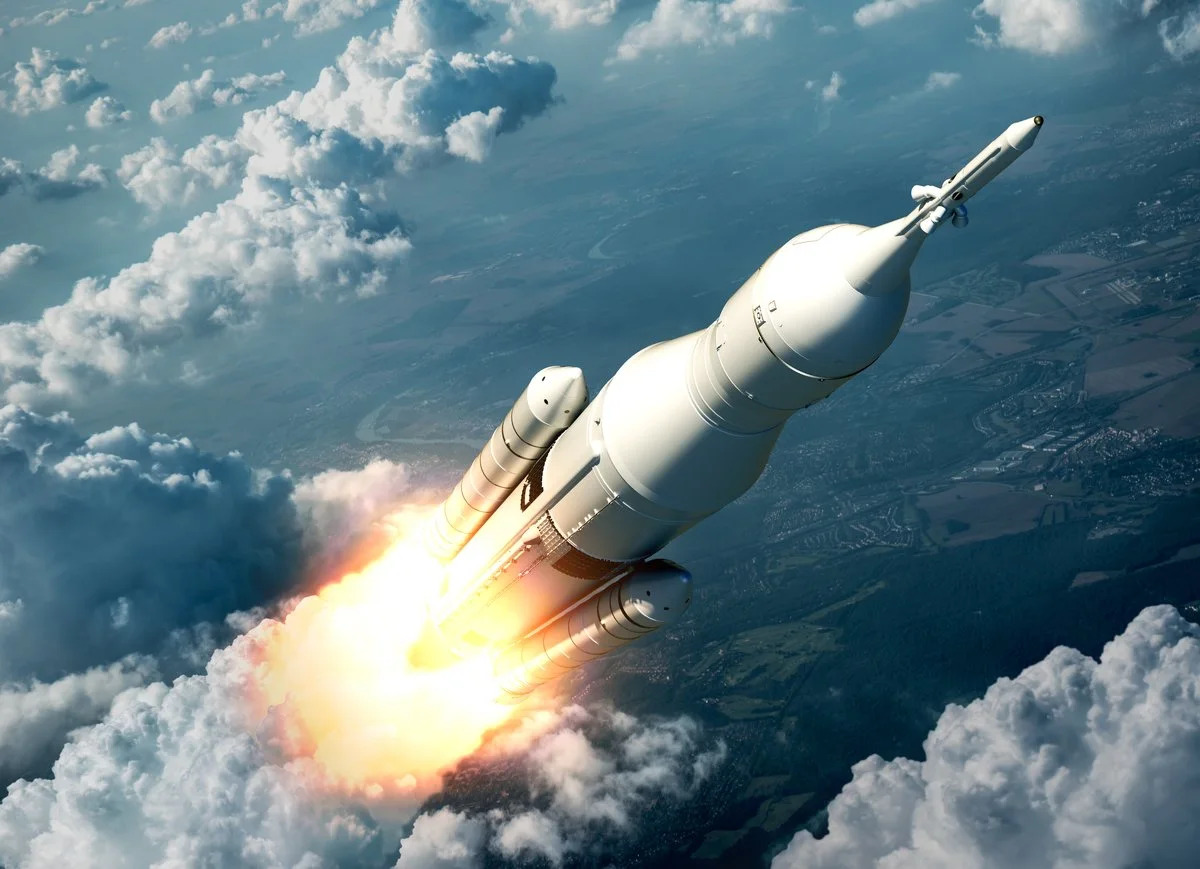
SpaceX's rocket business is a core part of the company. Its Starship program could be a game changer because rapid reusability could potentially lower the cost of sending payloads into orbit. It could also allow SpaceX to conduct launches much more frequently.
Cheaper access to space could unlock more markets across lunar missions, national security, scientific research, and space infrastructure.
But what's interesting is that growth is no longer coming solely from rocket launches. SpaceX's connectivity and AI businesses are becoming important contributors to its performance. In turn, that diversification could make the company more valuable by 2029 if it can turn its investments into strong earnings growth.
One of SpaceX's biggest catalysts today is Starlink, its satellite-based broadband business. Unlike rocket launches, Starlink brings in recurring subscription revenue from its customer base of 13.6 million, nearly double that from a year earlier.
The results are starting to pay off as the company reported $4.4 billion in net income, compared with a loss just a year earlier.
That said, the growth opportunity doesn't stop there. SpaceX is also investing heavily in the AI boom.
SpaceX is building out massive compute infrastructure to support AI models, cloud services, and enterprise applications. This creates more opportunities to participate in the rapidly expanding AI market rather than simply supplying rockets and satellites.
The Super Intelligence segment, for example, already generated around $7.6 billion in third-quarter revenue, up by over nine times from the previous year. The company also completed its acquisition of Cursor in August, further expanding its presence in enterprise AI software.
Granted, there are enormous opportunities at SpaceX, but its ambitions also require substantial investment. In the third quarter alone, for example, capital expenditures (capex) totaled around $19.6 billion, with AI infrastructure accounting for the largest share. If returns on these investments take too long to materialize, cash flow could come under pressure.
There are also execution risks surrounding Starship, increasing competition in the AI space, and regulatory hurdles. Still, the real question now is how much growth SpaceX can deliver by 2029.
Today, SpaceX stock trades at a price-to-sales (P/S) ratio of about 54, a high multiple. As revenue scales, the multiple could shrink from today's level, but strong growth and a growing Starlink subscriber base could still support a premium.
In a conservative scenario, SpaceX delivers 30% annual revenue growth on a 2029 P/S multiple of 20 times, putting its shares at around $115. That suggests approximately a 19% downside, meaning a $1,000 investment would drop to about $810.
Under the base case, SpaceX sees annual revenue growing by 45% on a 2029 P/S of 25 times. With that, its shares could reach a target price of $200, representing about 40% upside. In that scenario, $1,000 would grow into about $1,400.
Finally, under an optimistic scenario, SpaceX grows revenue by 60% each year on a P/S of 30 times, putting its share price at $322. That suggests a potential upside of about 126%. A $1,000 investment would more than double to about $2,260.
Before you buy stock in Space Exploration Technologies, consider this:
The Motley Fool Stock Advisor analyst team just identified what they believe are the 10 best stocks for investors to buy now… and Space Exploration Technologies wasn't one of them. The 10 stocks that made the cut could produce monster returns in the coming years.
Consider when Netflix made this list on December 17, 2004... if you invested $1,000 at the time of our recommendation, you'd have $341,157!* Or when Nvidia made this list on April 15, 2005... if you invested $1,000 at the time of our recommendation, you'd have $1,037,753!*
Now, it's worth noting Stock Advisor's total average return is 834% — a market-crushing outperformance compared to 207% for the S&P 500. Don't miss the latest top 10 list, available with Stock Advisor, and join an investing community built by individual investors for individual investors.
*Stock Advisor returns as of November 12, 2026.
Rick Orford has no position in any of the stocks mentioned. The Motley Fool has positions in and recommends Space Exploration Technologies. The Motley Fool has a disclosure policy.
Prediction: $1,000 Invested in SpaceX Today Will Be Worth This Much by 2029 was originally published by The Motley Fool