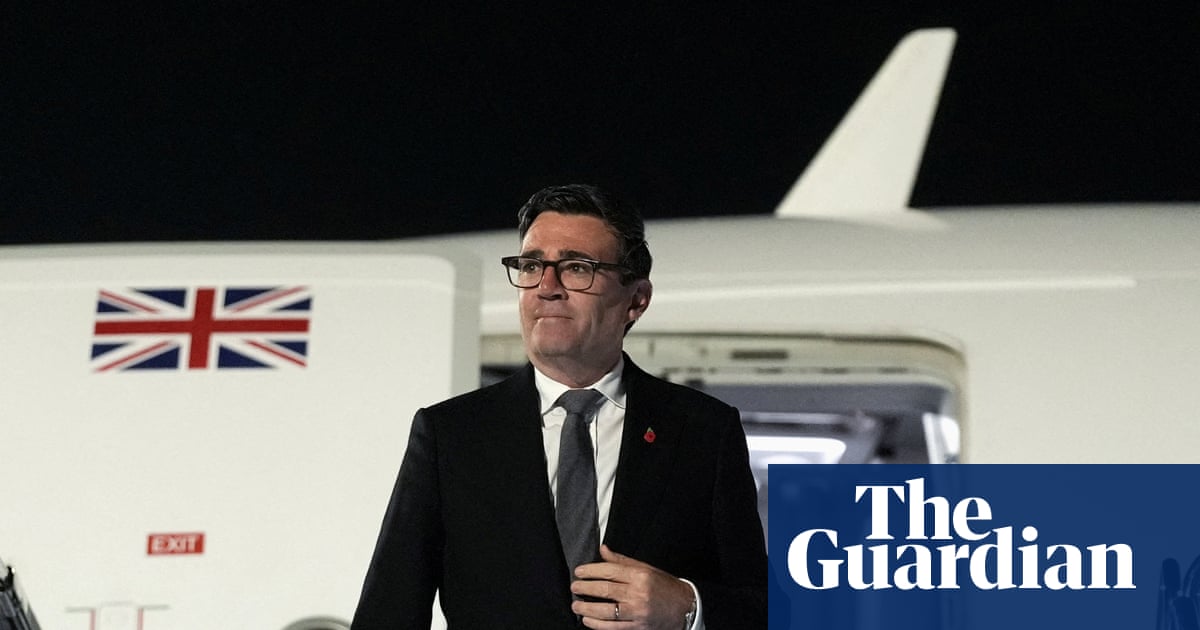
Andy Burnham arrives at Cop31 in Antalya, Turkey on Wednesday evening. He will announce the new role there on Thursday morning. Photograph: Stefan Rousseau/ReutersView image in fullscreenAndy Burnham arrives at Cop31 in Antalya, Turkey on Wednesday evening. He will announce the new role there on Thursday morning. Photograph: Stefan Rousseau/ReutersUK appoints world’s first special representative for climate securityExclusive: Madeleine Alessandri, chair of the joint intelligence committee, will take on the role of advising No 10 on climate-related national security risks
The UK government has appointed the world’s first special representative for climate security, in the strongest sign yet of fears that climate breakdown will bring chaos to the country.
Prime minister Andy Burnham will announce the move on Thursday at Cop31, the UN climate summit, with the new role designed to advise the government on national security risks from the climate crisis before they spell catastrophe.
Burnham will tell the key climate talks on Thursday morning: “We should all recognise the summer was not normal. The climate crisis is upon all of us now. We saw that with the wildfires that devastated lives and livelihoods everywhere.”
This year’s summer was the UK’s hottest on record, with back-to-back heatwaves supercharged by the climate crisis causing health services and transport to suffer, schools to close and thousands of people to lose their lives prematurely.
Burnham will add: “The message I carry here, in my first Cop as prime minister, is that the UK remains determined to reach net zero by 2050 and to work with our partners to build a clean energy future. The world has changed. The consensus we once enjoyed on science and climate action has broken down. “We will not stand by, and that’s why I’ve pledged a new era of British leadership over the next decade.”
View image in fullscreenUK climate group Mothers Rise Up protest near Downing Street in September to highlight the impact of record-breaking heat on children. Photograph: Adrian Dennis/AFP/Getty ImagesBurnham arrived in Antalya, Turkey late on Wednesday night, before joining scores of heads of state and government for a series of high-level meetings at the talks, which are presided over jointly by Turkey and Australia. He will also confirm UK support for a proposed target of 35% electrification by 2035 and help towards plans to raise £5bn in private finance for clean energy projects across the world.
Madeleine Alessandri, chair of the UK’s joint intelligence committee (JIC), which oversees MI5 and MI6, will take on the special representative job.
But campaigners pointed to what they said were Burnham’s failures to take the measures needed to reduce greenhouse gas emissions at home, and to provide the funding needed to protect vulnerable countries overseas from the kind of risks the JIC has warned about. The government is mulling a major weakening of targets for electric vehicles and has given the green light to a gasfield, Jackdaw, in the North Sea while considering a new oilfield, Rosebank, west of Shetland.
View image in fullscreenClimate campaigners protest outside the Department of Energy and Net Zero against the decision drilling at Jackdaw and Rosebank. Photograph: Denise Baker/Getty Images“What we’re seeing in part is double standards,” Mohamed Adow, director of the Power Shift Africa thinktank, told the Guardian. “We can’t have Britain preaching a clean development gospel but expanding fossil fuels back at home. You cannot expect one set of rules for Africa and another for Britain.”
The UK’s credibility was “crumbling”, said Asad Rehman, chief executive of Friends of the Earth England, Wales and Northern Ireland. “The prime minister’s first climate talks should be an opportunity to demonstrate he means business. But if this is all the UK has to offer, then the questions piling in about his climate credibility are more than justified.”
Under Alessandri, the JIC collaborated on a secret report warning that within five years the UK could begin experiencing national security impacts from the collapse of ecosystems overseas, driven by the climate crisis and overexploitation of the living world. These impacts included food shortages, rising food prices, mass migration and conflict among nuclear-armed countries.
The report was suppressed under former prime minister Keir Starmer, but its contents were revealed by the Guardian last year, ahead of a redacted publication earlier this year.
Dame Madeleine Alessandri said: “Climate change and nature loss are increasingly shaping the security environment in which the UK operates, placing additional pressure on resources, economies and communities around the world. “The best time to address these risks is before they develop into crises. In this role, I will work with partners across government and internationally to strengthen our understanding of climate threats, build resilience and ensure we are better prepared for the challenges ahead.”
View image in fullscreenLow water levels in Colliford Lake reservoir, Bodmin Moor, Cornwall. This year’s summer was the UK’s hottest on record. Photograph: Amazing Aerial/AlamyThe risks of the climate crisis to national security were also highlighted by Ed Miliband, foreign secretary, who has been briefing foreign capitals on the findings of the JIC report. He is also at Cop31 this week, and told the Guardian: “National security is the next frontier of the fight for climate action – the scenarios once of science fiction are now regular occurrences in the daily news.”
He added: “Climate breakdown is one of the greatest national security threats we face: food security, threats to infrastructure and population movements [are resulting from the climate crisis].
“Those who seek to stick their heads in the sand on climate are putting our national security at risk.”
In common with many wealthy nations, the UK has significantly rolled back its climate finance, funnelling money instead to military spending. In July, Burnham fronted a pledge to lower the cap on UK bus fares, funded by changing international climate donations into repayable loans.
Prakash Dahal of Pro Public and Friends of the Earth Nepal said finance was vital for his country’s adaptation to climate breakdown, and recovery from disasters such as the catastrophic flash flood that struck Nepal in August. “Crucially, this essential funding must come as grants – not loans,” he said. “Nepal is not asking for charity. Nepal is demanding justice.”