Don’t buy Nvidia yet: 4 stocks to buy instead Rebecca Mezistrano Wed, November 11, 2026 at 3:45 PM EST 30 min read ^GSPC +1.31% NVDA +3.14% Trade NVIDIA on Coinbase Trading disclosure Trading disclosure The above button links to Coinbase. Yahoo Finance is not a broker-dealer or investment adviser and does not offer securities or cryptocurrencies for sale or facilitate trading. Coinbase pays us for certain activity generated through this link. Prices displayed are informational.
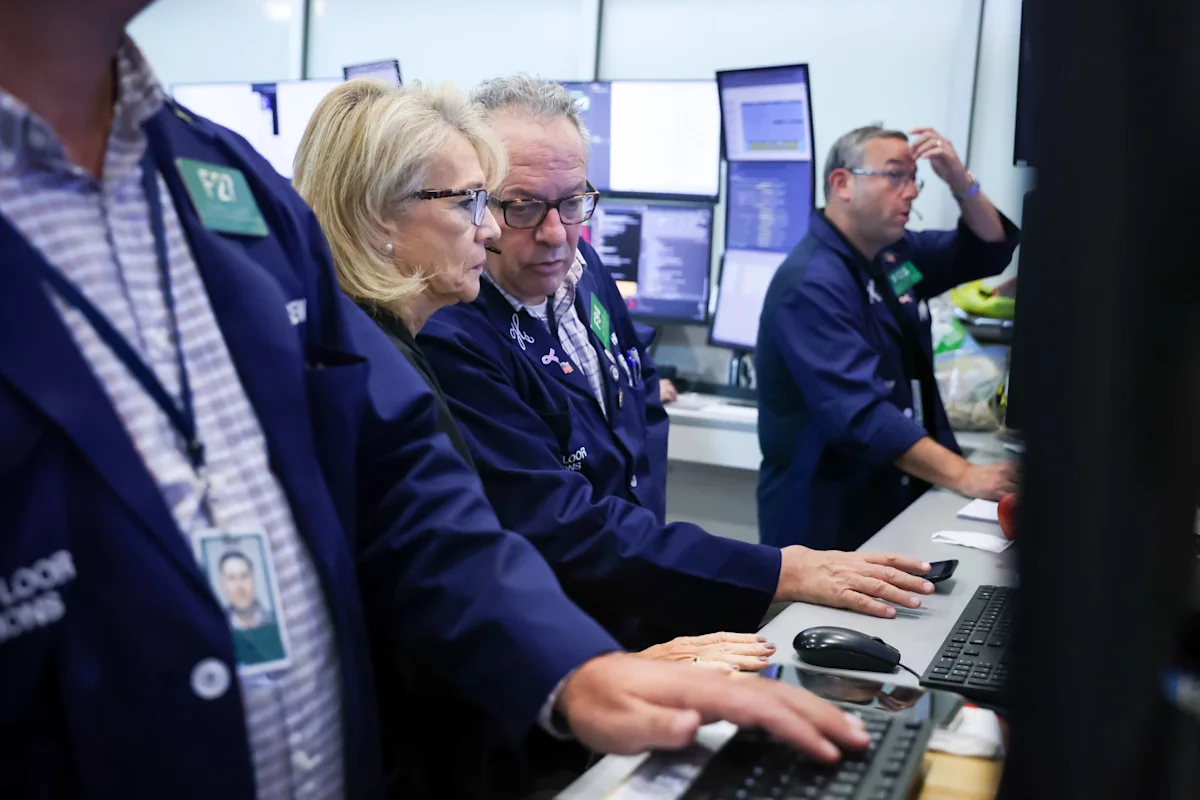
Caroline WoodsJoining me now, Christopher Davis, founding partner, Hudson Value Partners. Christopher, welcome to the desk. Not your first time on the show, but first time here with us on the floor. So welcome.
Caroline WoodsAnd our rebound is already fading. We have that hotter than expected CPI report. The inflation report just one day after the S&P 500 posted its best gains since what, April? And now we're looking at some red arrows. So was Monday's rally a false start?
Christopher DavisI don't know if it was a false start. The metaphor I like to use is I think about a rowboat. And when you push down really hard on one side of a rowboat, it's going to have to rock back and forth a bunch of times before it finds center and finds level again. And I think last week, particularly after the midterm elections, we had a really strong shove to that rowboat.
Christopher DavisSo we've had a couple of days, a couple down days since, and we're still trying to find that level.
Caroline WoodsAnd I guess what is center because we have now inflation running hotter than expected, we have the potential for maybe a 50 basis point hike come December, if not potentially a 25 basis point hike. Does that change your outlook for stocks? Where should center be, I guess?
Christopher DavisYeah, I think center is when, investors can really focus on the fundamentals of companies and they're not really worried about some of those big shocks that are out there. I think in terms of the of rates, obviously rates are very important to the market right now. You've had the move in in the 10-year today back over 5%.
Christopher DavisYou've had the move in the 2-year. There's about 20 basis points, which is a large move there as well. I'm not in the 50 basis points in December camp. I think you get the 25 basis points that the committee has been telegraphing. Even if the Fed chair isn't giving the forward guidance, we're getting that from the rest of the committee.
Christopher DavisAnd I think really that October CPI print, which is a little funky because we didn't have that year over year comparison because of last year's government shutdown, and also because, you know, the decline in fuel prices that really started this month in November. And that's been the big thing that's had the thumb on the scales of CPI this year is energy.
Christopher DavisSo if that energy price trend can continue to go down and we get further de-escalation in conflict with Iran, which seems to be the case, there doesn't seem to be much appetite to really renew that conflict that could, you know, take a lot of pressure off interest rates and inflation by proxy. And I think that just gives you maybe that 25 basis point instead of the 50 that some people are talking about and get a little nervous about today.
Christopher DavisAnd I could put you in a setup where 2027 could be flat to maybe cuts in the back half of the year.
Caroline WoodsAnd what does that mean for the market? Can this market power higher with even a 25 basis point hike?
Christopher DavisYeah, I think the market can power higher with a 25 basis point hike in December because that is I think that's the base case for most people's expectations. More would be an issue. But when we look at the earnings season and that just really wrapped up last week for the biggest bulk of companies out there, earnings were strong.
Christopher DavisAnd there's not much reason to think that's not going to continue to be the case in Q4 and into next year. The pace of earnings growth acceleration has declined a little bit. It may have been the peak of that growth, that second derivative, the rate of change in Q2, but you're still seeing double digit growth across most sectors.
Christopher DavisAnd it's hard to get too bearish when that's the case.
Caroline WoodsBut we're also seeing this unwind of the AI trade. I think yesterday's rally suggested that people were willing to step back in and buy tech stocks again today. Maybe they're rethinking it. And we're seeing a lot of red on the screen outside of just a few names. Do you think people are jumping back into tech too soon? Which side are you on?
Christopher DavisI think people are realizing that there's technology and there's AI, and technology is a big part of the market is the largest sector. But the AI theme, which has now bled out into all sorts of other sectors too, is probably approaching 60% of the market. And most people, and I think a lot of people were uncomfortable with their allocations last week or saying, I have too much of this theme.
Christopher DavisThings that weren't in the technology line out of my portfolio, I'm realizing, are still very correlated internally to the AI theme and want to find ways to mitigate that. And I think that's what you're seeing right now. I think one of the divergences, and I always look for divergences in the market as a tell, is you see Nvidia under pressure for some obvious reasons with the industrial espionage issue potentially out there.
Christopher DavisBut you see a company in the same group, ASML, has held up relatively well. At one point last week there was an intra day 10% divergence, five up five down between those two names. So that tells me that investors are starting to reorient their technology and AAI exposure. They're not necessarily getting rid of it entirely.
Caroline WoodsWhere should we be reorienting to which tech or AI names should definitely be in our portfolios at this point? Where should we take some profits? What should we maybe take some losses on? Yeah.
Christopher DavisI think you want to an individual basis. You want to think about what the weighting in your portfolio is. Obviously, if things have gotten beyond, say, 6 or 7% in your portfolio weighting, you probably want to think about peeling that back and taking some gains there. Because if you don't, history tells us that oftentimes the market will take those gains for us in terms of allocating within technology.
Christopher DavisI think you want to start to look at what are the companies that AI is going to make it better, that AI that are beneficiaries of AI, which improves what they do, rather than the companies that just have to completely shovel in a ton of money into CapEx continuously. There are some companies that can handle that economically, but not everyone can.
Christopher DavisAnd if you're on the side of the coin, that's a benefit of all that spending. That's a much better place to be.
Caroline WoodsSo you brought four, I think four stock picks with you. I'm assuming all of those are some of the beneficiaries of AI before we get to those, because you are a value investor and we do see quite a few potential values on the screens. You know, you mentioned Nvidia down 10% this week alone 30% off the highs. Do you look at Nvidia here as a value or a value trap.
Christopher DavisI wouldn't necessarily say it's a value trap because it's still growing. To me, the classical definition of value trap is a company that just can't grow and always looks cheap and gets cheaper. So I think there is growth potential still certainly with Nvidia, but I think it's going to take time for it to get to find its level.
Christopher DavisI mean, it's the one stock that everyone's probably the most overexposed to. And you've had this this shock. That's pretty hard to price. And I think what investors are wondering is what if you have an Nvidia without Jensen. Why. What does that look like. He's certainly been a figurehead for the whole AI movement a spokesperson, the driving force.
Christopher DavisBut is there more to the company than him? I think the answer is yes, but I think that's a stock that could be in the penalty box for a while until this this shakes out. So I'd hold your fire.
Caroline WoodsAll right, Nvidia below $170. Not an opportunity here?
Caroline WoodsWhich tech stocks are opportunities based on you know your kind of value lens. Yeah.
Christopher DavisSo I think Alphabet is really interesting here. And if we go back to their their earnings report people and street expectations were nervous that their advertising revenue came in lighter than expectations still growing over 10% but lighter than expectations. And we really look at alphabet as an advertising business in the world's best advertising business. And the line in that conference call that was most underappreciated about Alphabet was really that they say, well, you know, we've been monetizing our AI queries in the US, but we haven't started do it the rest of the world.
Christopher DavisWell, that's a light bulb moment. If you're listening to that call and thinking about what the next quarter's going to look like. If they said that they just started this quarter monetizing internationally, AI queries, that's a large percentage of the queries out there. I think that's going to be supportive of getting advertising revenues back on track. And what investors have to adjust to is it seems like they're able to charge more per ad that shows up in AI, but they're also going to be serving less of them because the AI search results are better, more direct where people are looking than the traditional Google search, which may take a few few tries before you get
Caroline WoodsOkay, so you like Alphabet. What else within the tech trade?
Christopher DavisThis was in the tech trade. I think you want to look at a company like ASML. And that to me is one of the great franchise businesses of the world. I mean, they have truly dominant market share in the advanced lithography equipment. They have a multi-year backlog. And that backlog is secured by committed orders with substantial deposits.
Christopher DavisAnd on their recent earnings call, CEO says, you know, an order with ASML is not something to be taken lightly. And that, to me, suggests that you're not going to see the risk of all sorts of cancellations or things like that in their backlog being being too high. So that is, to me, as a more comfortable place to bet rather than thinking, is it going to be Nvidia chips or AMD chips or Intel chips, say, let's go one layer back to ASML, the manufacturer of the machines that make all these great equipment.
Christopher DavisAll the manufacturers and fabs use ASML equipment. So I'd rather deal with that. That arms dealer.
Caroline WoodsWhat about a name like Arm which is well off the highs.
Christopher DavisYeah. Arm, to me. You know it's an interesting business. They have an interesting design set up that a lot of people have been trying to get right for a long time. They seem to be able to do it. But when I can buy the market leader, ASML, at these levels, I prefer to stick with that.
Caroline WoodsAnd then software, where are you? How are you looking at software doing better than it was earlier this year? We've seen a bounce back in quite a few names, some still really beaten down. How are you thinking about software as a whole and which names do you like there?
Christopher DavisYeah. So within software, I think the truly indispensable software name is Microsoft. They're the leader in the productivity suite with Office. The E5 and E7 licenses are really one of the best ways we're seeing a company truly monetize AI. And tying that into the productivity software. That's the software that corporate America really can't live without. I mean, if you hire someone, chances are they're coming with a Microsoft subscription.
Christopher DavisThe other companies out there in the more specialty software names, I think it's still, for me, in the too-hard category, it's hard to price who's going to be the winner, who's going to survive. And I think it's probably going to be more companies right now than people think, because the thing to remember with AI is AI,
Christopher DavisWhen you put in, you know, code or you put in some sort of query, it does it a little bit different each time. You know, it's nondeterministic; it tries to solve the problem. It's not absolute the way written, true software is. And because of that, for mission critical procedures and operations where you need to get the same result every time for the same inputs, AI isn't necessarily the best fit.
Christopher DavisBut right now, trying to figure out which of those companies is going to be the winner is. I think we need to, you know, let the game play out a little bit longer.
Caroline WoodsIt's interesting, though, as we think about which companies will be the winner in AI. It wasn't the case for you because I don't think Nvidia was the pick last time you're on. And over the summer before all of these headlines started coming out, but it seems like Nvidia was the safe pick if you're only going to pick that on one tech stock.
Caroline WoodsNvidia is kind of the I guess Apple's become the safety play. But Nvidia you know, is the highest conviction stock among so many of our guests. Yes. If that continues to falter and the AI revolution is really powering or powered by Nvidia, could that bring the whole AI trade down with it?
Christopher DavisIt has the potential. I think it's people's highest conviction names, because oftentimes people confuse conviction with position size just because it's grown in such a way and you've left it there, it becomes your highest conviction. But I think if investors reduce their Nvidia allocation, that's a lot of money that's going to go other places and it could go into other parts of technology.
Christopher DavisBut I would caution people that owning multiple names within AI doesn't reduce your AI concentration or reduce your thematic risk. It's not real diversification the way, you know, getting some other sectors and some other things in the portfolio is so selling a little bit of Nvidia to buy AMD, that hasn't changed your AAI exposure. You're still going to have a pretty high beta to whatever investor sentiment is on that theme.
Caroline WoodsAnd for those people who might say, well, I don't own Nvidia but are invested heavily in the S&P 500, how should they start thinking about their the market impact, their and their potential returns?
Christopher DavisI would say you're already there. So in terms of if you're a S&P index holder, I wouldn't say go out and buy some Nvidia to add to that position just because it's down. If you're going to come at this from an index oriented perspective, you need to be very cognizant that 40% of your money is in technology, and close to 60% of that is going to be related to AI.
Christopher DavisSo if you're looking to complement it, you might want to look at, say, a small cap value index or an international index that's going to give you complementary exposure without adding too much overlap to what you have in the S&P 500 index, which is a great wealth filter over time.
Caroline WoodsOkay, maybe we'll have a chance to dig into a little bit of that, but I had mentioned that you brought four stock picks that are beneficiaries of AI, not necessarily part of the build out. Want to get to those? First up Sony. Yeah, for about 4% year to date. So underperforming in the broader market. What's the market missing about Sony that it should be recognizing here.
Christopher DavisYeah. So Sony is one of those technology names out there that isn't burdened by crippling CapEx. So Sony has had a lot of activists over the past 5 to 10 years take different wax at it to try and get them to make changes. And I think it's a situation right now where my my funny line on it is that it's the second mouse that gets the cheese.
Christopher DavisAfter all these years, the company is finally starting to make the operational and efficiency changes that people long argued for. And Sony really operates across three buckets. I describe it. They have their media business, which includes TV, pictures, music, as well as video games. They have hardware and devices. So think really high end displays, cameras, optical equipment.
Christopher DavisAnd then they also have their components business, which are things that go into like the camera sensors for your iPhone or other industrial automation type components. And where Sony is really interesting is it's this flywheel effect with the media. So take the example of Spider-Man over the summer, one of the biggest movie releases ever, 2.5 billion in sales or something like that.
Christopher DavisWhat that did was it drove more people into their video games that are related to Spider-Man, about a two times engagement increase and about a billion extra streams across their music catalog of music. That was in that Spider-Man movie. And what that resulted in is Sony's top line went up about 10% year over year in the quarter that was just reported last week.
Christopher DavisTheir operating earnings went up by 44%. So it shows you that this content business is very accretive, and they're sitting on this big library of all this content, great music, everyone from Springsteen, Michael Jackson, Adele, as well as all sorts of sorts of new stuff. And for Sony, you think about AI, the content world, the content they own becomes more valuable in an AI world, and there's a real catalyst coming up, and that is in the video game business.
Christopher DavisWe've got this Grand Theft Auto six coming. Now, Sony doesn't.
Christopher DavisTwo, it just take two to play the game for PlayStation. So we think it's really going to increase the engagement with PlayStation. And Sony is now operating on really like an App store type model for video games. So they make a substantial amount every time someone downloads that Grand Theft Auto game. So we think that could reinvigorate the PlayStation franchise and engagement.
Christopher DavisAnd I think it's going to shape up to be a pretty strong Q4 for Sony.
Caroline WoodsSo that's the catalyst that gets US stock actually moving as opposed to some of these other things that okay. Exactly. Next up, Green Brick Partners housing of course remains under pressure, especially as we talk about potential interest rate hikes from here. Why a homebuilder now versus waiting for a recovery?
Christopher DavisSure. So why why now I would think is that the homebuilders are really at very, very attractive valuations. I think we're getting close to a valuation floor. And when we look at stocks Hudson Value Partners we think about really three components asset value earnings power value and some sort of growth value that we're going to put on it.
Christopher DavisAnd Green Brick unlike a lot of homebuilders hasn't shifted to the asset light model on a homebuilders are now operating. Land banks are just buying options on land. So in essence they rent lots until a buyer comes and then they'll buy it, create the home and then sell it. Green brick controls over 40 plus thousand lots that they own outright.
Christopher DavisSo they are an asset rich company. And when you think about the long sweep of housing prices in the US, a lot of the value is driven not by the sticks and wood, but by the dirt, by the land. That land value is what it creates over time. So while other home builders are, you know, giving away some of the upside of the land, Green Brick has it and they have it at least in ten years of that, and it hasn't really actually hurt their margins.
Christopher DavisThey have 29% homebuilding margins, which are the leaders in the space. So even in the face of a Fed that may go 25 basis points again in December, we think, you know, as a small allocation in your portfolio trying to diversify away from that. I think you're in a very good position to add a super high quality builder like Green Brick.
Caroline WoodsOkay. Next up, I should mention Green Brick, for people who aren't aware, GRBK. Marzetti, MZTI, down more than 30% this year. You're the value investor, so you're looking for things that might look reasonable. Why is this a buying opportunity versus a value trap.
Christopher DavisYes. So this is an opportunity not a trap because there are two catalysts with Marzetti. First is earlier this year they bought a Japanese barbecue sauce company called Bachan's and that added to their portfolio. And Marzetti is a consumer staples company, about 2.8 billion in market cap with a 3.8% dividend yield. And Marzetti is the number one company in salad dressings, croutons, as well as frozen frozen dinner rolls and some assorted bread products.
Christopher DavisSo they're a category leader. And what happened over the summer is we had the Cyclospora outbreak. Now, with that, salad dressing, sales went down substantially. Cyclospora was concentrated really in the Great Lakes region, which is one of Marzetti's strongest regions. So when you're thinking about consumer staples, particularly in the GLP one era, it's a subtle point. Where do you want to be?
Christopher DavisDo you want to be in the world of Rice Krispie treats? What do you want to be in salads?
Caroline WoodsI know what I want to eat, but yeah.
Christopher DavisBut it's you know, we're in a salad world. Salad season is coming up in January with everyone's New Year's resolutions and Marzetti, with their number one position and a fast growing new business in Bachan's. And what was great in their recent earnings calls is Bachan's made up almost all of the degradation in earnings that they had from the Cyclospora outbreak.
Christopher DavisSo it shows you that this business that they bought, which investors questioned heavily when the stock took a dip this spring, is still growing strong. The salad dressing is growing well, and Marzetti is really smart how they do it, because they have these licensing agreements and they license sauces from companies like Chick-fil-A, Olive Garden, Texas Roadhouse.
Christopher DavisSo they have an industrial foodservice type scale business where they sell to all those restaurants. Most of the top restaurants in the US get sauces from Marzetti in some way, and then they have the licensing agreement to then sell you that same sauce, same great taste in the supermarket. And their biggest customer in that is Chick-fil-A. So they've been the maker of the Chick-fil-A sauce going back to the 1980s.
Caroline WoodsInteresting. All right. And finally, ESAB.
Caroline WoodsWhich is a company I'm not familiar with. ESAB, what's the business and what's the bull case?
Christopher DavisYeah. So ESAB is definitely an under the radar name. It's about a $5.8 billion market cap company out there trading about 15, 16 times forward earnings. And ESAB is a leader in the precision welding and automated fabrication space. So very much, a couple tiers down from your top industrial suppliers, but very critical to building things, particularly within the oil, gas and anything that has piping or flow control systems.
Christopher DavisNow, what's interesting about ESAB is for a small cap company, it actually gets more of its revenue from outside of the US than inside the US. And if you've ever gone to Dubai or Abu Dhabi, when you drive from Dubai to Abu Dhabi, across that highway that goes across there, looking out on one side, you'll see a massive ESAB facility and they have facilities both in the UAE and in Saudi Arabia.
Christopher DavisSo we think an upcoming catalyst for ESAB, is as the war escalates and things fall down, they stand to be a real big beneficiary of all the rebuilding that's out there, because with their recent acquisition of Eddyfi, they took out one of they're not necessarily a competitor but an adjacent business. So they were able to expand their franchise.
Christopher DavisNow through one business, you can take care of all your cutting, joining, shielding, automating, analyzing and inspection needs. The complete lifecycle of all of those piping and fabrication technologies in one business.
Caroline WoodsOkay, so if you could only buy one of those four right here, which one would it be?
Caroline WoodsOkay. And you had mentioned the international exposure, and that's a great kind of segue back to the point of diversifying our portfolios, maybe away from I, as we think about constructing our portfolios for your end, how much of the, I know you can't clump everyone together, but maybe the risk on my portfolio say retail investors portfolio should be within tech right now.
Caroline WoodsHow much should be international? What other sectors should we have exposure to?
Christopher DavisSure. I think I'll start with the international piece. And I think, you know, having perhaps 10 to 15% of your portfolio in companies that are, you know, domiciled and get most of their revenue outside of the US is probably a good, good place to be. I don't think you need to go more than that. And you can certainly look at companies like Sony or ASML that we talked about.
Christopher DavisThose are international companies that also still add to your technology allocation. I still think you probably want to have a good 25 to 35% of the portfolio in broader tech and communication services type names, but I think you don't want it to be in three or 3 or 4 names, or just in one part of technology.
Caroline WoodsWhat about some of the other sectors that we haven't hit on healthcare? Yeah. You know, you mentioned kind of homebuilders with real estate, but industrials, utilities, things like that. Staples I guess Marzetti would fit into that. But how should we be thinking about exposure to some of the other sectors.
Christopher DavisYeah I think when you and I last spoke we talked a lot about health care and some of the pharma names. And those have been doing quite well.
Christopher DavisI don't think it is too late, because I think all of the names that we follow think about companies like Merck, Amgen, Johnson & Johnson, Thermo Fisher, these are all fall into the category of AI beneficiaries. AI is allowing these companies to get more out of every R&D dollar that they have, to find out if a molecule can be turned into a drug much more quickly.
Christopher DavisAnd when you listen to these earning calls, go through the release and take a look at them. They have tremendous pipelines out there. So while they've had a good run up so far, and you know, maybe valuations are not as cheap as they once were, I think there's great potential for them to grow into those valuations. And I don't think the pace of innovation in health care, especially some of these breakthroughs in oncology that are saving lives and doing tremendous work, is going to slow down.
Christopher DavisAnything I'm avoiding. I think you want to be careful. In in energy.
Caroline WoodsEven though it's on sale this month.
Christopher DavisEven though it's on sale this month. But it's a great example of of the dangers of energy investing. People get excited about it when there's some sort of dislocation or catalyst like that. And you want to think about, particularly if you're a retail investor and how we manage money at Hudson Value Partners, is we want to own companies that we can own through the cycle.
Christopher DavisSo if you're going to have some energy exposure in your portfolio, you know, we like a company like ONEOK, which is a roll up of a bunch of different pipelines throughout the US. They've done about three acquisitions in the past five years, and we are more interested in being toll takers on that energy business. So betting on the flow rather than the exact dollar price of what that commodity is, is going to be.
Caroline WoodsLast time you joined it was back in August. You said investors should always be investing. Yes. Is that still the case right now given the volatility that we've been seeing, given that there's a potentially another fed rate hike in the cards? Should investors always be investing still, or should they be holding on to some cash here.
Christopher DavisWell I think as long as you've got a decent time horizon. And by that I would say, you know, my investable time horizon is a minimum of 18 months. I think you should always be continuing to add anything shorter than that. You know, I think is just too difficult. But, you know, just like, you know, the people who put their money in their 401(k) account on payday last Friday got a good mark.
Christopher DavisYou know, maybe the, the, you know, Mark this upcoming Friday will be a little bit different, but I think you always want to be continuing to add to your, your portfolio because that time in the market is always going to be timing the market. Just because, you know, we never know which way the rowboat is going to flip back and forth.
Caroline WoodsSo if the retail investor has a lot of exposure to the S&P 500 right here, what's the first thing that they should add to potentially diversify right here?
Christopher DavisI think a little bit. Just picking an international index. I think that's a great thing to do with a small percentage of it. And because the S&P 500 great index, great money maker, over time it has become very concentrated. And it's almost a mega cap index at this point based on how big those companies have gotten, I think adding some small or mid-cap exposure.
Christopher DavisAnd again, not a lot. We're talking about maybe 5 to 10% international and maybe 5% small cap, 5% mid cap like that will start to help you buffer things a little bit, and you'll get exposed to some companies which I think are cheaper, have some good growth prospects. And I think if you're a little uncomfortable in your your allocation, when correlations on everything related to AI and tech basically went to one to the downside last week, having those different things in there will give you a smoother ride potentially.
Caroline WoodsOkay, I think that's a great time to pivot to our rapid fire round of this or that. You know how to play. Quick questions, quick answers. No hedging. Are you ready?
Caroline WoodsMarket volatility: buying opportunity or warning sign?
Caroline WoodsAI selloff: healthy reset or bigger warning.
Caroline WoodsFresh money. Buy stocks now or wait for another pullback.
Caroline WoodsStocks by year-end higher or lower from here. Higher. How much higher?
Christopher DavisI think we could make a new high in December.
Caroline WoodsOkay, Nvidia, buy the weakness or stay away. Stay away Microsoft or Alphabet. Alphabet market leadership. Big tech or the rest of the market?
Caroline WoodsSony or Netflix? Sony housing recovery 2027 or later?
Caroline WoodsSo housing stocks buy ahead of the recovery. Wait for confirmation.
Small caps are large caps small caps growth or value value. Finish the sentence. The biggest risk to the rally is hubris. Meaning.
Christopher DavisYou know, people just put in too much money into into one thing. And I and, you know, discounting the big old diversification lessons.
Caroline WoodsThe most overlooked stock opportunity right now is,
Caroline WoodsThe one stock I'd be buying on any sell off is Berkshire Hathaway. And one word to describe how your feeling about the market heading into 2027.
Caroline WoodsAll right. So we'll leave it there. That's Christopher Davis, founding partner, Hudson Value Partners. Christopher, you're your wealth of information. I learned so much from you. So thank you for your picks and all of your your insights. Really appreciate it.
Christopher DavisOh my pleasure. Thank you. Good to be here.
Caroline WoodsIf you enjoyed this interview check out our street talk with Andy Goldberg. He's another one who says you should always stay invested and explains where you should put fresh cash to work today.
This story was originally published by TheStreet on Nov 11, 2026, where it first appeared in the Video section. Add TheStreet as a Preferred Source by clicking here.