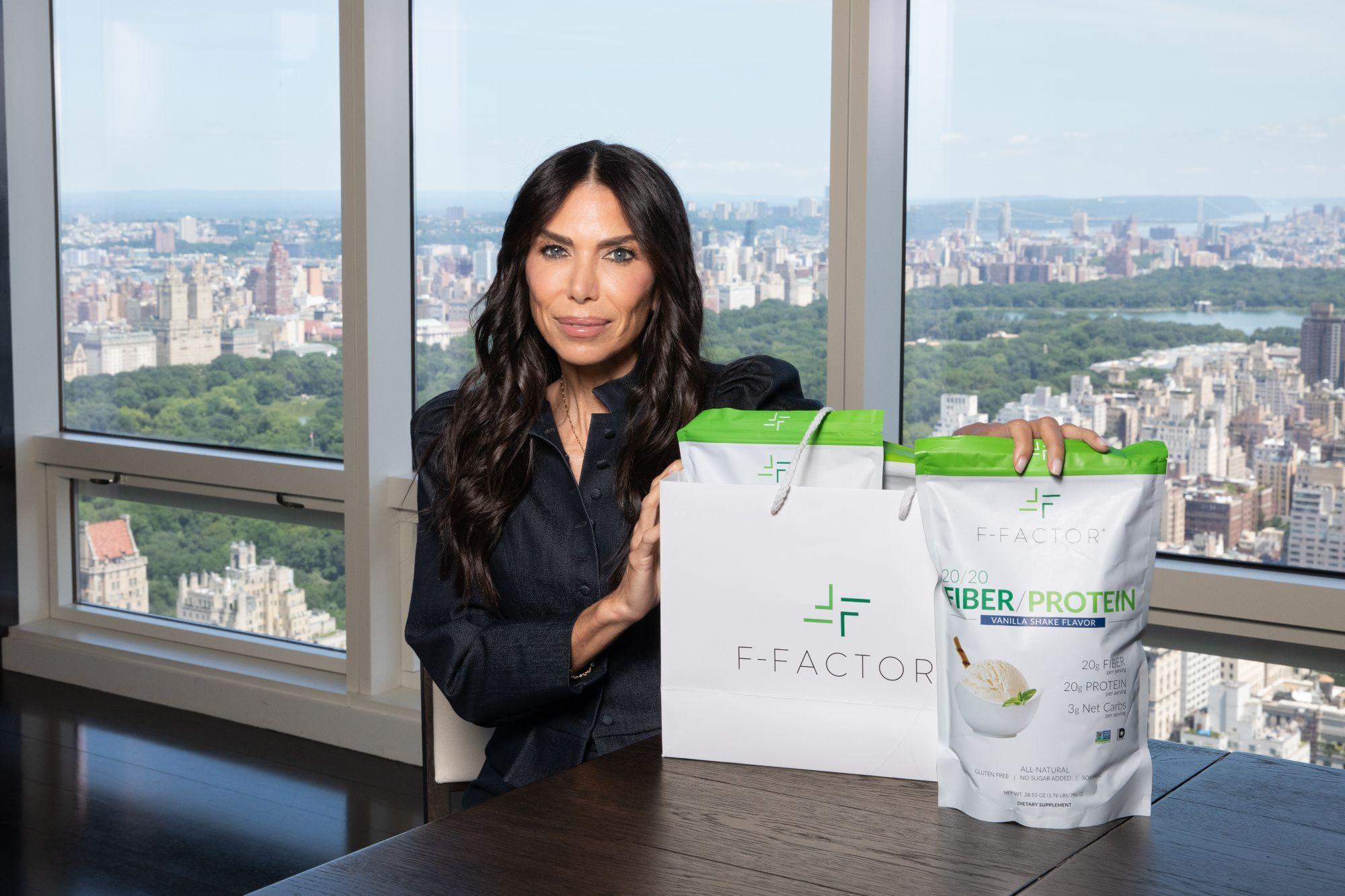
Make New York Post a Preferred Source Tanya Zuckerbrot is resurrecting F-Factor — and the product at the center of its scandal is coming back exactly as it was.
Six years after allegations that her fiber powders and bars made dozens of women sick ignited a social media war, lawsuits and a public fall from grace, the Manhattan dietitian is preparing to relaunch her brand by spring 2027.
“When we relaunch, I’m bringing back the F-Factor products people knew and loved. I continue to stand behind their formulations because they were developed based on sound nutritional science, and that foundation has not changed,” Zuckerbrot told The Post.
The 55-year-old plans to resume using the original signature powder formula — whey protein, partially hydrolyzed guar gum, stevia and monk fruit — from the same manufacturer.
“Why wouldn’t I?” she said. “The products have now been proven to be safe. I was so proud of this product.”
It’s a bold bet in a wellness world now obsessed with fibermaxxing, supplement stacking and experimental peptides. But for Zuckerbrot, fiber was never a trend. It was the foundation of the empire she spent decades building.
Ten years ago, Zuckerbrot might have been the Gwyneth Paltrow of fiber.
The glamorous Manhattan dietitian built a cult following around her supplements and fiber-packed snacks, with devotees like Katie Couric, Molly Sims and an army of well-heeled elites who funded — and talked up — her growing empire.
Park Avenue heiresses stirred her 20/20 fiber-protein powder into morning coffee. Brooklyn Heights moms swapped bread for Scandinavian fiber crackers. Tribeca influencers paraded around in sweatshirts emblazoned with “Fiber” instead of “Fendi.”
Zuckerbrot transformed the humble dietary staple into a wellness status symbol — and the foundation of a $40 million business.
A University of Michigan graduate with a master’s degree in nutrition from NYU, she built her reputation through a private Manhattan practice, advising clients on a high-fiber, high-protein approach to weight loss and chronic illness management.
Her mantra: “Fiber and protein at every meal makes losing weight no big deal.”
She even helped popularize the term “net carb,” a concept introduced in the 2006 edition of her bestselling book and it has since spread across wellness creators on TikTok.
Zuckerbrot promised a diet that still let followers enjoy restaurants, cocktails and carbohydrates. They hung on every word.
By 2018, F-Factor was ubiquitous. Devotees stirred her powdered supplements into coffee and smoothies and baked them into waffles. At Bloomingdale’s, the in-house restaurant 40 Carrots even served her products.
But nothing captured the F-Factor phenomenon quite like the GG crackers — humble Scandinavian crispbread that, under Zuckerbrot’s influence, became an unlikely obsession among her followers.
It was a full-fledged lifestyle, complete with cookbooks, branded merchandise, wellness retreats, spas in Los Angeles and an Instagram community of over 200K that seemed to organize its days around getting enough fiber.
“It wasn’t a company I built. It was my identity,” Zuckerbrot said. “It’s what I loved to do. It was my God-given purpose to educate people about nutrition, connect with them and inspire them.”
In summer 2020, New York fashion influencer Emily Gellis began sharing allegations that F-Factor products caused serious health problems, including gastrointestinal distress and hair loss.
The accusations erupted into an Instagram war, with Gellis — who had a history of crusading against brands — publishing more than 4,500 posts in 75 days, including claims that Zuckerbrot sent hundreds of people to the hospital, according to court documents.
Zuckerbrot denied the allegations and sued Gellis for defamation, claiming the alleged smear campaign caused F-Factor’s monthly revenue to plunge from more than $1 million to $90,000.
By 2023, the company had shuttered, leaving more than 20 employees out of work, according to Zuckerbrot.
The defamation case settled in October 2026, with Gellis agreeing to a public apology and $240,000 in payments.
But her claims sparked a separate product-liability lawsuit filed in 2022 that remains unresolved. Court documents show that Gellis galvanized her audience, prompting 8 women to allege that F-Factor products caused serious injuries, including intestinal blockages and internal bleeding.
F-Factor had approximately 127,000 unique customers, according to Zuckerbrot, and maintains the allegations did not accurately reflect the consumer experience.
In September, her attorneys moved for summary judgment, seeking dismissal of the case, now involving seven plaintiffs. The defense submitted product-testing and toxicology evidence, arguing that none identified a treating physician who attributed their alleged injuries to F-Factor.
Losing her business was heartbreaking, Zuckerbrot said. But losing her professional credibility was worse.
“I was completely delegitimized as an expert,” she told The Post. “I had more than 20 years of professional experience, a master’s degree in nutrition and published books. Yet Emily’s accusations seemed to carry more weight than my career or the product safety tests,” she added. “They didn’t want the science, they wanted the story.”
Neither Gellis’s representatives nor the plaintiffs’ attorneys in the ongoing product-liability lawsuit responded to The Post’s requests for comment.
Fast forward to today, Zuckerbrot is preparing to bring F-Factor back with some changes to how the products are presented and used.
The new packaging will include more explicit instructions for how much powder consumers should use, as well as guidance on gradually introducing fiber into their diets — a rebuke to the online complainers during the 2020 controversy who said she never specified “an upper limit” on how much powder they should use daily — with guidance on introducing fiber gradually.
The bars will also get a makeover, swapping pea protein for whey protein, which Zuckerbrot says will improve their taste.
She’s updating the F-Factor cookbook with new research and recipes, too, and plans to revamp the brand’s app to address the growing interest in fibermaxxing.
But the biggest thing staying the same? The powder itself.
Despite the controversy, Zuckerbrot says she has no plans to reformulate the signature product or distance herself from the brand’s original approach.
For her, the relaunch isn’t about starting over. It’s about bringing back what she believes worked in the first place.
Since F-Factor first took off, wellness culture has boomeranged from juice cleanses to body positivity—and arguably right back to heroin chic in the Ozempic era.
Meanwhile, Zuckerbrot is returning to a wellness marketplace crowded with influencers, weight-loss injectables, experimental treatments and endless promises of optimization that never existed during her reign.
“I think it’s wonderful that people are becoming more proactive about their health and longevity,” she said, arguing that wellness should enhance your life, not consume it. “But I become concerned when consumer enthusiasm moves faster than the science.”
Whether the brand that once made her a Manhattan wellness celebrity can reclaim its glory remains to be seen, even if consumers have caught up with what she’s been preaching for decades.
“It’s exciting to see fiber finally receiving the attention it deserves and the broader wellness world embracing nutritional principles I’ve spent more than 25 years advocating,” she said. “I don’t see fiber as a trend. The trend is that people are finally talking about it.”
And while she may be returning to an increasingly crowded wellness marketplace, Zuckerbrot insists she’s not interested in becoming the next big influencer. She wants to return to the work that made her famous in the first place.
“I became a dietitian to help people improve their health. That’s what brought me to work every day,” she said. “I never thought of myself as an ‘influencer’—that word came with social media.”
“But if you said, ‘Tanya, you’re influencing people to eat more fiber,’ I would be so thrilled by that compliment. I would feel like my life has meaning.”
And she may not be starting from scratch. Zuckerbrot already has one thing working in her favor: a loyal customer base that never fully moved on.
“I still to this day use GG crackers,” Sharon Feiereisen, freelance writer and founder of The Mom Club, who has followed F-Factor since 2014, told The Post. “Every time I see them at Whole Foods now, I basically have to buy them all.”
She told The Post that she still drinks the discontinued powder, thanks to a stockpile left over from the company’s heyday.
“I do think she was unfairly targeted. So many people hate to see someone succeed and they jumped at the opportunity to take her down,” Feiereisen said.