Make New York Post a Preferred Source The heroic wartime bravery of a British shopkeeper who hid Allied commandos from the Nazis during WWII has been revealed 40 years after her death.
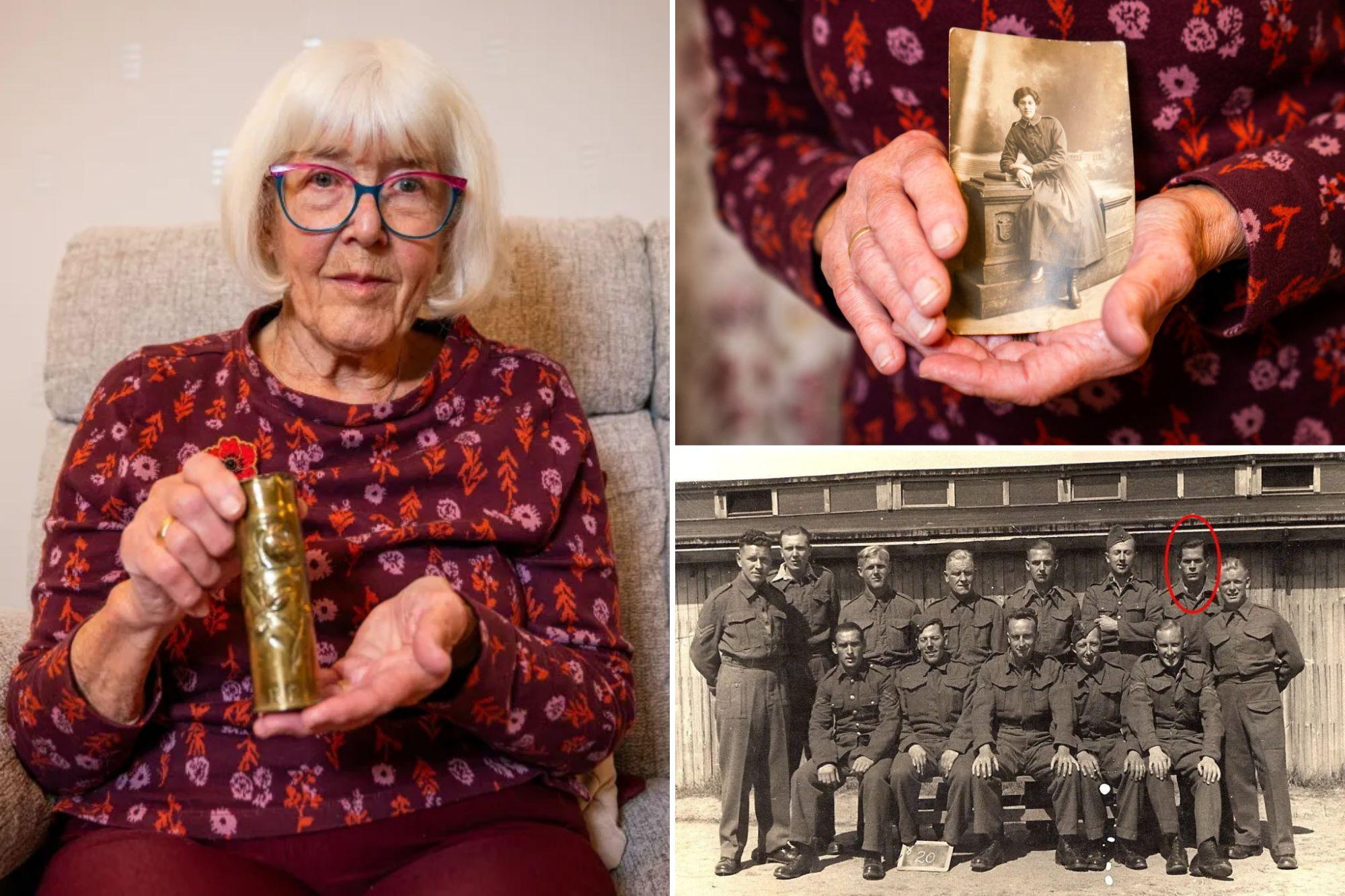
Ada Le Poidevin sheltered three British soldiers after they were left behind during a raid on Nazi-occupied Guernsey in 1940, despite German troops living next door.
In July that year, Corporal Dennis Dumper, Private Fred Drain and Private Andrew Ross were left stranded on the island without food or shelter.
Ada and her husband Walter stepped in, hiding them in their garden shed despite the severe consequences if they were discovered.
The soldiers eventually realized they had little choice but to surrender to the Nazis and were taken as prisoners of war.
But all three survived the conflict and remained close to Ada and Walter, regularly returning to Guernsey to visit them and even attending the couple’s Golden Wedding celebration.
It was the second time Ada had put herself in danger during wartime, having spent two years supporting British troops in France during WWI, where camps she worked in came under enemy fire and suffered heavy shell damage.
Now her story has been pieced together by her niece Liz Walton, 79, using a treasure trove of photographs and diaries alongside records on Ancestry.com.
She said: “There were huge risks because there were Germans living next door, and people were being sent off to concentration camps – they were terrified of being caught.
“It must have been absolutely horrendous for people like my aunt, who had been involved in the First World War just relatively few years before, and then 20 years later to have the Germans actually in their homes.”
Liz, a retired teacher from Guernsey, turned detective to match her aunt’s personal accounts and photographs with official wartime records.
She had been fascinated by Ada’s stories since childhood and inherited her collection of diaries and photographs when she died aged 88.
Simon Pearce, military genealogist at Ancestry.com, said: “Stories like Ada’s are an incredibly powerful reminder of the courage and sacrifice shown by ordinary people during extraordinary times.
“Being able to uncover these moments and keep them alive means future generations can understand not just what happened, but the people and families behind our shared history.
“So many remarkable wartime stories are still waiting to be discovered, often within our own family histories.”
Ada was born in Guernsey in 1895 and volunteered for the Salvation Army in France in 1917, while still in her early 20s.
“There were no men in our family that could go and fight, she felt a calling to go,” Liz said.
She spent two years in British camps, providing refreshments to soldiers, writing letters for them and mending their clothes.
Ada traveled to areas including Abbeville and Amiens, where fighting was heavy, and the camps she worked in were on more than one occasion fired upon and badly damaged by shells.
After the war, she contracted Spanish flu and was hospitalized in Wimereux, near Boulogne, but recovered and went on to work with the Salvation Army’s Graves Visitation Service.
For four years, she helped bereaved families travel to France to visit the graves of loved ones killed during the conflict.
Liz added: “Most of the graves were just wooden crosses that anybody had put up, because they hadn’t started making proper cemeteries yet.
“She took them through Arras, where everything had been blown up and completely destroyed.
“I went there in the 1970s and showed her some pictures of it and she burst into tears as she never thought she would see it rebuilt.”
Start your day with all you need to know Morning Report delivers the latest news, videos, photos and more.
When families were unable to make the journey themselves, Ada would visit soldiers’ graves on their behalf, leaving flowers, taking photographs and pressing flowers to send home to their relatives.
Ada told Liz she was given a silver medal for her Salvation Army service, although Liz has never been able to track it down.
She returned to Guernsey in 1923 and married Walter Bourgaize five years later, with the couple going on to run Torteval Stores together.
Liz said: “As a person, Ada was immensely kind and caring. She was always immaculately dressed.
“She would help anyone in need and loved having children around her even though she had none of her own.
“She and Walter lived very modestly in a small, rented house without electricity, mains water or proper drainage for much of their life.”
Reflecting on her aunt’s contribution, Liz said: “I don’t think many people are aware of how many women were directly involved in the First World War and how it changed the role of women in society.
“They nursed the wounded, cooked for the troops, acted as clerks and despatch riders to aid communications.
“Vast numbers worked in munitions factories, giving up their traditional nurturing role to strike back at the enemy.
“The era of the Edwardian/Victorian Lady whose main role was to marry and run a home largely died with the war because so many young men never came home and women had to take their place in the workplace.
“Women became used to earning their own money and being independent, so domestic service was no longer an attractive option.
“Women’s war work was life-changing not just for them but for everyone.”