Volkswagen’s Owners Are Losing Patience With the Old German Auto Playbook Mark Nichols Wed, November 11, 2026 at 11:17 AM EST 4 min read VOW.DE +1.33% NVDA +4.00% P911.DE +0.07% PAH3.DE +0.28% VLKAF -3.78% Trade NVIDIA on Coinbase Trading disclosure Trading disclosure The above button links to Coinbase. Yahoo Finance is not a broker-dealer or investment adviser and does not offer securities or cryptocurrencies for sale or facilitate trading. Coinbase pays us for certain activity generated through this link. Prices displayed are informational.
Our analysts just identified a stock with the potential to be the next Nvidia. Tell us how you invest and we'll show you why it's our #1 pick. Tap here.
Volkswagen's controlling shareholders are turning up the pressure. Porsche SE, the investment vehicle of the Porsche and Piëch families, saw adjusted profit fall about 42% in the first nine months as weaker earnings at Volkswagen and Porsche hit the holding company.
The awkward part is that Volkswagen is not short of signs that customers still want its cars. Electric demand is rebounding in Europe, but China is shrinking much faster, tariffs are biting and the cars carrying the future currently make less money than the ones Volkswagen is trying to replace.
Porsche SE reported adjusted profit after tax of €930 million for the first nine months (about $1 billion), down from €1.59 billion a year earlier. Its reported result swung to a €2.78 billion loss after another non-cash writedown on the value of its Volkswagen stake.
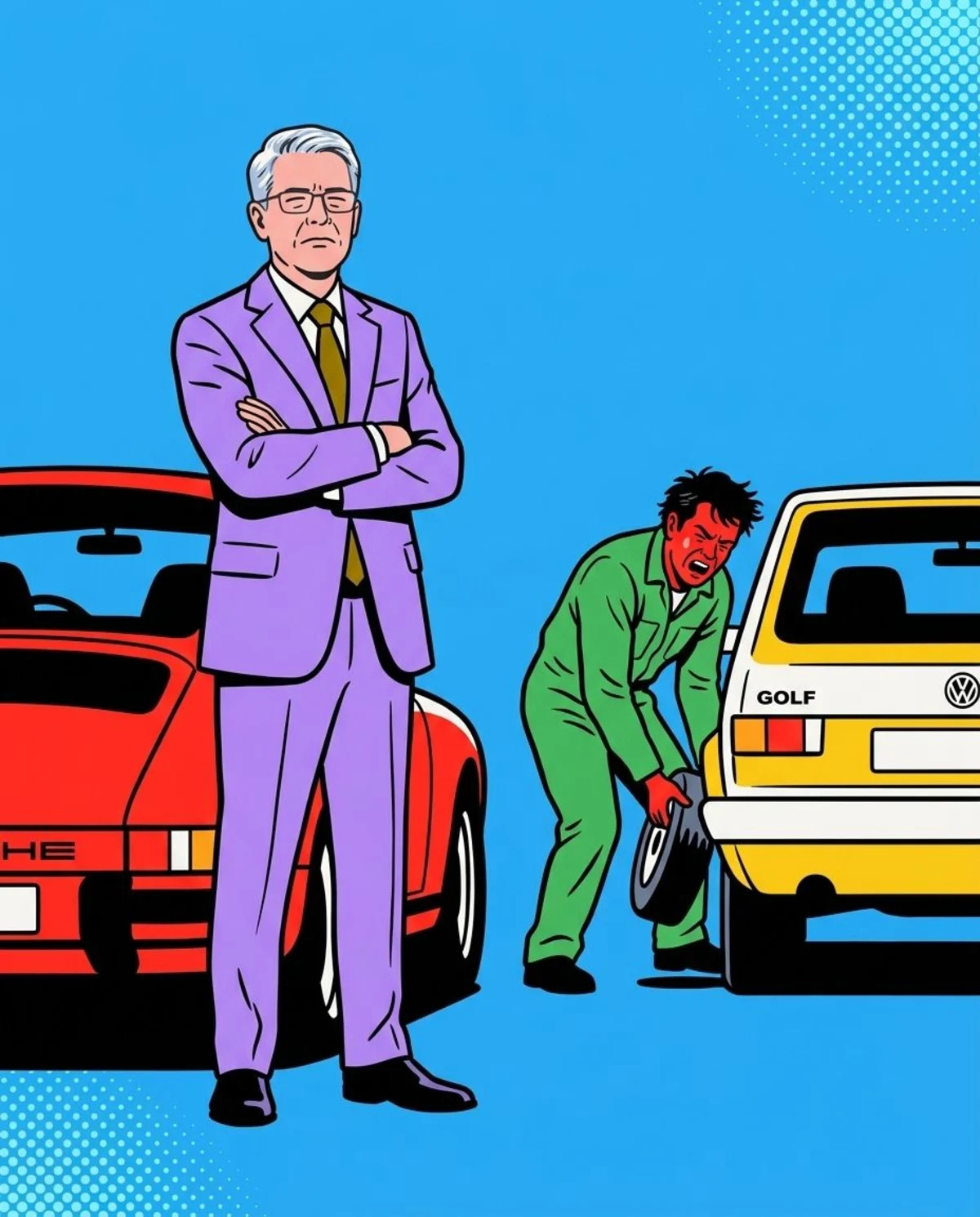
Porsche SE is not a passive investor. It owns 31.9% of Volkswagen and controls 53.3% of the voting rights, giving the Porsche-Piëch families enormous influence over Europe's largest automaker.
Chairman Hans Dieter Pötsch said Volkswagen's latest results show that measures to improve competitiveness, reduce costs and restore profitability need to be implemented quickly. His message was direct: management now has to deliver.
Volkswagen certainly has work to do. Group deliveries fell 9% in the first nine months, while China dropped 30.2% and third-quarter deliveries there plunged 38.5%. Operating profit was almost wiped out after special charges, falling to €71 million from €5.4 billion a year earlier.
Electric vehicles provided one of the few bright spots in Europe. Battery-electric orders rose 39% and EVs now account for around 40% of Volkswagen's European order book. European BEV deliveries increased 12% through September, although global EV deliveries still fell as China and the US weakened sharply.
The family pressure matters because Volkswagen's crisis is no longer mainly about whether it has competitive electric cars. It is increasingly about whether a giant industrial structure built for the old auto world can make those cars profitably enough.
Volkswagen itself has acknowledged the contradiction. EV demand is improving in Europe, but the company currently earns less on electric vehicles than on combustion models. Selling more of the product that represents the future can therefore squeeze earnings before scale, battery costs and factory utilization catch up.
One stock. Nvidia-level potential. 30M+ investors trust Moby to find it first. Get the pick. Tap here.
China makes the transition much more painful. Volkswagen once relied on the country as a profit engine that helped subsidize expensive German plants and technology spending. Its Chinese joint ventures produced a loss in the first nine months, while local manufacturers increasingly compete on price, software and electric technology from a lower cost base.
The response is to become more Chinese inside China. Volkswagen is shortening development cycles, partnering with local technology companies and preparing new electric and plug-in hybrid models. It is even exploring exports of China-developed vehicles and technology, a striking reversal for a company that once brought German engineering into China rather than the other way around.
That creates an uncomfortable problem back home. Volkswagen needs lower costs in Germany while powerful unions and regional stakeholders try to protect plants and jobs. Porsche SE has repeatedly backed deeper restructuring, arguing that delays only make the eventual fixes more painful.
The families also have a financial reason to push harder. Volkswagen and Porsche AG remain the holding company's core investments, so weaker car earnings flow directly into Porsche SE's results. The latest impairment is non-cash, but it still shows how much value has been lost.
There is a nasty strategic loop at work. Volkswagen needs to spend heavily on cheaper EVs, batteries and software to compete with Chinese rivals, but weaker margins make that investment harder to fund. Cutting costs frees up money, yet aggressive cuts risk labor conflict and political backlash in Germany.
Strong European EV orders therefore do not solve the problem by themselves. Volkswagen can win back customers and still disappoint shareholders if the economics underneath those sales remain poor.
The immediate focus is execution. Volkswagen has outlined a roughly €31 billion cost program and expects a 2026 operating margin of no more than 1%, leaving little room for another weak quarter.
Investors will watch whether European EV momentum turns into better margins, whether China stabilizes as locally developed models arrive and how aggressively management follows through on German restructuring.
Porsche SE's message is becoming harder to miss. The families want Volkswagen to prove not just that it can build desirable electric cars, but that it can still make money doing so.