Make New York Post a Preferred Source A recent routine aquatic survey in the lower Great Lakes turned up an incredibly rare fish that also happened to be in poor health.
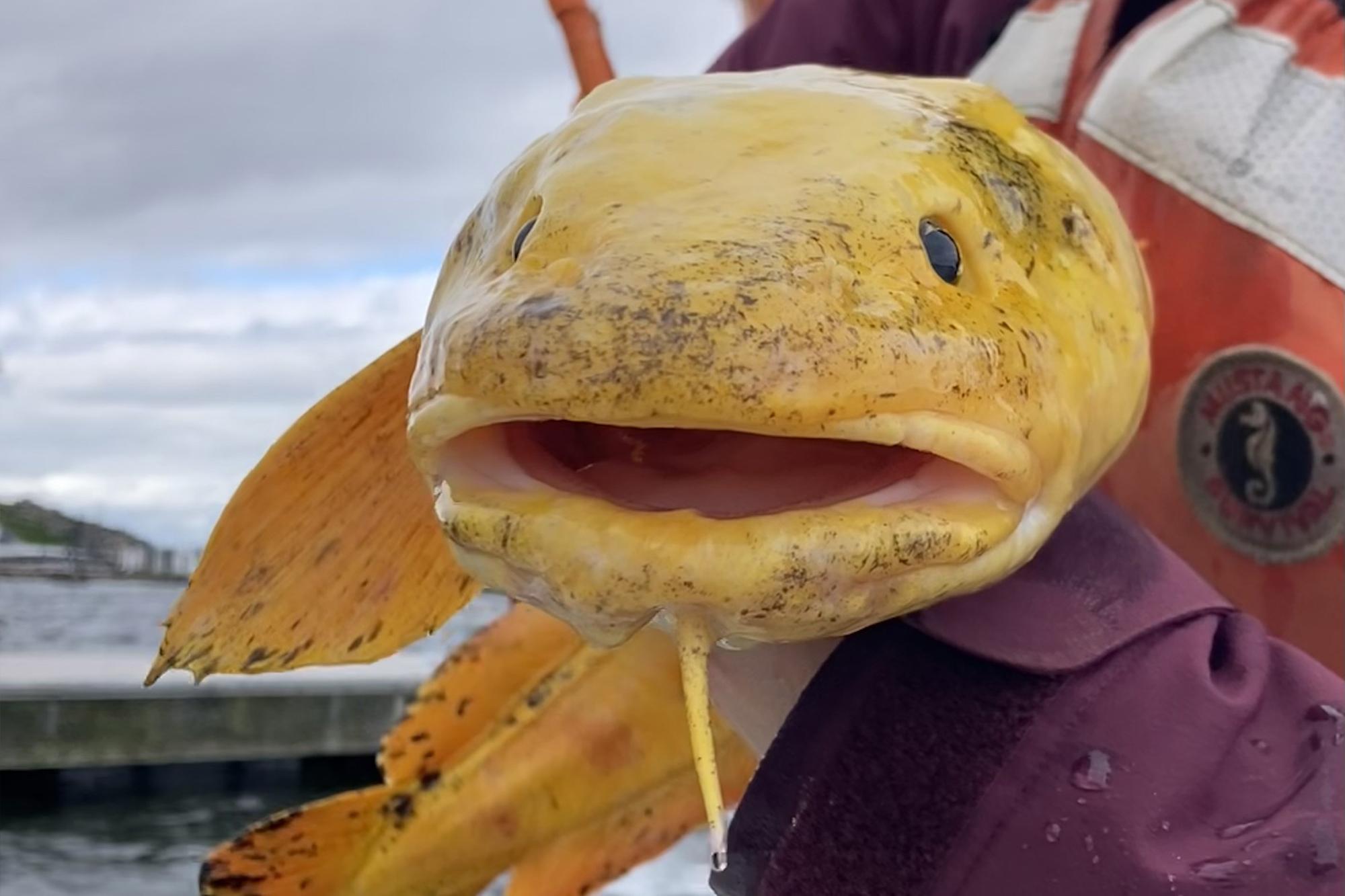
US Fish and Wildlife Service biologists were surveying Oswego Harbor for invasive fish when they caught a bright yellow burbot fish.
Burbots are usually yellowish-brown, green or brown, but coming across one exhibiting xanthochromism, like this one, is extremely rare.
The Lower Great Lakes Fish and Wildlife Conservation Office said it’s a rare biological condition caused by a genetic mutation that suppresses normal pigmentation and produces a yellow-orange appearance.
“Xanthochromism in wild fish is considerably less common than albinism or melanism, making this an especially unusual capture,” the office said.
While the fish’s color also made this a rare find, even more extraordinary is the fact that burbot populations in Oswego Harbor are already low, and the species typically inhabit deeper, cooler waters than those found within the harbor.
The conservation office said the discovery is the first documented detection of a burbot during a fisheries survey in Oswego Harbor, though a few anglers have reported catches.
US Geological Survey (USGS) biologists noted while processing the fish that it was emaciated and in poor health.
Because of the fish’s health and the unexplained factors contributing to the continued suppression of its population, it was sent to the Cornell University College of Veterinary Medicine for a health analysis, the office said.
“The discovery could turn out to be lucky for the burbot too; this exceptionally rare fish may provide valuable insight into the health of the species’ populations throughout the basin that can inform management actions,” the conservation office said.
The US Fish and Wildlife Service also highlighted the rare discovery, saying: “While the survey’s primary goal is to detect and track invasive species, the discovery also highlights the broader value of long-term Great Lakes monitoring programs, which help scientists document biodiversity, identify unusual biological occurrences, and better understand ecosystem health.”