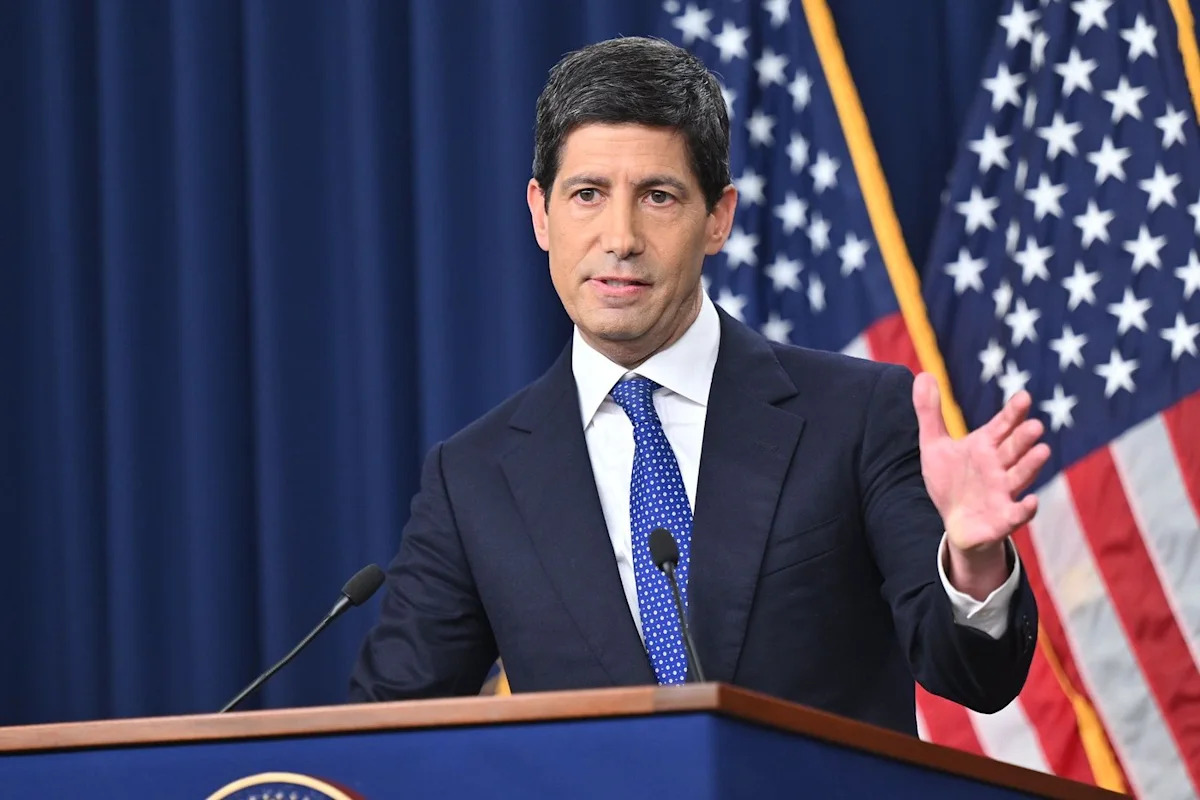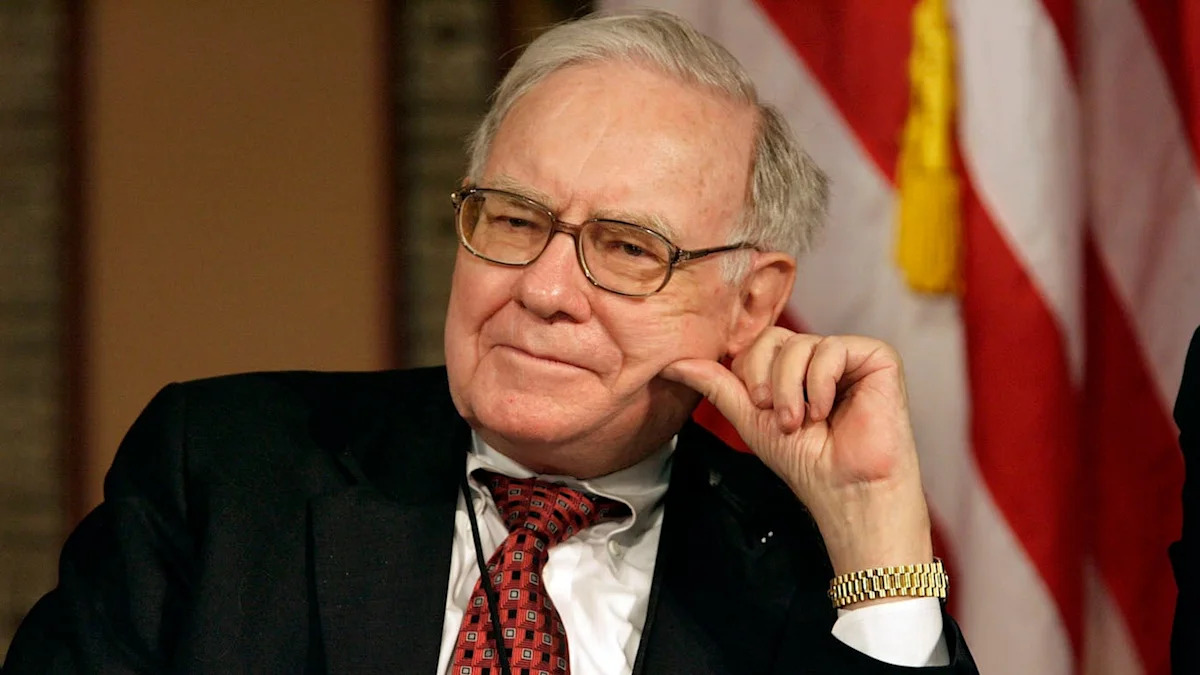
In 1957, A Pediatrician Signed Up For An Investing Class In Omaha. She Decided To Invest Half Her Life Savings With The Teacher. His Name Was Warren Buffett. At 71 Years Old She Was Still Practicing Medicine And Carol Angle’s Family Fortune Was $300 Million. AJ Tiarsmith Tue, November 10, 2026 at 10:07 PM EST 9 min read BRK-B +1.10% ^GSPC -0.38% Quick Read Forbes reported in 1998 that Dr. Carol Angle put $30,000 with Warren Buffett after his 1957 Omaha class, half of the Angles' life savings, and that her family's Berkshire stake was worth about $300 million at 71.
On the partnership's published results and Buffett's $45 book value at the 1969 wind-up, $30,000 placed in 1961 becomes about $4.52 billion at Tuesday's $875,655 Berkshire A close, against $23.7 million in the S&P 500 with dividends.
Berkshire fell 59.1%, 37.1%, 48.9% and 50.7% along the way; the Angles never sold, and a reader with $4 million of $7 million in one stock would see a 34% portfolio drop in a fall that size.
Building a portfolio and living off one are two completely different skills, and almost nobody teaches the second. This problem is what The Definitive Guide to Retirement Income helps, and it is free today. Read more here. (Sponsor)
In 1957, Dr. Carol Angle, a 29-year-old pediatrician at the University of Nebraska College of Medicine, signed up for a night class on investing at the University of Omaha because she had heard the instructor was a bright kid. The instructor was Warren Buffett, 27, a year into running a small investment partnership. About 20 people showed up. "Warren had us calculate how money would grow, using a slide rule," she told Forbes in 1998. "He brainwashed us to truly believe in our heart of hearts in the miracle of compound interest."
Her husband, Dr. William Angle, was a physician too. Forbes reported that the Angles put $10,000 in, and that Carol Angle later raised her stake to $30,000. The magazine's description of that figure is the line the whole story turns on: it was half of the Angles' life savings. By the time Forbes found her again in 1998, at 71 and still practicing as director of clinical toxicology at the University of Nebraska Medical Center, her family's Berkshire Hathaway holdings were worth about $300 million.
Many successful investors eventually reach the same moment. The saving is done, the portfolio is built, and the question quietly changes from how much can I grow this to how much can I take out? Get that second question wrong and decades of good investing can come apart in a handful of years.
That is exactly what The Definitive Guide to Retirement Income helps answer. It covers what your retirement could actually cost, which income sources are worth using, and the withdrawal math that decides whether the money lasts. It is free today from Fisher Investments. Read More Here ›
Her decision reads as a bet on one person rather than on a stock or a strategy, and as a bet she never unwound. The limit of that reading is that it worked because the person turned out to be Warren Buffett, and nobody in that classroom could have known it.
The Angles did more than invest. They told their colleagues. In August 1960, after a dinner the Angles arranged for Buffett with other Omaha physicians, 11 doctors put in $10,000 each, and Buffett formed a partnership for them called Emdee, Ltd. The name was a joke on their credentials. Buffett told Forbes he remembered Bill Angle getting up at the end of the dinner and announcing: "I'm putting $10,000 in. The rest of you should, too." Forbes wrote in 1998 that many of those doctors, their children and grandchildren still held significant Berkshire stock.
Buffett had started with $105,000 from seven limited partners in May 1956, most of it family. Emdee's $110,000 came from people who had watched him work a slide rule and decided to find out whether he meant it.
Buffett's partnership letters give the limited partners' net results every year from 1957 to 1969, after his own share of the profits. In the nine full years after Emdee was formed, 1961 through 1969, those results compounded at 25.5% a year. Over the whole 13 years the partners earned 23.8% a year against 7.4% for the Dow with dividends, and never had a losing year. The Dow had five.
Put $30,000 in at the start of 1961 and leave it alone, and the partnership's published results turn it into about $232,027 by the end of 1969. That year Buffett wound the partnership up, and partners who wanted to stay with him took their share in the stock of a textile company it controlled, Berkshire Hathaway, about 70% of which the partnership owned. In his wind-up letter Buffett put Berkshire's stated book value at about $45 a share and its tangible net assets at about $43. At $45, that $232,027 buys 5,156 shares.
Here is what those shares did, and what the same $30,000 in the S&P 500 with every dividend reinvested did, using Damodaran's annual return series and this year's move in the SPDR S&P 500 ETF:
$30,000 in the partnership from 1961, then Berkshire
End of 1969: about $232,027 (5,156 Berkshire shares at $45)
End of 1998: about $361.1 million, at Berkshire's year-end price of about $70,037
Tuesday's close, $875,655 a share: about $4.52 billion
$30,000 in the S&P 500 from 1961, dividends reinvested
The Buffett path ends 191 times larger than the index path. The 1998 checkpoint is the one that matters: the model's $361.1 million sits close to the $300 million Forbes reported that year, so the family's real path looked a lot like this one. Start the clock in 1957 instead of 1961 and the same $30,000 would be about $9.35 billion today. Either way, the $300 million Forbes found in 1998 would be about $3.75 billion at Tuesday's close if it had simply stayed in Berkshire stock, which has risen 12.5 times since the end of that year.
The number in the headline took 41 years to arrive, and the road was not smooth. Berkshire's 2017 shareholder letter lists the four times its own stock fell hardest: 59.1% from March 1973 to January 1975, 37.1% in October 1987, 48.9% from June 1998 to March 2000, and 50.7% from September 2008 to March 2009. On a $300 million stake, those are paper losses of $177.3 million, $111.3 million, $146.7 million and $152.1 million. The 1998 to 2000 drop began within months of the Forbes profile. A family just written up as worth $300 million watched nearly half of it disappear while the Nasdaq doubled and Buffett was being described as a man who had lost his touch.
They did not sell. Carol Angle's own explanation of her life after the money, in the same Forbes piece, was that she did not fly first class and would not dream of buying a Mercedes. "There isn't that much to spend money on in Omaha," she said, "and if you do, you're highly suspect." Her husband died in 1993. She stayed on the faculty until 1999, when the medical center made her professor emeritus after 45 years, most of them spent on childhood lead poisoning, the work that made her name before anyone outside Omaha knew about the other thing.
The S&P 500 fell about 0.4% on Tuesday, Goldman Sachs called chip stocks oversold, and plenty of people who hold one stock they have owned for decades are asking the question the Angles answered by default: when do you take some off the table?
The Angle story is often told as proof that concentration pays. It is better read as a description of what concentration costs. Take a 74-year-old reader with $7 million, $4 million of it in a single stock bought decades ago, which is 57% of everything. A fall the size of Berkshire's worst would take that position to $1.6 million and the whole portfolio to $4.6 million, a 34% drop, before any recovery. The Angles lived through four of those in one stock and came out with a fortune, but they also had two physicians' salaries, a paid-for life in Omaha, and no need to sell a share at the bottom.
There is one more thing in their favor that applies to anyone sitting on a decades-old gain. Shares held until death pass to heirs with the cost basis stepped up to the market value on that date, so the embedded capital gains tax on a lifetime of compounding is never paid. For a family whose stake grew from $30,000, that single rule is worth more than any amount of trading, and it makes trimming a huge position a tax and estate decision first and a market call second.
A 29-year-old doctor put half her family's savings behind a 27-year-old who taught compound interest with a slide rule. On the partnership's own published results and Berkshire's share price, $30,000 placed with him in 1961 would be about $4.52 billion today against $23.7 million in the S&P 500, and the $300 million Forbes found in 1998 would be about $3.75 billion now. She got there by never selling, through four drops of 37% to 59%, on a salary she never needed to supplement. If you hold one position that size, her story is less a reason to keep it than a checklist of what has to be true for keeping it to be safe.
(Sponsor) Most people spend their entire working lives focusing on one thing: growing a pile of money. Then they retire and discover the skill they actually need is close to the opposite. Turning that pile into steady income, year after year, through good markets and bad, without ever running out.
It may be the least discussed and most consequential transition in personal finance, and plenty of otherwise careful investors walk into it with no real plan. That is exactly what The Definitive Guide to Retirement Income helps answer. It is a free guide from Fisher Investments covering what your retirement will really cost, where the cash flow should come from, and how much you can safely withdraw each year. Learn more here. Learn More Here ›
Contact editorial@247wallst.com for any questions or corrections.