Stock market today: Dow, S&P 500, Nasdaq slip after CPI data raises Fed rate-hike bets Grace O'Donnell and David Hollerith Updated Tue, November 10, 2026 at 2:31 PM EST 2 min read ^IXIC -0.98% ^DJI -0.30% ^GSPC -0.49% US stocks slipped Tuesday as investors digested a hotter-than-expected inflation report that cemented bets that the Federal Reserve will raise interest rates next month.
The Dow Jones Industrial Average (^DJI) fell 0.3%, while the S&P 500 (^GSPC) gave back 0.5% in gains and the tech-heavy Nasdaq Composite (^IXIC) tumbled 1%. The moves in major indexes come after a sharp rally in US stocks on Monday.
The Consumer Price Index, released on Tuesday morning, showed prices rose 0.4% in October from a month earlier, higher than the 0.3% economists were expecting but cooler than September's 0.6% gain. October's CPI report did not include annual inflation figures because last year's government shutdown limited the data available.
Traders now overwhelmingly expect the Fed to hike interest rates by 25 basis points, with a subset of Fed watchers expecting a 50 basis point jumbo hike. Recent comments by Fed governor Chris Waller reinforced those bets, as he noted he would be open to a larger hike.
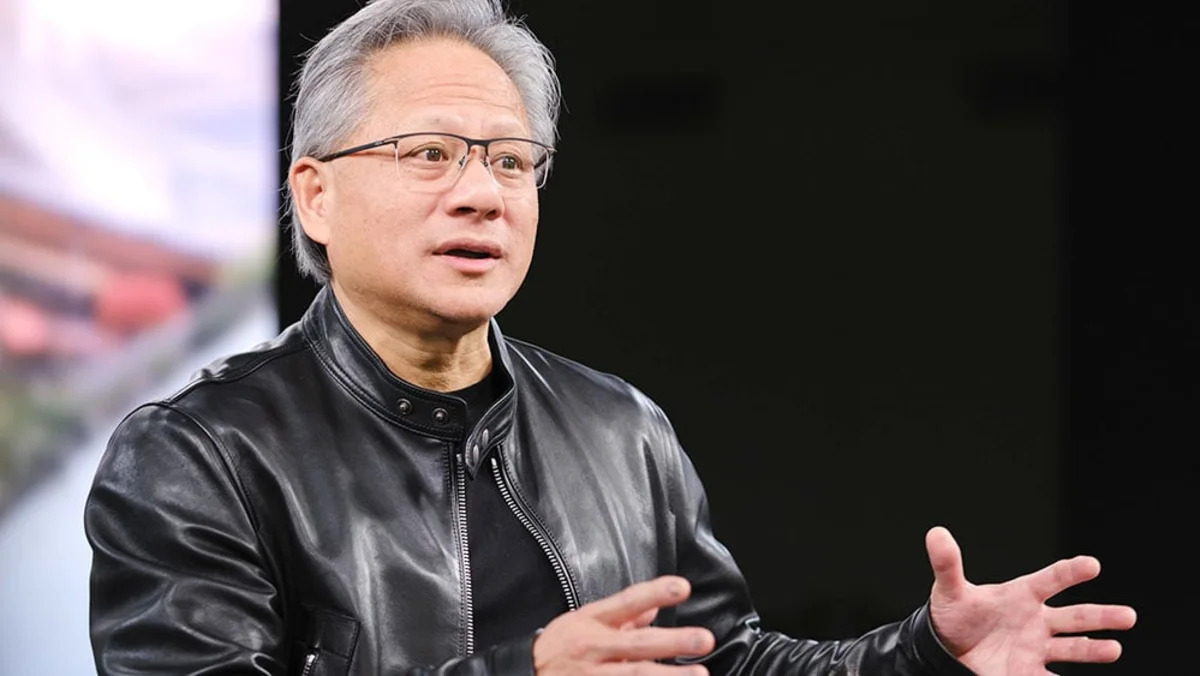
Go deeper with AlphaSpace 52,235.16 -154.59 (-0.30%) As of 2:54:44 PM EST. Market Open. ^DJI ^GSPC ^IXIC Nvidia (NVDA) investors continue to reel from the board's investigation into CEO Jensen Huang following reports of his affair with an alleged Chinese spy. Nvidia stock dropped another 6% on Tuesday after falling over 4% the day before.
In other tech news, Anthropic began its roadshow and released an updated filing ahead of its highly anticipated IPO. The AI lab is forging ahead with its public debut despite recent volatility in tech stocks, and is seeking a valuation of $1.4 trillion.
Oil prices are falling, with Brent crude (BZ=F), the international benchmark, and WTI crude (CL=F), the US benchmark, declining by around 1%.
While most of the third quarter earnings season is in the rearview mirror, Nvidia-backed neocloud CoreWeave (CRWV) and quantum computing stocks Quantum (QBTS) and Rigetti Computing (RGTI) report results after the bell today.
Gold futures (GC=F) tumbled more than 2% on Tuesday, trading just above $4,000 per troy ounce as expectations of a rate hike in December grew.
The precious metal declined as the US dollar (DX-Y.NYB) rose and investors assessed a hotter-than-expected inflation reading for the month of October. Hawkish commentary from Fed governor Waller prior to the Consumer Price Index release also raised the odds of tighter monetary policy ahead.
Gold can come under pressure when interest rates rise because higher yields on interest-bearing assets make the precious metal relatively less attractive.
Nvidia (NVDA) shares extended their slide Tuesday, falling as much as 6% following a 4% drop in the previous session.
The sell-off deepened amid broader market weakness and escalating concerns over regulatory scrutiny after CEO Jensen Huang admitted to having an extramarital affair with a tech executive suspected of being a Chinese intelligence asset.
A broader sell-off in Tech also weighed on shares of the AI chip heavyweight.
Bitcoin (BTC-USD) temporarily tumbled below $73,000 on Tuesday as investors moved out of riskier assets amid the day's slump in US stocks.
US stocks moved lower Tuesday following a hotter-than-expected inflation report that cemented bets that the Federal Reserve will raise interest rates next month.
The move has strengthened the US dollar and sent US Treasury yields higher, a setup that has proved difficult for bitcoin's price in recent months, according to Lewis Huang, an analyst for crypto exchange Bitget.
Bitcoin slipped below its 200-day moving average of $73,200 by Tuesday at noon New York time. Dropping below the key support level "could increase the risk of a deeper pullback," Huang added.
Investors are also grappling with a reset in tech stock valuations amid a volatile stretch for artificial intelligence-related names.
Crypto-related stocks also fell Tuesday. Shares of Coinbase Global (COIN) and Michael Saylor's Strategy (MSTR) both fell 4%, while Robinhood (HOOD) shares declined more than 3%.
Goldman Sachs is sifting through the AI stock rubble in search of bargains.
"We believe stocks are now clearly in oversold territory," Goldman Sachs analyst James Schneider said about semiconductor stocks.
Three of his top names to buy: Nvidia (NVDA), Broadcom (AVGO), and AMD (AMD).
"Even in a 'no growth' scenario for 2028 (which we see as relatively unlikely), NVDA/AVGO are trading 12X/13X this baseline — which we believe valuations are compelling at current levels," Schneider wrote in a note. "We find AMD to be very attractive given the growth we believe it can achieve, albeit at a less compelling valuation."
Anthropic (ANTH.PVT) is seeking a valuation of roughly $1.4 trillion in its highly anticipated IPO, setting the stage for one of the largest public-market debuts during the AI boom, Yahoo Finance's Ines Ferré has the latest.
The stock is expected to begin trading on Thursday, Nov. 19, or Friday, Nov. 20, of next week, according to the Wall Street Journal.
The AI developer said in an updated filing Tuesday that it plans to sell 825 million shares at between $70 and $78 each. At the top of that range, the IPO would generate up to $64.35 billion in proceeds. On a fully diluted basis, which includes employee stock options and other securities, the frontier AI lab could be valued between roughly $1.3 trillion and $1.45 trillion.
What happened: Hims & Hers Health (HIMS) shares fell as much as 15% on Tuesday after the telehealth company reported third-quarter results and issued a weaker-than-expected revenue forecast for the fourth quarter.
What's behind the move: Third-quarter revenue rose 49% year over year to $890.4 million, roughly in line with estimates according to Bloomberg data. Gross margin dropped to 57% from 74% a year earlier, while subscriber growth also missed expectations.
Nvidia (NVDA) stock extended its decline Tuesday, falling more than 3% after dropping 4% in the prior session.
The stock came under pressure amid a broader market sell-off and growing concerns about increased scrutiny of the chipmaker following CEO Jensen Huang's admission to an affair believed to involve a woman suspected of being a Chinese spy, Yahoo Finance's Ines Ferré has the latest:
The scrutiny could center on Megaspeed, the Singapore-based company where Alice Huang previously worked, and on whether she helped divert restricted Nvidia chips to China. The Information reported Tuesday that at least $7.5 billion worth of Nvidia hardware had been shipped to Chinese companies through a network linked to Alice Huang since 2023, citing two people who knew her.
On Monday, US House Democratic Leader Hakeem Jeffries said Congress needs more answers about the matter, adding that there are "real concerns that need to be addressed with respect to the Nvidia situation."
US stocks opened lower on Tuesday after hotter-than-expected inflation data strengthened expectations for another Federal Reserve rate hike in December.
The Dow Jones Industrial Average (^DJI) fell 0.2%, while those on the S&P 500 (^GSPC) fell 0.5%. The Nasdaq Composite (^IXIC) dropped 0.8% after stocks rallied on Monday.
Go deeper with AlphaSpace 52,235.16 -154.59 (-0.30%) As of 2:54:44 PM EST. Market Open. ^DJI ^GSPC ^IXIC Consumer prices rose 0.4% in October from the prior month, above economists' expectations for a 0.3% increase. Core inflation, which excludes food and energy, rose 0.3%, also hotter than forecast.
The report pushed Treasury yields higher, strengthening bets on another Fed rate hike in December. The move comes after stocks saw a sharp stock rally on Monday as oil prices continued to fall.
Shorter-term Treasury yields jumped sharply after the CPI inflation data was released, keeping the pressure on the Fed to raise rates at its next meeting.
The 5-year yield (^FVX) jumped 10 basis points to 4.75%, while the 10-year Treasury yield rose 7 basis points to 4.93%. The 30-year yield (^TYX) increased 3 basis points to 5.29%.
Traders now see an 84% chance that the Fed will raise interest rates by 25 basis points in December. Bets that the Fed will hike by 50 basis points jumped from 0% yesterday to 15% today.
The move comes after Fed governor Chris Waller said he would be open to a jumbo 50 basis point rate hike in December if inflation came in hot.
"Inflation is too high … this means that even if, as I expect, the monthly rate of inflation improves in October, I am leaning toward supporting an increase in our policy rate of 25 basis points at the FOMC's December meeting," Waller said in a speech in London.
He added that if the October inflation data comes out higher than expected, then stronger action may be needed. "In that case, I believe a 50-basis point hike in the policy rate should be considered at the December meeting," Waller said. "Hiking only 25 basis points would put our credibility at risk, a risk I am not eager to take."
The latest CPI data is out, and the report showed that inflation came in hotter than expected in October but still cooled from the previous month.
The Consumer Price Index rose 0.4% in October from a month earlier, higher than the 0.3% economists were expecting but below September's 0.6% gain. Core inflation, which strips out volatile food and energy prices, rose 0.3%, coming in above the 0.2% economists were expecting to match September's levels.
October's report didn't include annual inflation figures because the Bureau of Labor Statistics was unable to publish full October 2025 data due to the government shutdown last year. But some economists estimate that inflation accelerated slightly on a year-over-year basis.
Rising energy prices weighed heavily on September's report, but October's price increases were less dramatic. Energy costs rose 0.7% last month, down from 5.2% in September.
Housing costs were a major contributor to October's price increases, rising 0.3%, while food costs were up 0.5%.
Anthropic took one step closer to one of the largest initial public offerings in history on Tuesday, unveiling that it plans to sell 825 million shares at $70 to $78 apiece.
The Claude chatbot maker could raise as much as $64.4 billion through the offering, valuing the company at more than $1 trillion at the top of the proposed range, according to its updated IPO paperwork
The new terms follow an unusual reversal late Monday, when Anthropic circulated and then retracted earlier IPO details indicating it would sell roughly 867 million shares at $70 to $80 each, according to a Reuters report. The company told bankers those figures were inaccurate.
The offering comes amid growing Wall Street concerns about AI valuations and the enormous spending required to develop the technology.
Separately, Anthropic has secured $26 billion in planned investments from seven technology companies, including Google, Nvidia and Microsoft, through a private placement tied to the IPO.
Goldman Sachs and Morgan Stanley are leading the public offering.
With 2026 in its final stretch, Wall Street looks poised for another banner pay year.
Bonuses for most finance workers, which will be doled out by early 2027, are projected to rise for a third straight year. That's according to third quarter projections published Tuesday by Johnson Associates, a Wall Street pay consultancy that has for over three decades charted annual compensation for finance workers.
"We were not expecting 2026 to be as good a year for pay as it turned out to be," Alan Johnson, the firm's founder and president, said in an interview. "We're at the top of the mountain," he added.
The odds of a Fed rate hike are creeping upward. A strong jobs report last week cemented the argument further for another raise, Yahoo Finance's Hamza Shaban reports:
And inflation figures coming later today are expected to confirm that pricing pressures remain stubbornly high.
Together, that's a compelling case — elevated pricing pressures call for a hike, while healthy jobs figures provide cover for tamping down the economy.
The odds for a 25 basis point hike at the Fed's December meeting are over 80%, according to the CME FedWatch Tool.
But a new analysis from DataTrek co-founder Nicholas Colas suggests that the recent volatility on Wall Street is also doing some heavy lifting for the Fed — potentially removing the need for subsequent hikes next year.
Dip buyers didn't wait long. Two sessions after the S&P 500's worst day in 18 months, stocks added more than $1.6 trillion in value, even as Nvidia kept sliding, Yahoo Finance's Jared Blikre reports:
The S&P 500 (^GSPC) was up about 2.3% Monday afternoon, its best day in seven months, while the Nasdaq-100 rose more than 3.4%, its best since May 2025.
Chip stocks did the heavy lifting. AMD (AMD) and Broadcom (AVGO) jumped roughly 9% to 13%, adding more than $200 billion in combined market value — more than Nvidia's (NVDA) loss. Micron (MU), Applied Materials (AMAT) and Lam Research (LRCX) also climbed.
The hole is deep. The S&P 500 lost 4.4% on Nov. 5 — its worst day since the April 2025 tariff tantrum — and the Nasdaq (^IXIC) closed Friday about 11% below its Oct. 6 record, putting it in correction territory.
Fidelity and Vanguard recently released long-term forecasts for stock market returns, and both companies delivered a sobering outlook for retirees: Long-term investment returns are either modest or expected to decline.
Vanguard's 10-year outlook suggests that U.S. stocks will deliver an average annual return between 4.8% and 6.8% over the next decade. Fidelity's 20-year forecast projects an annualized return of 5.8% for U.S. stocks, or about 3.2% after inflation. That compares with the S&P 500's historical average of roughly 10% since it launched in 1957.
For retirees, these projections could translate to slower growth over time and less money in their retirement accounts if these predictions hold or decrease.
Federal Reserve governor Chris Waller said Tuesday that he is leaning toward raising interest rates by a quarter percentage point in December. If October inflation data released Tuesday morning is hot, he's willing to raise rates by 50 basis points next month.
"Inflation is too high … this means that even if, as I expect, the monthly rate of inflation improves in October, I am leaning toward supporting an increase in our policy rate of 25 basis points at the FOMC's December meeting," Waller said in a speech in London.
But if the October inflation data comes out higher than expected, then stronger action may be needed, Waller said. "In that case, I believe a 50 basis point hike in the policy rate should be considered at the December meeting," he said. "Hiking only 25 basis points would put our credibility at risk, a risk I am not eager to take."
Economic data: ADP's weekly employment change, Consumer Price Index (CPI) month-over-month (0.3% expected, 0.6% previous), core (CPI) month-over-month (0.2% expected, 0.3% previous)
Earnings calendar: CoreWeave (CRWV), Petróleo Brasileiro (PBR), TransDigm Group (TDG), Honda Motor (HMC), Sea (SE), Alcon (ALC), Ecopetrol (EC), Venture Global (VG), Hesai Group (HSAI), Embraer (EMBJ), On Holding (ONON), KT (KT), Legend Biotech (LEGN), D-Wave Quantum (QBTS), Rigetti Computing (RGTI), Wix.com (WIX), StubHub Holdings (STUB), Sonos (SONO), eToro Group (ETOR)
Catch up on some top stories from overnight:
Vanguard and Fidelity have a warning for retirement savers
Gold holds gain above $4,100 as lower oil eases inflation woes
Nvidia CEO probe will 'force' succession plan, tech investor says
Anthropic reportedly plans to move forward with IPO plans
Celebrity chef Robert Irvine on the big mistake fast food giants are making