Make New York Post a Preferred Source High-profile tech tycoons driven by sex, money and ego have become prime targets for sophisticated honeypot traps from foreign enemies — and the stakes have never been higher, experts warned.
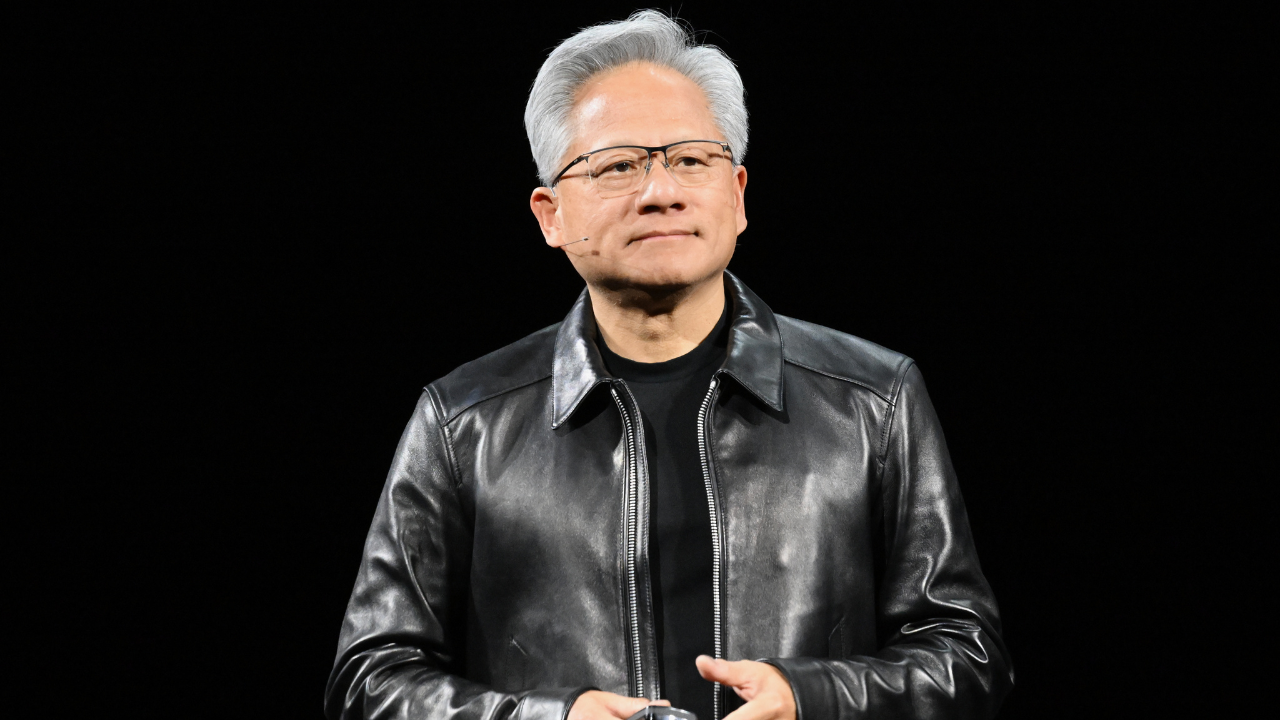
Nvidia CEO Jensen Huang’s affair with an alleged Chinese spy revealed just how easy it is to compromise important individuals who, despite their access to national security secrets, don’t undergo rigorous background checks or mandatory foreign-contact reporting like government and military officials.
Toby Braun, founder of the American Special Investigative Group, said his firm has seen honeypot traps skyrocket in recent years, with women luring powerful men to casually give up their secrets.
“We’ve seen a 60-70% rise in blackmail cases over the past two years involving very powerful executives,” Braun told The Post. “And we are only expecting it to grow in the middle of this AI race,” he warned.
“An affair can destroy a marriage, but this kind of thing can destroy national security.”
When it comes to people as important as Huang, who heads one of America’s top companies and has a close relationship with President Trump, the federal government tries to prepare them for acts of foreign espionage.
“All these CEOs get training from law enforcement about counter-espionage,” Braun said. “Especially big tech CEOs working for the government.”
But because they live in the private world, these executives aren’t treated like high-ranking federal employees who are subject to thorough background checks, polygraphs, financial audits, and mandatory foreign-contact reporting.
Instead, these executives are allowed to roam free with state secrets and influence, all while receiving very little pushback from their handlers.
“What fascinated me was the cult of personality surrounding CEOs,” said Paul Eckloff, a retired US Secret Service agent. “It’s never been more pronounced than it is today.
“We trust these people to know everything,” he added. “In this case, one individual was incredibly influential in deciding US export policy for this technology.”
Without robust preparation, these executives are the perfect prey for government-trained agents who know just what to say to get their targets talking.
“A honeypot operation exploits one of our most fundamental vulnerabilities: the human desire for intimacy, affection, and trust,” said Eric O’Neill, a former FBI counterintelligence operative.
“These operations are particularly dangerous because a target doesn’t know they’re being manipulated,” he added.
Huang has previously said that he had “absolutely no idea” his mistress was an alleged Chinese spy, Trump said after a call with the CEO on Monday.
Despite Huang’s denial, his position at the heart of America’s AI revolution, which is directly competing with China, is troubling, O’Neill added.
“Access to someone with that level of influence could be extraordinarily valuable to a foreign intelligence service, even without access to a single proprietary document,” he added.
These types of honeypot traps make traveling overseas especially dangerous for the uninitiated CEO, said Mark Trott, a former FBI special agent who specialized in national security operations.
“The most dangerous invitation an engineer can get is the all-expenses-paid trip to speak overseas, because the goal is to get you talking about what you know,” he said.
In these situations, all a person needs to start talking is an attractive, sympathetic listener who is eager to hear about your complaints and opinions, Trott added.
But the honeypot doesn’t even need to be real anymore. AI has made extracting information from targets even easier.
“AI has given the other side a faster, cheaper playbook,” Trott said. “Deepfakes and synthetic personas make a convincing approach scalable, so the fake friend can now be the fake colleague, recruiter, or investor.”
Gone are the days of Russian sex spies luring influential people to spill their industry secrets, Eckloff warned — with today’s tactics now aimed at the singular people who are currently shaping artificial intelligence, global commerce and national security.
“The Russians made this famous, but the Chinese understand that the most valuable thing you can steal from a powerful man isn’t necessarily a secret. It’s his judgment,” Eckloff said.
“In this case, the consequences of influencing an executive’s judgment extend far beyond one company,” he added.
“They can shape the strategic balance between nations.”