Musk Says SpaceX Could See a “Six Month Payback Period for Compute” as It Chases $1 Trillion Roxanna Maglangit Tue, November 10, 2026 at 11:38 AM EST 6 min read SPCX -0.57% NVDA -6.55% Explore stocks on Coinbase Trading disclosure Trading disclosure The above button links to Coinbase. Yahoo Finance is not a broker-dealer or investment adviser and does not offer securities or cryptocurrencies for sale or facilitate trading. Coinbase pays us for certain activity generated through this link. Prices displayed are informational.
Elon Musk says a six-month payback on SpaceX's compute isn't impossible next year, as he targets $500 billion to $1 trillion of annual recurring revenue by the end of 2027.
At the rents SpaceX says it charges, a gigawatt of compute pays for itself in under a year, which makes its heavy spending on NVIDIA GPUs look smart.
Analysts' consensus for SpaceX's 2027 revenue is $180 billion, far below Musk's target.
The payback depends on near-spot pricing and customers who can leave on short notice, so lower rents would make it much longer.
SpaceX (SPCX:NASDAQ) wants to grow its recurring revenue as much as tenfold in a single year.
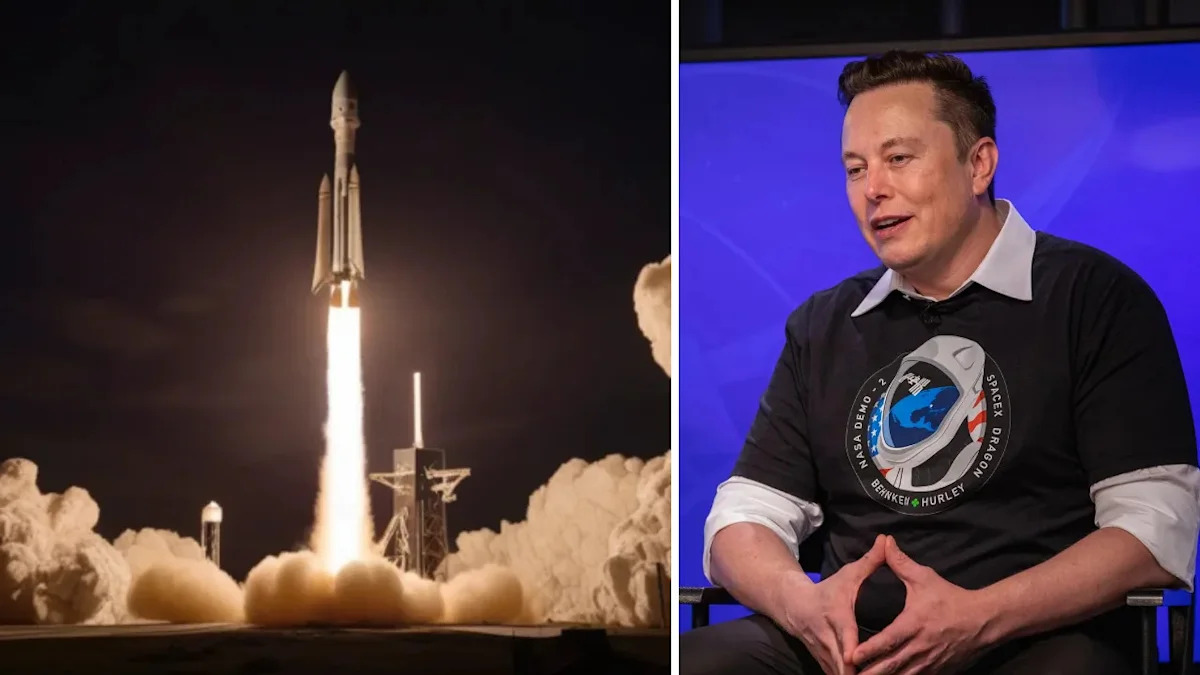
Elon Musk spoke at Ron Baron's investment conference on Friday, as the stock bounced back from a post-midterm selloff. He said SpaceX sees annualized revenue of about $500 billion by December 2027. He has put the range as high as $1 trillion, compared with the $100 billion run rate SpaceX expects to end this year with.
So what gets it there? Compute that pays for itself fast. On SpaceX's third-quarter call, CFO Brett Johnson said new compute pays back in less than a year at current prices. Musk went further and said it's "not impossible that we will have a six month payback period for compute next year."
That would be a remarkable return on the NVIDIA (NVDA:NASDAQ) GPUs SpaceX rents out.
Analysts' consensus has SpaceX's revenue at $180 billion in 2027 and $335 billion in 2028:
Even that 2028 figure is a third below the $500 billion run rate Musk expects SpaceX to carry into the year. The consensus also needs a steep ramp of its own. SpaceX guided to $33 billion to $37 billion of revenue for the first quarter of 2027, and four quarters at the top of that range come to $148 billion. Musk first gave the $500 billion to $1 trillion range on the third-quarter call, so I wouldn't expect Friday's comments to move the estimates much.
TIKR tracks 40 analysts on SpaceX. How many say "Buy"?
See the full breakdown of Buy, Hold, and Sell ratings on SpaceX, along with Wall Street's revenue and earnings estimates, all in one place. More than 500,000 investors use TIKR to research stocks like this one. See SpaceX's Analyst Ratings
Ron Baron's firm, Baron Capital, is a major SpaceX investor. He explained how the payback works on Friday's episode of CNBC's Squawk Pod. He said other builders take about two and a half years and $50 billion to $60 billion to build a gigawatt of data-center capacity, then rent it out for $10 billion to $12 billion a year. SpaceX spends about $35 billion and charges about $50 billion a year: "We're renting it for $50 billion. Spending $35 billion."
That $50 billion fits with Johnson's comment on the call that pricing ran slightly above the high end of a $30-to-$50-per-watt range.
Divide $35 billion by $50 billion a year, and a gigawatt earns back its cost in just over eight months. On Baron's figures, other builders need four to six years to do the same. A six-month payback would take either a $25 billion build or $70 billion a year in rent. (Baron also said builds that SpaceX once finished in four months now take about eight.)
If a gigawatt pays for itself in under a year, the smart move is to build as many as you can, and SpaceX's quarterly capex has climbed all year:
The fourth quarter will be bigger still. SpaceX guided to $35 billion to $40 billion of capex, nearly double the $20.1 billion analysts expected, as Jim Cramer pointed out on Friday's Mad Money. A debt financing of about $40 billion will pay for more NVIDIA GPUs. As long as rents hold, SpaceX is a customer NVIDIA can count on to keep ordering.
Management has called its pricing "effectively the spot market rate." Its biggest customer made up 34.5% of third-quarter revenue, according to SpaceX's quarterly filing. Its prospectus also says either side can end the Anthropic deal on 90 days' notice. Baron himself expects Anthropic to cancel "at some point," with Grok taking over the capacity.
SpaceX's EBITDA margin jumped to 53.1% in the third quarter from 35.6% in the second, as the AI deals kicked in:
AI made up 52% of third-quarter revenue and 56% of EBITDA. But at the bottom of that $30-to-$50 range, a $35 billion gigawatt takes about 14 months to earn back. My read is that the price per watt falls once supply catches up, and the payback gets longer as it does.
Here's where I land: the payback math is the best argument for SpaceX's spending, and at the prices it charges today, the math holds up. But I'd value the stock on the Street's $180 billion for 2027. Musk's $500 billion to $1 trillion only works if shortage pricing lasts through a year of SpaceX's own building. Fourth-quarter results early next year will show whether December revenue reached the $100 billion run rate, and how much cash a $35 billion to $40 billion quarter used up.
TIKR lets you forecast the future price of any stock in less than a minute. Just enter a few assumptions into TIKR's valuation model and see what SpaceX could be worth. Start from Wall Street consensus estimates, or adjust the inputs to reflect your own view of the business. It's free to use.