Alphabet’s Regulatory Advantage Never Gets Talked About But It Should Alex Sirois Tue, November 10, 2026 at 10:45 AM EST 5 min read GOOGM -0.26% META -0.46% MSFT -0.35% Explore stocks on Coinbase Trading disclosure Trading disclosure The above button links to Coinbase. Yahoo Finance is not a broker-dealer or investment adviser and does not offer securities or cryptocurrencies for sale or facilitate trading. Coinbase pays us for certain activity generated through this link. Prices displayed are informational.
Alphabet (GOOGL) turned grid regulation into an edge by locking in long-term nuclear power deals in PJM, Iowa, Georgia and Tennessee.
Google Cloud revenue more than doubled to about $31 billion last quarter, with backlog above $460 billion proving AI demand already exists.
Alphabet trades near 13 times earnings versus Microsoft's 30 and Meta's 23, while Meta's $10 billion settlement charge shows regulatory risk's cost.
Building a portfolio and living off one are two completely different skills, and almost nobody teaches the second. This problem is what The Definitive Guide to Retirement Income helps, and it is free today. Read more here. (Sponsor)
Alphabet (NASDAQ:GOOGL) got cheaper again this month. Shares sit at $288.15, down 18.06% over the past month.
AI runs on electricity, and every new megawatt has to get past grid operators, utility commissions and regulators. Alphabet has spent the past year locking in power through long-term supply deals. That advantage supports Alphabet's long-term AI growth case.
A single data center can draw over a gigawatt (GW) of power, equivalent to powering approximately 750,000 homes, according to Colorado legislative staff. In April, a House Energy and Commerce subcommittee held a hearing titled "AI and the Grid: Meeting Growing Power Demand While Protecting Ratepayers." Getting onto the grid now determines how fast a company can grow in AI.
Many successful investors eventually reach the same moment. The saving is done, the portfolio is built, and the question quietly changes from how much can I grow this to how much can I take out? Get that second question wrong and decades of good investing can come apart in a handful of years.
That is exactly what The Definitive Guide to Retirement Income helps answer. It covers what your retirement could actually cost, which income sources are worth using, and the withdrawal math that decides whether the money lasts. It is free today from Fisher Investments. Read More Here ›
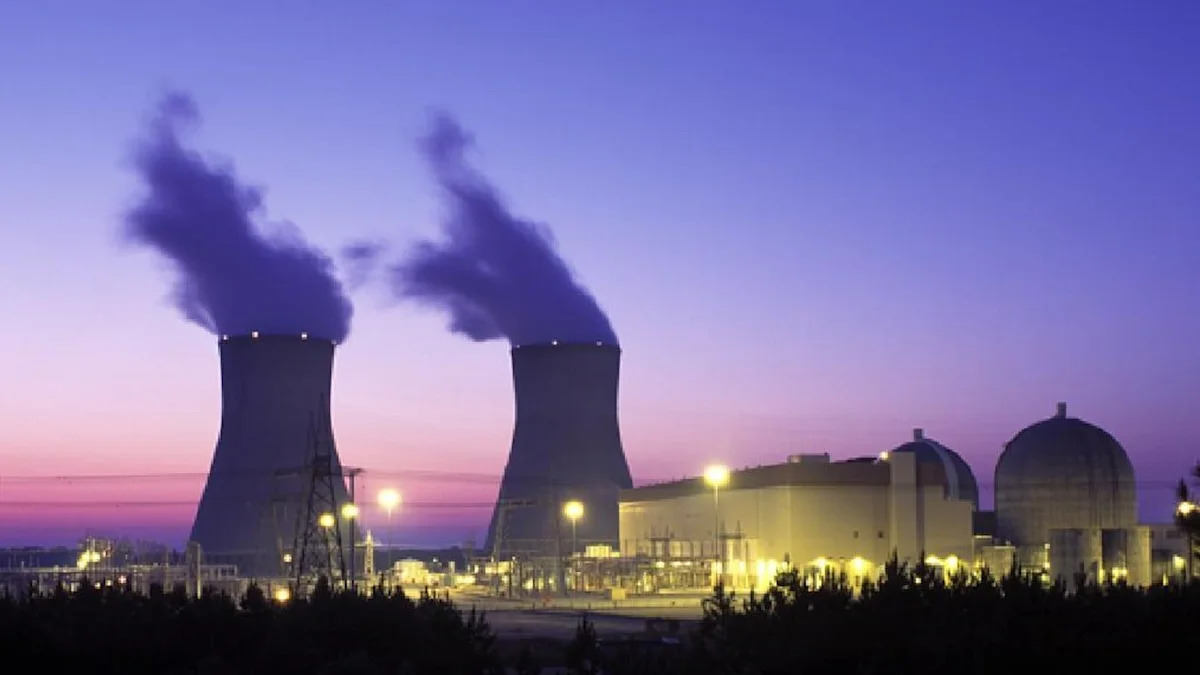
Alphabet moved early. PJM, the largest U.S. grid, proposed that data centers either bring their own power or accept being cut off remotely during peak demand. Google responded with a long-term supply agreement that includes new nuclear output from upgrading existing reactors, and both companies called the deal a response to PJM's "bring your own power" proposal. Google has also contracted to restart a nuclear plant in Iowa and agreed to fund capacity upgrades at two Georgia nuclear plants. In Tennessee, it partnered with Kairos Power and the Tennessee Valley Authority to supply nuclear power to its data centers. Each of these contracts takes a regulatory hurdle and turns it into an advantage over competitors.
That power matters because the demand already exists. Google Cloud revenue rose 103% to $30.709 billion in the third quarter. Cloud operating income reached $11.121 billion, up from $3.594 billion a year earlier. Cloud backlog exceeded $460 billion as of the first quarter. Total revenue grew 24.65%, the 13th straight quarter of double-digit growth. Chief Executive Sundar Pichai said "Our deep full stack approach is driving momentum across the business."
The balance sheet can carry the expansion. Debt to equity stands at 0.143, and interest coverage is 175.32x. Management also raised the quarterly dividend 5% to $0.22. At a 0.59% yield, I treat the dividend as a small income stream that should grow.
Microsoft (NASDAQ:MSFT) trades at about 30 times earnings. Alphabet trades at about 13. Unrealized equity gains inflated Alphabet's earnings this year, which makes its multiple look cheaper than it is, so I discount that figure, though the valuation gap remains wide. Microsoft also carries debt to equity of 0.291.
Meta Platforms (NASDAQ:META) shows what regulatory risk costs a shareholder. Its third-quarter EPS of $3.83 took a $9.89 billion charge from a settlement with 52 U.S. state attorneys general over teen mental health. Meta still trades at about 23 times earnings.
The spending interests me. Capex hit $51.355 billion last quarter, and free cash flow came in at negative $9.065 billion. To pay for the expansion, Alphabet issued $28.7 billion in senior notes and sold $4.3 billion of Class A and $8.1 billion of Class C shares through its at-the-market program, which dilutes existing shareholders. An $8.7 billion loss on equity securities pulled EPS down to $2.12, missing expectations.
The thesis holds up all of that because the money is turning into Cloud profit and secured power. Operating income rose 29.93% in the same quarter that headline EPS fell short.
The Gemini app reached 1 billion users. First-party models now process about 32B tokens/minute. Every one of those requests needs electricity that Alphabet has already signed for. Whoever controls the power will shape the next decade of AI, and Alphabet locked it up first.
Alphabet's power lock-in is one piece of a much bigger infrastructure story that goes well beyond the chipmakers. We covered seven companies supplying the AI data-center expansion, from power to cooling, in a free report you can grab here.
(Sponsor) Most people spend their entire working lives focusing on one thing: growing a pile of money. Then they retire and discover the skill they actually need is close to the opposite. Turning that pile into steady income, year after year, through good markets and bad, without ever running out.
It may be the least discussed and most consequential transition in personal finance, and plenty of otherwise careful investors walk into it with no real plan. That is exactly what The Definitive Guide to Retirement Income helps answer. It is a free guide from Fisher Investments covering what your retirement will really cost, where the cash flow should come from, and how much you can safely withdraw each year. Learn more here. Learn More Here ›
Contact editorial@247wallst.com for any questions or corrections.