play Live Sign upShow navigation menuplay Live Click here to searchsearchSign upNewsGCC agrees to set up advanced military command headquarters in KuwaitGulf leaders emphasised the need to strengthen defence coordination to confront present and future regional challenges.
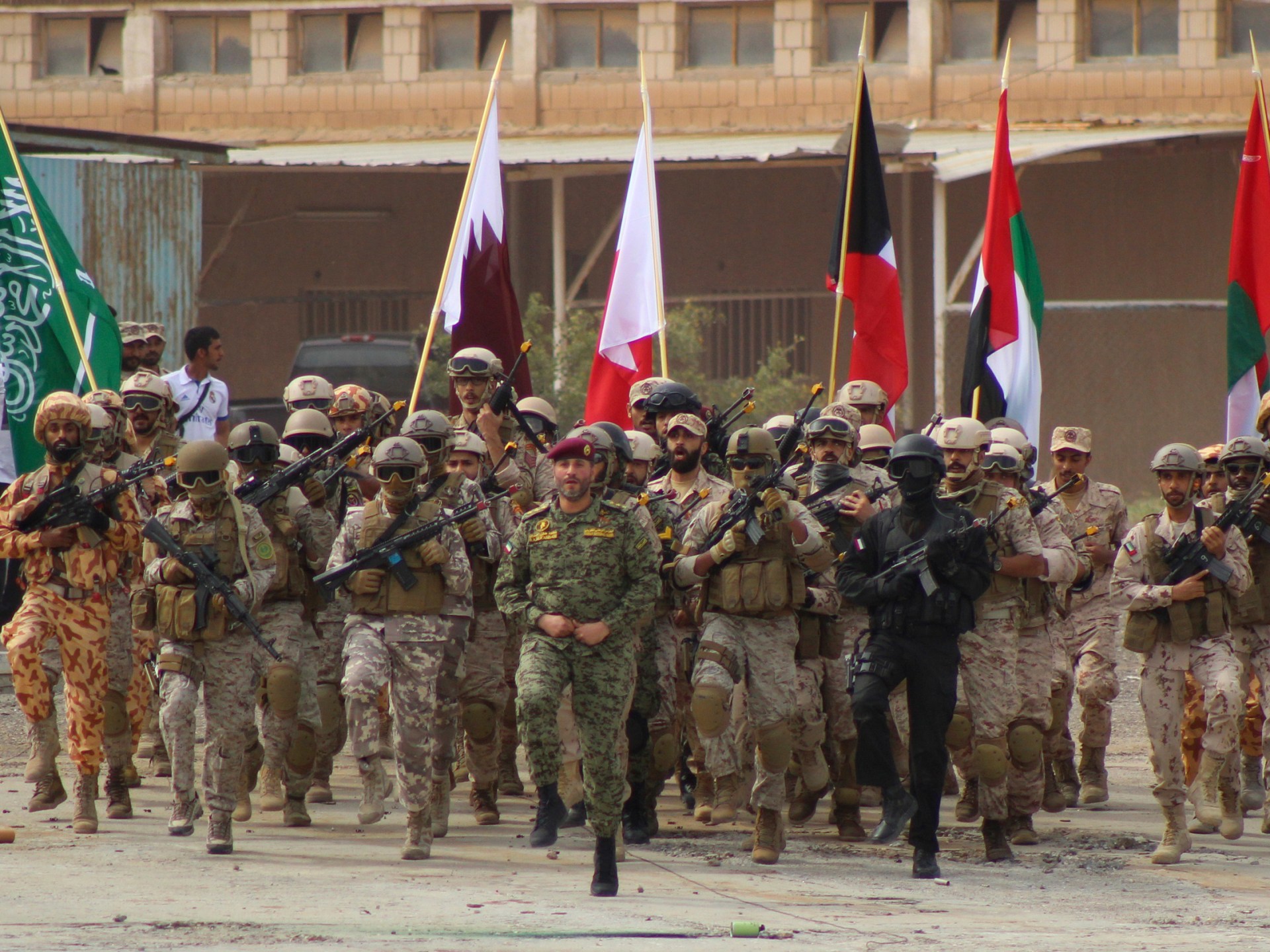
xwhatsapp-strokecopylinkgoogleAdd Al Jazeera on GoogleinfoIn this April 6, 2017 photo released by the U.S. Defense Department, Gulf Arab soldiers take part in the Eagle Resolve exercise in Kuwait City, Kuwait [File: Staff Sgt. Frank O'Brien/US Army Central via AP Photo)By Al Jazeera StaffPublished On 10 Nov 202610 Nov 2026The Gulf Cooperation Council (GCC) has agreed to set up an advanced headquarters for its Unified Military Command in Kuwait, with plans to station “appropriate” military forces there.
The announcement by the GCC’s General Secretariat on Tuesday followed a meeting of defence ministers from member states in Bahrain.
“The leaders of the GCC states – may God protect and preserve them – consistently emphasise the necessity and importance of strengthening this blessed Gulf journey, enabling it to confront various challenges and threats, both present and future,” the group said in a statement.
Details about the headquarters and the number or type of troops expected to be deployed have yet to be disclosed. The GCC consists of six United States-allied Gulf states: Bahrain, Kuwait, Oman, Qatar, Saudi Arabia and the United Arab Emirates.
Established at a summit in Kuwait in December 2013, the GCC’s Unified Military Command was designed to oversee joint military operations and enhance collective defence against threats to member states’ territory, airspace, maritime areas and interests.
Most Gulf countries host major US military installations and were targeted in Iranian missile and drone attacks in the weeks after the US-Israel war on Iran began on February 28.
The war has disrupted air travel and shipping, and raised concerns over the security of the region’s vital oil and gas exports.
The Iran war has also reignited the conflict in Yemen, where escalating fighting between the Iran-aligned Houthis and Saudi-backed forces of the internationally recognised government has further plunged the region into uncertainty, following the collapse in July of a United Nations-brokered ceasefire largely in place since 2022.
The Houthis have also targeted sites across Saudi Arabia, including the capital Riyadh.
Last month, an attack by the armed group on the city’s King Khalid international airport killed 14 people and wounded more than 300 others, in the deadliest assault on the kingdom in more than a decade.