play Live Sign upShow navigation menuplay Live Click here to searchsearchSign upNews|Death PenaltyUS lawyers say man on death row could be executed with expired lethal drugsExecution method has long raised questions about cruel and unusual punishment and botched executions.
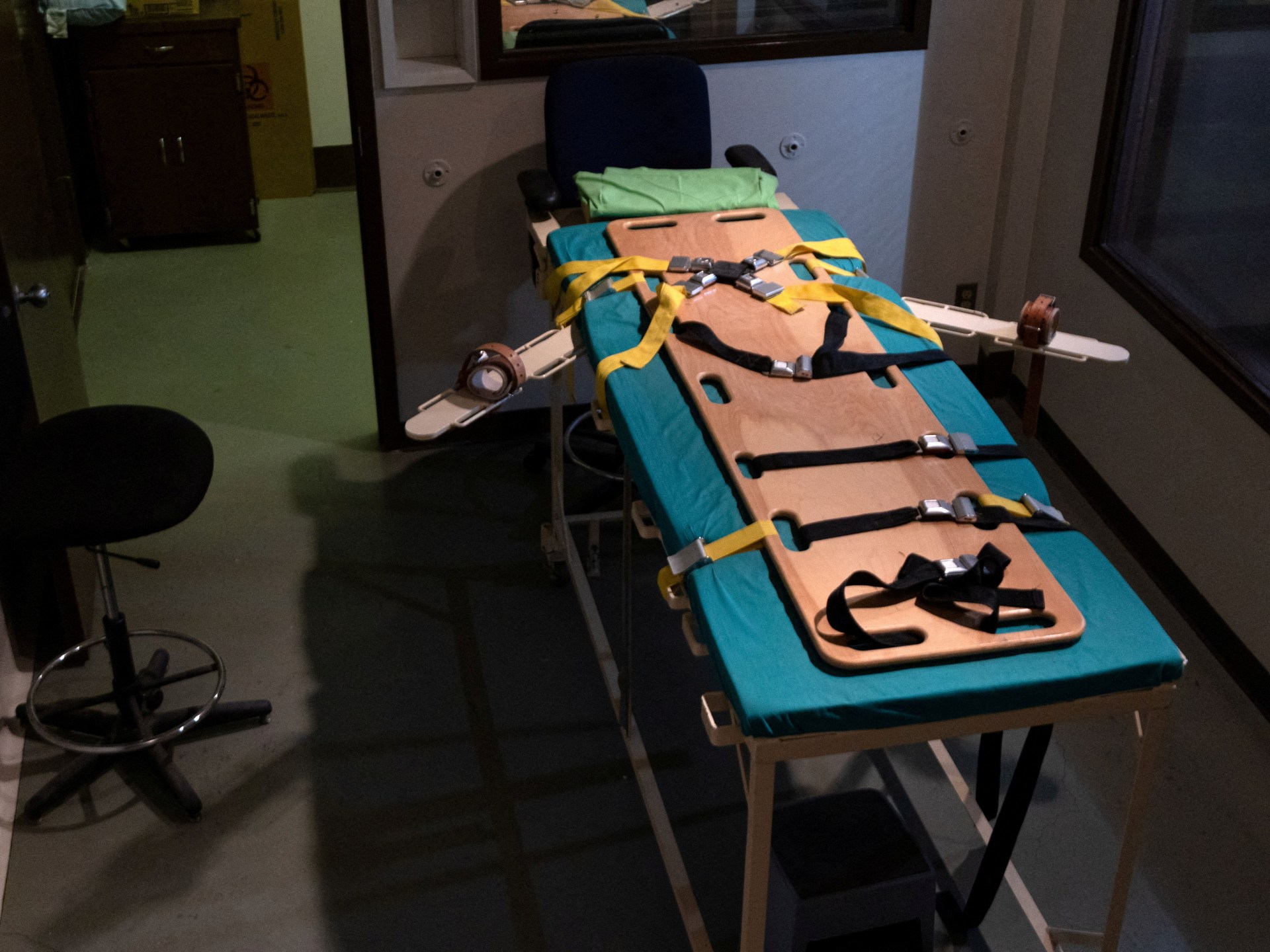
xwhatsapp-strokecopylinkgoogleAdd Al Jazeera on GoogleinfoA lethal injection chamber at Washington State Penitentiary in Walla Walla, Washington, US, on September 6, 2024 [Matt Mills McKnight/Reuters]By The Associated PressPublished On 20 May 202620 May 2026Lawyers for a Tennessee death row inmate say they are concerned the state may be planning to use expired lethal injection drugs at his execution on Thursday, amid growing concern across the country as states work to keep most information about their drugs secret.
Tony Carruthers’s lawyers twice asked the Tennessee Department of Correction (TDOC) last month whether it had secured the appropriate drugs for his execution date and to ensure the drugs had not expired.
Assistant Attorney General John W Ayers’s response did not directly answer, but said the department will comply with its lethal injection protocol, which includes regular inventory of the drugs to monitor expiration dates.
Carruthers, 57, was sentenced to death after being found guilty of the 1994 kidnappings and murders of Marcellos Anderson, his mother Delois Anderson and Frederick Tucker.
The Tennessee Department of Correction declined to answer on Wednesday when asked by The Associated Press news agency whether the drugs they plan to use to kill Carruthers are expired. Governor Bill Lee’s office did not immediately respond to a similar inquiry.
Federal Public Defender Amy Harwell said in an email that expiration dates reflect when a drug can no longer be safely relied upon to obtain the desired result.
“In the execution context, this may mean a slow, lingering death without a reliable loss of consciousness, as the body painfully and fitfully shuts down,” Harwell wrote.
Public opposition to executions has made it difficult for prisons to obtain execution drugs, among the lingering issues for those who use lethal injection. Some states have been forced to speed up executions or stop them entirely due to expiration dates on drugs.
In South Carolina, executions were on hold for 12 years while the state struggled to obtain drugs. They were able to get them only after the state passed a shield law that kept the supplier’s identity secret.
Tennessee has argued in court that its shield extends to revealing expiration dates. Just before the December execution of Harold Nichols, Tennessee Deputy Attorney General Cody Brandon offered instead to provide a declaration “attesting that the chemicals to be used in Mr Nichols’ execution will not expire before his execution and have not expired”, according to a transcript of the proceedings.
“The fact that TDOC was willing to provide such assurances to Mr Nichols, but not Mr Carruthers, raises serious concerns that TDOC is, in fact, intending to use expired drugs,” Harwell wrote in a May 18 follow-up to Ayers’s letter.
In 2017, Arkansas’s then-Governor Asa Hutchinson issued death warrants for eight prisoners on the state’s death row in an effort to beat the clock on a batch of lethal injection drugs that were set to expire. The state executed four of the men, but four others were granted stays.
Arkansas has not had any executions since then, in part because of the difficulty in obtaining drugs.
A group of Texas inmates in 2023 unsuccessfully tried to stop the state from using drugs they alleged were expired and unsafe. Prison officials denied their claims and said the state’s drug supply was safe.
Lawyers for Idaho’s death row inmates raised similar concerns in 2024, when the state planned to take a second try at executing Thomas Creech after the first attempt was botched.
The Federal Defender Services of Idaho told a federal judge that prison officials apparently failed to even check the expiration date of the execution drugs before obtaining a death warrant for Creech in October 2024. Nine days later, the drugs were returned to the supplier because they were expired, according to court documents. A new Idaho law has changed the state’s primary execution method to firing squad in part because of the difficulty of getting lethal injection drugs.
Tennessee has a history of problems with its execution drugs. In 2022, Oscar Smith came within minutes of being executed before Tennessee Governor Bill Lee issued a surprise reprieve that revealed the state’s lethal injection drugs were not being properly tested for purity and potency. Executions were on hold for two years to allow for an independent investigation into the problems.
The state attorney general’s office was also forced to concede in court that two of the people most responsible for overseeing Tennessee’s lethal injection drugs at the time “incorrectly testified” under oath that officials were testing the chemicals as required.
Tennessee released a new lethal injection process in December 2024 and restarted executions in 2025. Several death row inmates have sued over the new protocols, arguing that the Correction Department did not follow the recommendations from the investigation.
Meanwhile, the new process has not been completely smooth. When Byron Black was executed by lethal injection in August, he said he was “ hurting so bad”. Prison officials have offered no explanation for what might have caused the pain.