The Stock Market Just Had Its Best Day Since April. Here’s What History Says a 62-Year-Old Retiree With $1,300,000 in Cash Should Do Now Danielle Liverance Mon, November 9, 2026 at 10:32 PM EST 10 min read ^GSPC +2.35% Quick Read The S&P 500 fund rose 2.36% on Monday, its best day since April 8, 2026, erasing 85% of last week's 2.7% loss; the Nasdaq-100 fund rose 3.54% and is still 10.6% below its October 6 record.
Since 1999, 14 corrections produced a 2% day from 5% to 10% below the record: 9 gave the whole bounce back within a month (median 6 sessions), and 8 of the 13 with a year of data were higher a year later, by a median of 6.7%.
For $780,000 going into stocks from a $1,300,000 rollover, the median year after a bounce was $52,300 as a lump sum and $58,500 in thirds; the 2007 case lost $327,900 either way, which is what the $520,000 bond sleeve (10.8 years of the $48,000 draw) is for.
Building a portfolio and living off one are two completely different skills, and almost nobody teaches the second. This problem is what The Definitive Guide to Retirement Income helps, and it is free today. Read more here. (Sponsor)
Take a 62-year-old who retired in October and rolled $1,300,000 straight from a 401(k) into an IRA. The transfer landed as cash on Friday, so the money sat out both Thursday's drop and Monday's rebound, and the plan is 60% stocks and 40% bonds and cash: $780,000 into an S&P 500 index fund and $520,000 into Treasuries and a money market fund. A $48,000 pension covers half of the $96,000 a year they spend, so the IRA has to supply $48,000 a year, 3.7% of the balance, until Social Security starts at 67. The question on Monday night is the one you are asking if you hold cash: put the $780,000 in now, or wait for the bounce to prove itself. Monday's gain reads as the market calling last week a scare rather than the start of a bear market; it also looks exactly like the sharp one-day rallies that show up inside every decline, and the record below says you cannot tell the two apart on the day. The record's answer, worked out below, is a third now and the rest over the next two months, with the bond side kept out of the argument.
Many successful investors eventually reach the same moment. The saving is done, the portfolio is built, and the question quietly changes from how much can I grow this to how much can I take out? Get that second question wrong and decades of good investing can come apart in a handful of years.
That is exactly what The Definitive Guide to Retirement Income helps answer. It covers what your retirement could actually cost, which income sources are worth using, and the withdrawal math that decides whether the money lasts. It is free today from Fisher Investments. Read More Here ›
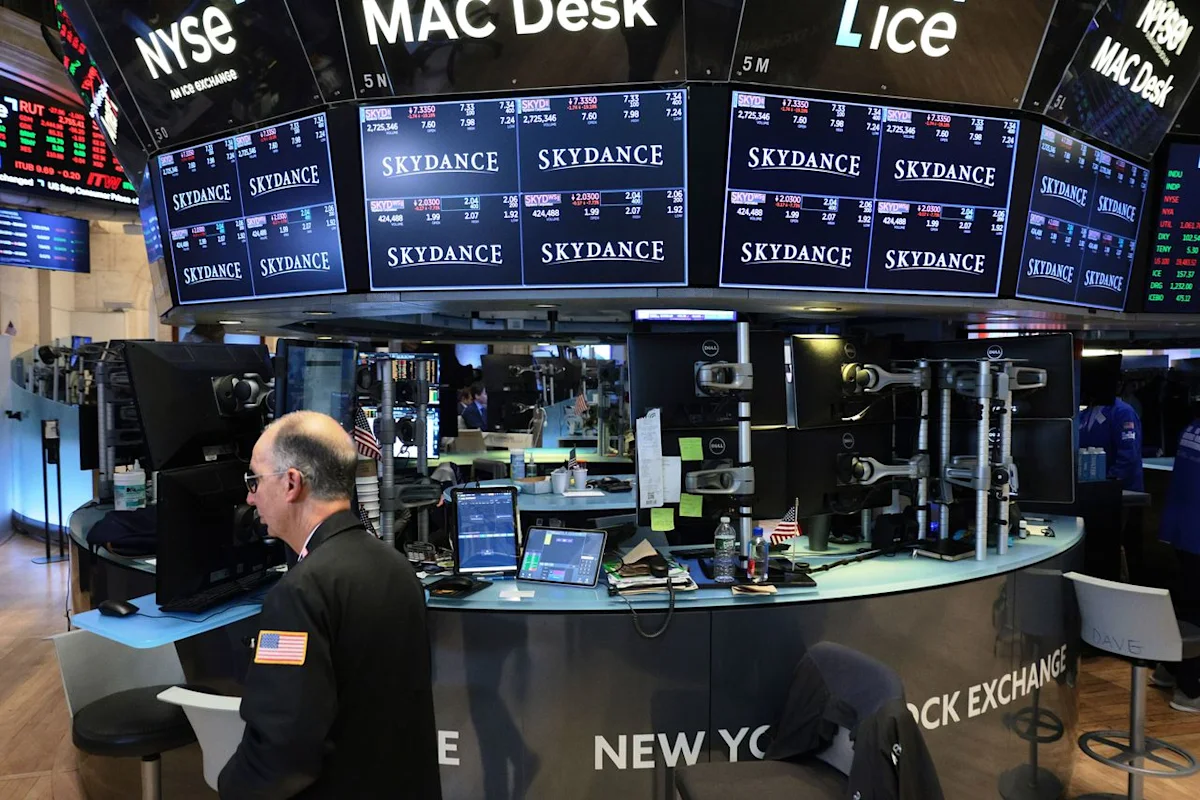
Stocks just had their best day since April, and the main S&P 500 index fund got back 85% of last week's loss in one session. It rose 2.36% on Monday, its biggest gain since April 8, 2026, while the fund that tracks the Nasdaq-100 rose 3.54%, its best day in 18 months. The record since 1999 says that is exactly what you would expect to see whether or not the low is in: of the 14 corrections since then in which the S&P 500 fund posted a 2% day from this far below its record, 9 gave the whole bounce back within a month, and 8 of the 13 with a year behind them were higher a year later. If you have money waiting on the sidelines after last week, both halves of that record are yours to plan around.
Wall Street read Monday both ways. Morgan Stanley's Mike Wilson told CNBC the correction is in its "final innings," put the likely bottom for the S&P 500 at 7,100 to 7,300 and expects a rally toward 8,000 by year end. JPMorgan's Dubravko Lakos-Bujas called the pullback "largely a deleveraging event" and kept his 8,000 year-end target, and HSBC's Max Kettner, who trimmed his stock allocation before the midterms, is adding to it again. On the other side, Barron's told readers not to buy the bounce, and InvestorPlace's Luke Lango had already run the numbers on chip-index breakdowns like last week's: seven bounced for an average 14% gain and six turned into bear markets with an average 28% loss. A coin flip, in his own numbers.
The index itself closed last week at 7,376.86, 5.65% below its October 6 record of 7,818.93, after a 4.36% drop on Thursday that was its worst day since the April 2025 tariff crash. Monday put back 51% of Thursday's drop in the S&P 500 fund and a little over half of it in the Nasdaq-100 fund, which is still more than a tenth below its own record. The Dow fund, which fell least last week, is now above where it ended the week before last.
For the $780,000 that would have gone into stocks, the arithmetic of the week is simple. Invested through Thursday, it would have lost $34,400 that day and $21,060 for the week. Sitting in cash, it lost nothing and missed Monday's $18,410.
A bounce like Monday's has a definition you can test: a one-day gain of 2% or more in the S&P 500 fund on a day when it started 5% to 10% below its record close. In the fund's price history since late 1999, that has happened in 14 separate corrections. Here is each one, with how long the fund took to close back below where it stood before the bounce, and where it was a year later.
Two things are true at once. Nine of the 14 bounces were fully given back, all of them inside about three weeks and the median one in 6 sessions, so the people calling Monday a dead cat bounce have the short-run record on their side. And 8 of the 13 that have a full year behind them were higher a year later, by a median of 6.7%, so the people calling for a year-end rally have the long-run record on theirs. The five that were lower a year later came in 2000, three times, in 2007 and in 2022: the opening weeks of three of this century's bear markets. Nobody on either side of Monday's argument can tell you which list this one joins.
The deeper the hole, the better a bounce has done: of the 137 2% days that came with the fund 20% or more below its record, 111 were higher a year later. That is also why a big up day is weak evidence on its own. 84% of all the fund's 2% days since 1999 arrived with it at least 10% below its record, because sharp rallies are what declines look like from the inside, so Monday tells you less than it feels like it does.
Put the whole $780,000 in on the day of the bounce, and across the 13 cases with a year of data the median outcome a year later was a gain of $52,300. Put it in by thirds instead, $260,000 now, $260,000 in a month and $260,000 in two, and the median was $58,500, a little better, because so many of these bounces were given back and the later pieces bought lower. The spread matters more than the median. In the 2007 case the lump sum was down $327,900 a year later and the thirds $318,100: staging saved about $9,800 and no more. In the 2020 case the lump sum was up $280,100 and the thirds $226,600: waiting cost $53,500.
So staging is a way to feel better in a 2000 or a 2007, and it costs real money in a 2020 or a 2025. What protects your plan in a bad year is the other 40%. The $520,000 in Treasuries and the money market fund covers 10.8 years of the $48,000 draw, and the longest wait in this table from a bounce back to a record was the 2007 one, at 5.3 years. A 2007-to-2009-size fall of 56.5% on the stock side would take $440,500 off the $780,000 and nothing off your draw, because you would sell no shares into it. At 67 Social Security adds about $43,200 a year, and the draw falls to $4,800.
The table has 14 rows, five of them from before 2010, and the one from last March has no year behind it yet. Tuesday brings the October inflation report and the odds of a December rate increase with it, and nothing that happened Monday answered the questions about AI spending that set off Thursday's selling. A rollover that lands as cash is not a taxable event and carries no deadline, so there is no tax reason to hurry or to wait. The bounces that failed were given back in a median of 6 sessions, so you will know which kind this was before the month is out, and your plan should not depend on the answer.
Monday erased 85% of last week's loss in the S&P 500 fund and left the Nasdaq-100 fund a tenth below its record. Since 1999 a 2% day from this far below a record has been given back within a month about two times in three, and followed by a higher market a year later about two times in three. Both can be true of this one, so build the $780,000 decision for both: a third now, a third in a month, a third in two, with the $520,000 that pays your bills kept out of the argument.
If you are rolling over a large balance after a week like this one, the useful question is how many years of your spending sit outside stocks, and whether that answer changes what you do on a Tuesday morning. An advisor who works through it with you, on your own numbers, is worth the conversation.
(Sponsor) Most people spend their entire working lives focusing on one thing: growing a pile of money. Then they retire and discover the skill they actually need is close to the opposite. Turning that pile into steady income, year after year, through good markets and bad, without ever running out.
It may be the least discussed and most consequential transition in personal finance, and plenty of otherwise careful investors walk into it with no real plan. That is exactly what The Definitive Guide to Retirement Income helps answer. It is a free guide from Fisher Investments covering what your retirement will really cost, where the cash flow should come from, and how much you can safely withdraw each year. Learn more here. Learn More Here ›
Contact editorial@247wallst.com for any questions or corrections.