Add The New York Post on Google When Realtor.com® first exposed the hidden home equity — a year ago, it looked like a penalty on patience.
The risk was most acute in places where decades of appreciation had pushed long-tenured homeowners past the capital gains exclusion for primary home sales — potentially exposing them to federal tax rates as high as 20%.
Now, new research from the National Association of Realtors® (NAR) suggests the home equity tax may also become a penalty on timing. In fast-growing markets, homeowners who bought before a recent price boom are coming very close to the exclusion limit.“What we are seeing is two dynamics happening at the same time,” explains Nadia Evangelou, senior economist and director of real estate research at NAR. “You have the high-cost markets where exposure is already very high, often affecting the majority of homeowners, and then you have the growth markets where exposure is rising quickly as prices increase.”
NAR estimates that 13.1 million homeowner households, or roughly 15% of all owner-occupied households, already have unrealized gains above the capital gains exclusion available to them.
It’s a more conservative figure than previous research, which estimated possible exposure at 29 million households.
But the new analysis applies filing-status thresholds, offering a more precise picture of who is already exposed and where the risk is spreading next.
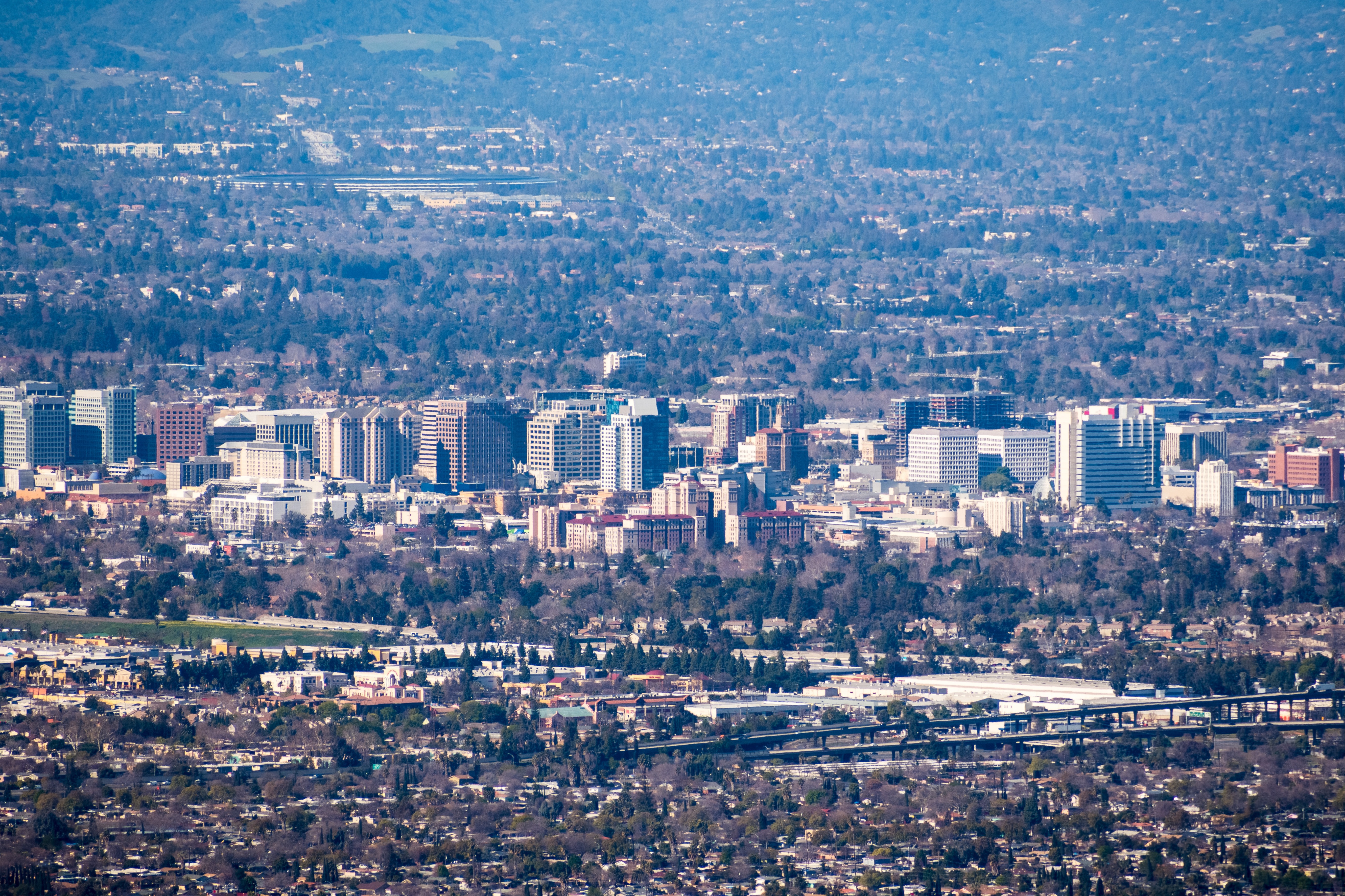
San Jose is one of the boomtowns that could be the most affected by the tax. Shutterstock Boomtowns are the next front for the hidden home equity tax About 63% of homeowner households in San Jose, CA, have unrealized gains above their applicable exclusion threshold, according to the analysis from NAR. In Urban Honolulu, the share is 54.4%, and in San Diego, it is about 54%.
These are the high-exposure, high-cost markets Evangelou described.
In these areas, exposure is largely the result of time: Owners bought decades ago, when local prices were still within reach for middle-income households.
Then, ordinary appreciation did what ordinary appreciation is supposed to do — build wealth — until it pushed them past the exclusion limit.
Part of the problem is that those limits haven’t changed since 1997, but since then, the exclusion’s real purchasing power has been cut roughly in half when adjusting for inflation. Meanwhile, the median home price more than tripled over the same period, rising from about $129,000 to $419,300 today.
Shannon McGahn, executive vice president and chief advocacy officer at NAR, says this is just one of many reasons for reform.
“NAR has long supported modernizing the capital gains exclusion because today’s housing market no longer reflects the realities of a tax policy that has not been updated in decades,” she says.
“Our research shows more homeowners across the country, not just in traditionally high-cost markets, are facing potential capital gains exposure simply because home values have risen so dramatically over time and the exclusion levels are fixed,” she adds.
It’s an important point that Evangelou echoes: “I think there is also this misconception that it only refers to luxury markets,” she says. “In many cases we are not talking about people who necessarily bought luxury homes.”
The report also identifies markets where exposure was triggered not by decades of slow appreciation, but by a purchase made just before prices surged.
“The impact of the exposure is also significant in these fast growing areas, because home prices increased significantly during a very short period,” says Evangelou. “[They’re not the] high cost areas that we usually have in mind.”
Start your day with all you need to know Morning Report delivers the latest news, videos, photos and more.
Boise, ID, and Nashville, TN, are standout examples of what Evangelou describes.
Current exposure remains well below the coastal metros — about 21.5% in Boise and 17.7% in Nashville — but the report’s point is that these markets are unusually sensitive to what happens next.
Both Boise and Nashville have many homeowners who bought before the post-2010 price acceleration, meaning another round of appreciation could move them across the threshold much faster than in markets where gains accumulated over generations.
The same dynamic is visible at the state level. California, Hawaii, and other high-cost coastal markets still show the deepest exposure, but the report highlights an emerging risk in the Mountain West and Sun Belt.
Under current conditions, 20.4% of homeowners in Idaho, 24.4% in Utah, 17.4% in Arizona, and 18.7% in Nevada already have unrealized gains above their applicable exclusion threshold, according to NAR.
Those shares remain well below the highest-exposure states, including Hawaii at 51.3% and California at 43.6% — but the gap narrows quickly under NAR’s 30% price-growth scenario.
In that case, exposure would rise to 39% in Idaho, 46.5% in Utah, 35.4% in Arizona, and 38.3% in Nevada.
It’s an especially striking finding given these states were once the affordable alternative to the coasts — places people migrated to flee high cost states.
But now, another run-up in prices could push homeowners into the same tax-risk zone.
About 13.1 million homeowner households are exposed today.
But if home prices rise another 10%, that figure climbs to 17.5 million.
A 20% increase pushes exposure to 22.1 million, and a 30% increase would expose 27.2 million homeowners, or just over 30% of all homeowners.
The report cautions that those scenarios are not forecasts. Still, NAR says those levels of appreciation could materialize over roughly the next four to 10 years, depending on local market conditions.
And if that seems unrealistic, Joel Berner, senior economist at Realtor.com, says recent history suggests otherwise.
“This range of outcomes is consistent with periods of steady growth in the housing market. For example, from 2016 to 2019 the country saw 23.4% growth in listing prices,” he says. “To be fair, the last four years have seen just 1.3% price growth.”
While it would take a measure of “return to normal” to reach those levels of appreciation again, it still serves as a dramatic illustration of what the next wave of appreciation could mean when home prices keep moving and the threshold stays in place.
The cost of that rising exposure reaches beyond the homeowners who might be facing a tax bill. When selling becomes more expensive, fewer homes come onto the market — and that can deepen the affordability problem for everyone else.
“Many of the markets where capital gains exposure is highest are also markets where inventory is already very limited,” says Evangelou. “When homeowners become more reluctant, when they don’t list their homes because of potential tax implications, that can further reduce turnover, and of course, supply.”
Berner says that dynamic poses a problem for homebuyers waiting for relief. “This works directly against the inventory recovery the market has been slowly putting together since the pandemic,” he says, noting that the pressure is especially acute in the move-up market.
Evan Liddiard, the director of Tax Policy for NAR, agrees — adding that for older homeowners, the decision extends to protecting equity they may see as retirement savings or family legacy.
“As homeowners get older, their attitudes often change,” he explains. “It’s not just a question whether they’re going to buy another home, but there’s also the question of the amount of retirement assets they have in their equity, and what they want to do with it.”
That’s why supporters of reform argue the issue is larger than one homeowner’s tax bill — touching everyone from retirees to first-time buyers, even local economies that depend on the real estate industry.
“Updating the capital gains exclusion through proposals like the bipartisan More Homes on the Market Act would help free up inventory, improve mobility for families and retirees, and create more opportunities for the next generation of buyers to enter the market,” says McGahn.
While there has been a flurry of proposals in the last year to address the problem, the More Homes on the Market Act that McGahn mentions proposes the most straightforward fix. The bill would raise the exclusion to better reflect the current market, reaching $500,000 for single filers and $1 million for couples, then index the limits to inflation going forward so the same problem doesn’t continue.
Without that kind of change, the report suggests, the hidden home equity tax will keep following appreciation — out of the coasts, into the boomtowns, and deeper into the already strained housing market.