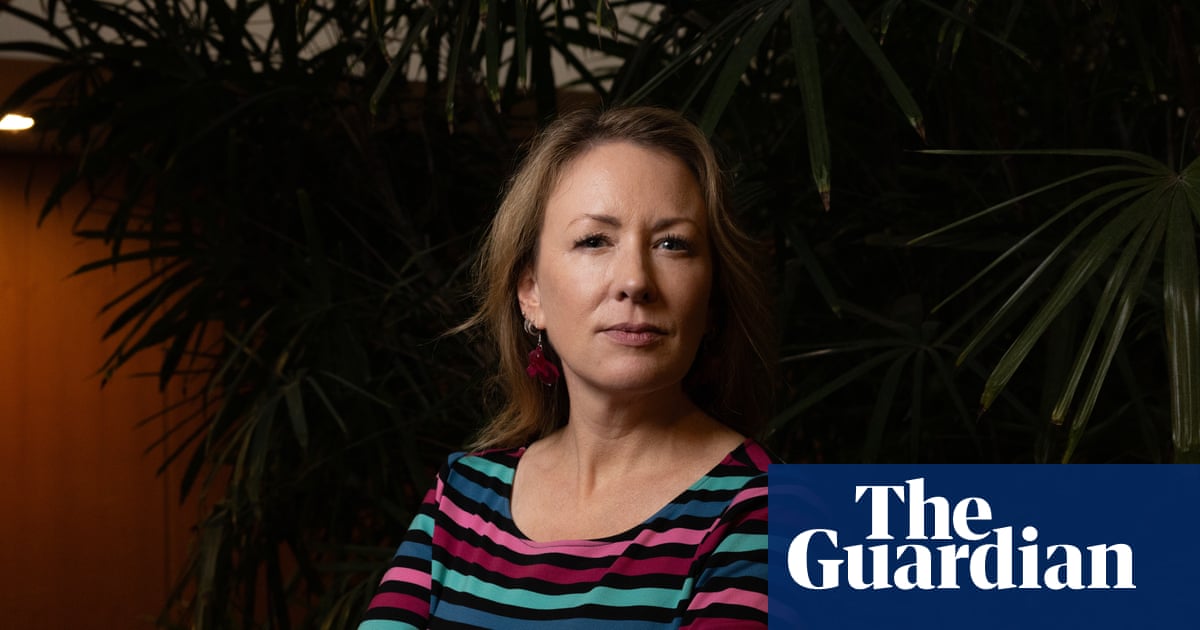
Abigail Boyd, who chaired the inquiry into the Early Childhood Education and Care sector, said the industry was ‘in crisis’. Photograph: Carly Earl/The GuardianView image in fullscreenAbigail Boyd, who chaired the inquiry into the Early Childhood Education and Care sector, said the industry was ‘in crisis’. Photograph: Carly Earl/The GuardianLax rules and rise in for-profit childcare allow predators to abuse children, NSW inquiry finds Greens MLC Abigail Boyd – who chaired inquiry – says system ‘failing too many children, families and educators’
Follow our Australia news live blog for latest updates
Get our breaking news email, free app or daily news podcast
Systemic weaknesses in New South Wales’ childcare sector have allowed predators to work in the industry and abuse children, a scathing inquiry has found.
In its final report, published on Wednesday, a NSW upper house inquiry into the Early Childhood Education and Care (ECEC) sector found “the proliferation of for-profit services and a lax regulatory approach” had led to “predators” being allowed to work in childcare and abuse children.
The report said operators backed by private equity have “no place” in the sector, and that the state’s regulator for early education had “failed to respond appropriately” to services with “extensive histories of non-compliance, breaches, safety incidents and persistently poor ratings”.
In her foreword, the chair, upper house Greens MLC Abigail Boyd, said the sector was “in crisis”.
“While the sector is entrusted with the safety, wellbeing and development of our youngest children, the evidence before this committee revealed a system under profound strain – one that is failing too many children, families and educators,” she wrote.
The inquiry was established in March last year, and held public hearings between August and October. The hearings came amid growing concerns about the industry nationally after reporting by the ABC’s Four Corners. There have also been a number of high-profile arrests of childcare workers in multiple states for the alleged abuse of children, including Ashley Paul Griffiths, Joshua Dale Brown and David William James.
Last year, a Guardian Australia investigation revealed that most childcare workers who are reported for allegations of child abuse are allowed to continue working, because police and regulators struggle to block them if the claim doesn’t result in a criminal conviction.
At an August hearing, NSW police’s child sexual abuse squad called for a national database of childcare workers who have had “red flags” raised that fall short of prosecution.
The following week, the federal government announced childcare workers would be put on a national register, alongside a trial to introduce CCTV at hundreds of centres, mobile phone bans and mandatory staff training.
The inquiry found that some ECEC services had “working towards” ratings, where a service does not meet a standard in one or more of seven assessment areas, for years at a time, without being shut down by the NSW Early Childhood Education and Care Regulatory Authority.
It heard evidence long day care services were more than twice as likely to have “working towards” ratings – at 9% – than not-for-profit and public services, at 4%.
In its submission, industry peak body Community Early Learning Australia said the sector had been “incentivised to deliver services that meet minimum standards in order to maximise the number of licensed places, rather than prioritising children and educators’ wellbeing”.
Boyd wrote that the “race to the bottom, where everybody can get rich – except the people actually educating, caring for and nurturing children – has hopefully reached the limits of its predatory expansion”.
She said the recommendations in the report sought to “curtail profiteering”, and included a clear finding that private equity-backed services had “no place in the sector”.
The crossbench and opposition-led inquiry recommended the government introduce a policy about the composition of the sector to reduce the overall percentage of large for-profit providers in favour of “not-for-profit, government-run and community-run services”. It found for-profit providers were of a lower quality and were less safe for children.
That includes the “provision of favourable lease arrangements” for services on state and local government land. The inquiry found that developers were influencing decisions about where services were being established, with a negative impact on availability in lower socioeconomic and regional areas.
The inquiry found that CCTV in childcare centres, for which a national trial is now under way, was a useful regulatory and investigative tool, but “no substitute for adequate staffing and supervision”. Experts have raised concern about hacking, data storage and the potential use of AI to produce illegal and harmful material.
The report has recommended the government look at preventing apprentice and trainee childcare workers being left unsupervised with children and that services rated “working towards” or lower not be allowed to take student placements or open new centres.
In a statement, the deputy premier and early education minister, Prue Car, said the government would “consider the committee’s recommendations and respond in due course”. She said the report acknowledged the government’s commitment to deliver 100 new public preschools by 2027 to “help rebalance the early learning sector in New South Wales”.
The NSW Early Learning Commission, which has replaced the NSW ECE CRA, has been contacted for comment.