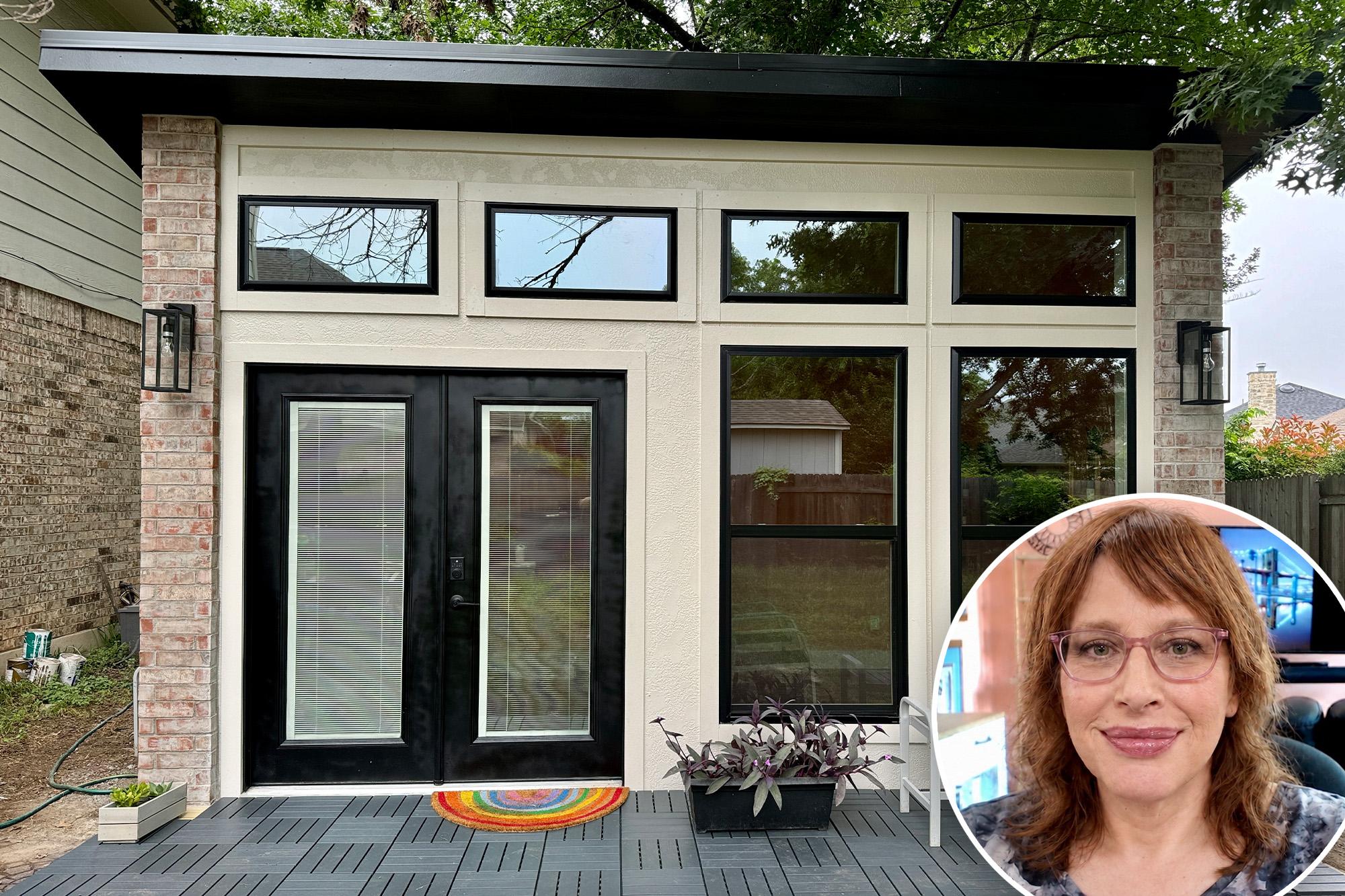
Make New York Post a Preferred Source A Texas homeowner’s fight to build a tiny backyard office spiraled into a six-year legal nightmare for the neighborhood’s homeowners association — which now faces a bill topping $153,000 after losing in court.
Masha Davis wanted to construct a modest 160-square-foot office behind a home in the Davis Spring subdivision in Austin, Texas, back in 2020.
But the homeowners association rejected the proposal, The Post has learned, setting off a bitter legal battle that ultimately ended in Davis’s favor.
As of Nov. 5, the association owed approximately $153,264 in attorney’s fees, court costs and interest, according to calculations provided by Davis’s attorney.
Interest is continuing to accrue at roughly $34 a day.
The association represents about 570 homes, and Davis says residents still haven’t received a clear explanation of how the judgment will be paid.
“It’s their association and their money,” Davis told The Post.
The dispute began in July 2020, when Davis submitted plans for a detached backyard office measuring just 10 feet by 16 feet, with a roof height of 9 feet, 6 inches.
The proposed structure would have electricity and air conditioning but no plumbing, and Davis said it would not have been visible from the street.
The homeowner, who had retired, planned to use the building for consulting work and as a separate space where family members could isolate during the COVID-19 pandemic.
But the HOA’s architectural review committee rejected the application, citing the structure’s height and concerns that it could function as a separate dwelling in violation of the community’s single-family housing restrictions.
Davis argued that the height restriction wasn’t included in the architectural guidelines legally in effect when the application was submitted.
The homeowner sued the association in January 2021, launching a legal fight that would stretch across multiple court rulings and an appeal.
In August 2022, a Williamson County district court ruled that the applicable architectural guidelines contained no height restriction prohibiting the proposed structure and that the committee lacked authority to reject the application on those grounds.
A second ruling in January 2024 determined that no restrictive covenant prohibited Davis from constructing the backyard office as proposed.
The court subsequently awarded Davis $100,000 in attorney’s fees, although the homeowner said legal expenses had reached approximately $150,000.
Rather than challenge the rulings allowing the structure, the HOA appealed the attorney’s-fee award.
On Sept. 29, 2026, Texas’s Third Court of Appeals unanimously upheld the award, including an additional $30,000 in conditional appellate attorney’s fees.
Davis said the association has since agreed to pay the judgment.
The homeowner said the HOA’s legal defense had been covered by insurance and questioned whether the insurer would also pay the judgment, or whether the association would have to tap its own funds.
Davis said an attorney has begun collection efforts to recover the money.
At a Nov. 3 board meeting, a former HOA president raised questions about the lawsuit’s financial consequences, but Davis said the board did not provide a clear answer about how the payment would be funded.
The Post has reached out to the association for comment.
For Davis, who previously served as vice president of the HOA board before resigning in July 2020, the case has become an example of how costly it can be for individual homeowners to challenge the associations governing their neighborhoods.
“I kept going because I believed the HOA was wrong, and I didn’t want them to be able to win just by making the process too expensive for me,” Davis said.
The homeowner is now pushing for changes to Texas HOA laws, including stronger accountability requirements for association directors and limits on how much of their legal defense expenses can be covered by insurance.
“An HOA should have to follow the rules it expects its homeowners to follow,” Davis said. “That shouldn’t be a controversial idea.”
The case adds to a growing string of HOA battles nationwide. In September, a Texas homeowner emerged victorious from a three-year war with an HOA, while California condo owners were blindsided by a $26,000 special assessment for emergency roof repairs.