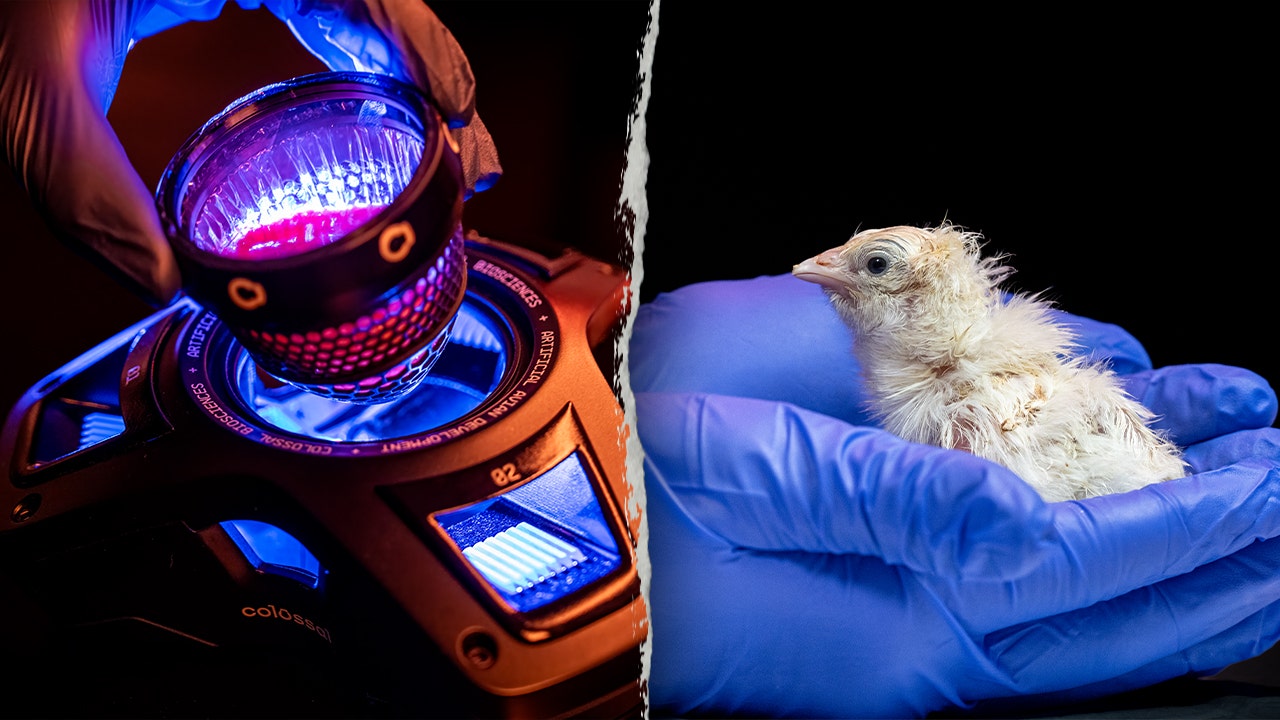
Video Texas company hatches chicks from artificial eggs Colossal Biosciences says the breakthrough could one day help revive extinct birds like the dodo and giant moa. (Credit: Colossal Biosciences via YouTube)
A Texas-based company has successfully hatched live chicks from artificial eggs for the first time, a breakthrough researchers believe could eventually help revive extinct birds like the dodo and giant moa.
Colossal Biosciences created a reusable titanium egg lined with a bioengineered membrane that mimics the oxygen transfer of a natural shell. Using the devices, scientists successfully hatched 26 healthy chickens while closely monitoring development from embryo to birth, according to The New York Post.
"We didn’t just copy nature," CEO and co-founder Ben Lamm told The New York Post. "We tried to re-engineer it."
MAN DIES AFTER ATTACK BY 13-FOOT GREAT WHITE SHARK NEAR POPULAR ISLAND RESORT: OFFICIALS
Using the artificial eggs, scientists successfully hatched 26 healthy chickens while monitoring development from embryo to birth. (Christopher Klee (Colossal Biosciences))
The chicks will remain at the company’s avian facility for the rest of their lives, Lamm said.
Researchers say the technology could improve hatch rates for endangered birds and support the company’s broader efforts to bring back extinct species, including the dodo and the moa, according to The New York Post.
The moa — a massive flightless bird that once roamed New Zealand — could weigh up to 500 pounds before it was hunted to extinction centuries ago.
ZOOS IN PITTSBURGH AND BOSTON JUST HASHED OUT A BLOCKBUSTER ONE-FOR-ONE GORILLA TRADE
The chicks will remain at the company’s avian facility for the rest of their lives, Lamm said. (Christopher Klee (Colossal Biosciences))
According to The New York Post, the artificial egg is compatible with standard incubators and could potentially support eggs as large as those laid by moa birds.
Before scaling the technology further, Colossal plans to conduct additional testing using emu and ostrich eggs, the outlet reported.
The company is pursuing its moa revival project in partnership with New Zealand’s Ngāi Tahu Research Centre and filmmaker Peter Jackson, who is also an investor in Colossal Biosciences.
VIRAL BUSINESSMAN WHO ALLEGEDLY BRAGGED ABOUT WEALTH CHARGED IN FEDERAL ENDANGERED SPECIES HARASSMENT CASE
Before scaling the technology further, Colossal plans to conduct additional testing using emu and ostrich eggs. (Christopher Klee (Colossal Biosciences))
Lamm told The New York Post that the company believes the moa could return by the early 2030s, while the dodo could be revived within four or five years.
CLICK HERE TO DOWNLOAD THE FOX NEWS APP
"The avian reproductive toolkit has lagged behind mammalian systems for decades because birds present unique developmental challenges," Dr. Beth Shapiro, chief science officer of Colossal, told the outlet. "The artificial egg changes that."
Sophia Compton is a Writer at Fox News Digital. Sophia was previously a business reporter covering finance, energy and tourism and has experience as a TV news producer. She graduated with a journalism degree in 2021 from the University of Hawaii at Manoa. Story tips can be sent to sophia.compton@fox.com.
Stay up-to-date on the latest AI technology advancements and learn about the challenges and opportunities AI
By entering your email and clicking the Subscribe button, you agree to the Fox News Privacy Policy and Terms of Use, and agree to receive content and promotional communications from Fox News. You understand that you can opt-out at any time.
You've successfully subscribed to this newsletter!