Apple is a Triple Threat in Terms of Positive Catalysts Alex Sirois Mon, November 9, 2026 at 7:15 AM EST 5 min read AAPL +0.36% MSFT +2.03% Explore stocks on Coinbase Trading disclosure Trading disclosure The above button links to Coinbase. Yahoo Finance is not a broker-dealer or investment adviser and does not offer securities or cryptocurrencies for sale or facilitate trading. Coinbase pays us for certain activity generated through this link. Prices displayed are informational.
Apple (NASDAQ:AAPL) locks in 2.5 billion devices and 1.5 billion paid subscriptions, feeding record Services revenue at a 76% gross margin.
Microsoft (NASDAQ:MSFT) poured $116 billion into capex while Apple spent just $9 billion, leaving Apple cheaper at 37 times free cash flow versus 59.
Memory costs threaten margins, with December gross margin guided to 45% to 46%, down from the 47.9% just reported.
Building a portfolio and living off one are two completely different skills, and almost nobody teaches the second. This problem is what The Definitive Guide to Retirement Income helps, and it is free today. Read more here. (Sponsor)
I added to my Apple (NASDAQ:AAPL) position again after the November 2 earnings report. Apple spends little on AI infrastructure, it compounds cash at a rate few companies match, and its customers stay locked inside its ecosystem. In uncertain markets, I want that trio compounding in my retirement account.
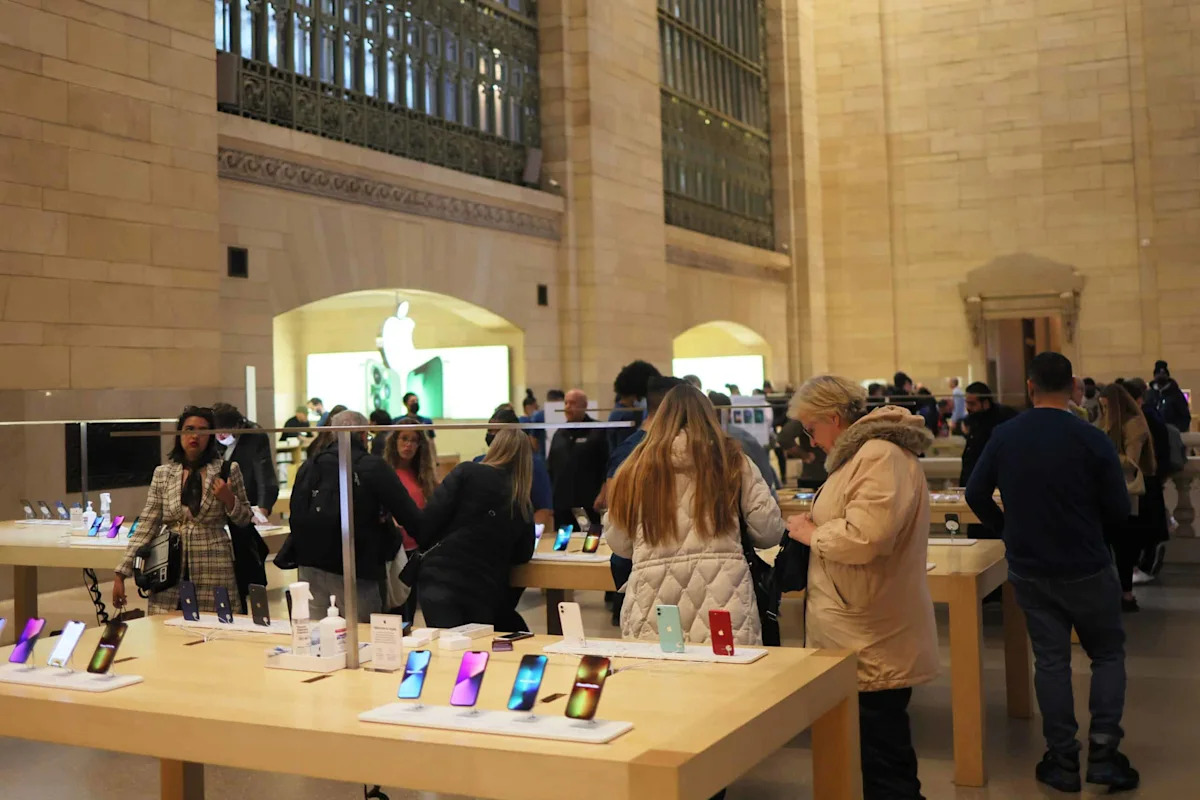
Apple's installed base now tops 2.5 billion active devices, an all-time high. That base supports more than 1.5 billion paid subscriptions, which grew by double digits last quarter. It also feeds Services, which hit a record $31.6 billion in the September quarter. That was up 10%, at a 76% gross margin, while products earned 37.2%. Every device Apple sells opens another door to its most profitable business.
Hardware keeps those doors opening. iPhone revenue rose 17% to $57.6 billion, a September quarter record, and Mac climbed 24% to $10.8 billion. CEO John Ternus called the new iPhone Duo "the most transformational iPhone since the original," and management says supply still can't keep up with demand.
Many successful investors eventually reach the same moment. The saving is done, the portfolio is built, and the question quietly changes from how much can I grow this to how much can I take out? Get that second question wrong and decades of good investing can come apart in a handful of years.
That is exactly what The Definitive Guide to Retirement Income helps answer. It covers what your retirement could actually cost, which income sources are worth using, and the withdrawal math that decides whether the money lasts. It is free today from Fisher Investments. Read More Here ›
In fiscal 2026, revenue reached $478.83 billion, up 15.06%, and EPS came in at $8.98, up 20%. Operating cash flow rose 30.15% to $145.10 billion while capex fell 28.9% to $9.04 billion. Apple returned $28 billion to shareholders in the September quarter alone, including $24 billion of buybacks. Earlier this year, the board also authorized another $100 billion in repurchases. Return on invested capital stands at 61.56%, and the latest quarter marked Apple's 10th consecutive EPS beat.
Friends usually ask how Apple compares with Microsoft (NASDAQ:MSFT). My answer is capex. In fiscal 2026, Microsoft spent $115.95 billion on capital expenditures, up 79.62%, and its free cash flow fell 6.46% to $66.99 billion. Its September quarter capex alone reached $39.37 billion. Apple spent $9.04 billion over its entire fiscal year. Microsoft trades at roughly 59 times free cash flow with a 1.7% free cash flow yield. Apple trades at 37 times free cash flow, with a 2.73% yield.
Apple lets others pour concrete for data centers while it sells the devices people use to reach AI. Siri AI launched in beta in September and added five more languages in October. Management has also said customers may be able to buy expanded server-side access in the future.
Memory costs worry me most. Management guided December quarter gross margin to 45% to 46%, below the 47.9% it just reported. That 47.9% also included roughly one percentage point from one-time tariff refunds. Memory purchase obligations rose $33 billion between the June and September quarters. On Friday, Daiwa warned that Apple's run of outperformance could end soon. At 38 times earnings and a 0.32% dividend yield, I have little buffer if margins decline further.
My thesis holds because memory pricing runs in cycles, while the installed base and Services keep building year after year. Apple has already raised prices on iPhone, Mac and iPad. The December quarter is also expected to be its best revenue quarter ever, with growth of 7% to 10%.
Shares are up 26.28% year to date, and my reasons for holding them have only gotten stronger. iPhone Duo supply should catch up with demand, and Siri AI opens a new way for Apple to make money. Services is guided to grow 8% to 9% this quarter. Apple remains a company that holding its customers, pays for its own future and hands the excess cash back to shareholders.
(Sponsor) Most people spend their entire working lives focusing on one thing: growing a pile of money. Then they retire and discover the skill they actually need is close to the opposite. Turning that pile into steady income, year after year, through good markets and bad, without ever running out.
It may be the least discussed and most consequential transition in personal finance, and plenty of otherwise careful investors walk into it with no real plan. That is exactly what The Definitive Guide to Retirement Income helps answer. It is a free guide from Fisher Investments covering what your retirement will really cost, where the cash flow should come from, and how much you can safely withdraw each year. Learn more here. Learn More Here ›
Contact editorial@247wallst.com for any questions or corrections.